

Table of Contents
- Why Adjustable Dumbbells Deliver Real Results for Home Workouts
- Space-Saving Design That Fits Real Apartments and Garages
- Cost-Effectiveness: Adjustable Dumbbells vs Fixed Dumbbells
- How Adjustable Dumbbells Enable Progressive Overload
- Best Adjustable Dumbbells for Small Spaces: What Actually Matters
- Full Body Dumbbell Workout Routine for Home Training
- Durability, Maintenance, and Long-Term Performance
- Frequently Asked Questions
Last Updated: October 3, 2026
Why Adjustable Dumbbells Deliver Real Results for Home Workouts
Adjustable dumbbells home fitness has become the standard for serious athletes training at home. The reason is straightforward: they solve the space problem that kills most home gym plans. Instead of storing 10 sets of fixed-weight dumbbells across your apartment or garage, you dial a single weight and move to the next exercise. This isn't just convenient, it changes how consistently you train.

The difference almost always comes down to friction. When your equipment takes up half your living room, you skip sessions. When adjustable dumbbells sit in a compact stand, you use them.
The benefits of adjustable dumbbells for home fitness extend beyond space savings. Progressive overload, the practice of gradually increasing resistance to drive strength gains, becomes frictionless. You don't need to buy new equipment as you get stronger. You simply dial up the weight. This is how muscle hypertrophy actually happens: consistent training with increasing resistance, not random effort.
Space-Saving Design That Fits Real Apartments and Garages
Most home gyms fail because they demand more square footage than people actually have. A full set of fixed dumbbells from 10 to 50 pounds occupies roughly 40 square feet of floor space. Adjustable dumbbells accomplish the same training stimulus in about 4 square feet.
This compact design changes the equation. You can place a dumbbell stand in a corner, next to your couch, or in a closet. The equipment doesn't dominate your space, it disappears into it. For apartment dwellers especially, this distinction between "I have a home gym" and "I have a home gym that I actually use" matters enormously.
The stand design itself matters. Quality adjustable dumbbells use a dial-a-weight or selectorized mechanism that lets you change resistance in seconds. You're not hunting for different plates or swapping weight collars. You rotate a dial, grab the handle, and move to your next set. This efficiency keeps your workout moving and your heart rate elevated during strength training sessions.
Cost-Effectiveness: Adjustable Dumbbells vs Fixed Dumbbells
The financial comparison reveals why adjustable dumbbells vs fixed dumbbells has become such a decisive question for home trainers. A complete set of fixed dumbbells spanning 10 to 50 pounds typically requires a substantial initial investment. Adjustable dumbbells deliver the same weight range for a fraction of that cost.
Beyond the purchase price, consider the hidden expenses. Fixed dumbbells require dedicated storage solutions, wall racks, or floor space that costs money to create or maintain. Adjustable dumbbells need only a single compact stand. If you move apartments or houses, fixed dumbbells become a logistical nightmare. Adjustable dumbbells pack into a box.
The cost-per-pound metric also favors adjustable options. When you calculate the total investment divided by the usable weight range, adjustable dumbbells deliver superior value. You're paying for versatility, not redundancy.
Quality matters here. Cheap adjustable dumbbells with loose mechanisms or unreliable locking systems frustrate users and create safety risks during heavy lifts. The investment in reliable equipment pays dividends through consistent use and injury prevention.
| Factor | Fixed Dumbbells | Adjustable Dumbbells |
|---|---|---|
| Total space required | 40-60 sq ft | 3-5 sq ft |
| Weight range coverage | Multiple sets needed | Single unit |
| Adjustment speed | N/A | 2-5 seconds |
| Storage flexibility | Low | High |
| Portability | Poor | Excellent |
How Adjustable Dumbbells Enable Progressive Overload
Progressive overload is the foundational principle of strength training. Your muscles adapt to resistance over time. To continue building strength and muscle, you must increase that resistance. This is where adjustable dumbbells become genuinely effective, not just because they allow weight increases, but because they remove the friction that prevents most people from implementing progressive overload consistently.
Why Progressive Overload Fails With Fixed Dumbbells
With fixed dumbbells, progressive overload requires buying new equipment. A lifter training with 30-pound dumbbells who reaches 12 reps for 3 sets faces a choice: buy 35-pound dumbbells or stay at 30 pounds. Most people stay at 30 pounds. They perform the same number of reps, the same exercises, and wonder why their body stops changing after three months.
The barrier isn't conceptual, lifters understand progressive overload. The barrier is practical: buying new equipment costs money, requires storage space, and creates friction in the training process. Adjustable dumbbells eliminate this barrier entirely.
Building a Progression Framework
Progressive overload works through three mechanisms: increasing weight, increasing reps, or increasing sets. Adjustable dumbbells make weight progression frictionless, but only if you have a structured plan.
The rep-based progression model: Start with a target rep range (8-12 reps for hypertrophy, 3-6 reps for strength). Select a weight where the final rep of the final set feels challenging but maintainable. Train at that weight for 2-3 weeks.
Example progression for dumbbell bench press:
- Week 1-2: 30 pounds, 3 sets of 8-10 reps
- Week 3: 30 pounds, 3 sets of 10-12 reps (strength adaptation)
- Week 4: 32.5 pounds (or 35 pounds if equipment only increments by 5), 3 sets of 8-10 reps (new stimulus)
- Week 5-6: 32.5 pounds, 3 sets of 10-12 reps
- Week 7: 35 pounds, 3 sets of 8-10 reps
This cycle repeats. Over 12 weeks, you progress from 30 to 40 pounds, a 33% strength increase. This is measurable, sustainable, and achievable without buying new equipment.
The weight increment decision: Adjustable dumbbells typically increment by either 2.5 pounds or 5 pounds. This choice affects your progression speed:
2.5-pound increments allow more granular progression. Upper body exercises (bench press, shoulder press, rows) respond well to small jumps. If you're pressing 25 pounds for 12 reps, jumping to 30 pounds might drop you to 6-7 reps, too large a jump. A 2.5-pound increase to 27.5 pounds keeps you in the 10-11 rep range, maintaining the hypertrophy stimulus while increasing load.
5-pound increments work better for lower body exercises (squats, deadlifts) where strength capacity is higher. A 5-pound jump on a 100-pound squat is only a 5% increase, which feels natural. The same 5-pound jump on a 30-pound shoulder press is a 17% increase, which often exceeds your current rep capacity.
If you're choosing between equipment with different increment sizes, prioritize 2.5-pound increments for upper body focus, or select equipment with both options if available.
Tracking Progression: The Missing Piece
Most lifters don't track progression systematically. They remember "I did 30 pounds last time" but forget how many reps. This creates stagnation disguised as training.
Implement a simple tracking system:
- Spreadsheet method: Create a table with Exercise | Week 1 | Week 2 | Week 3, etc. Record weight and reps for each exercise. This takes 30 seconds per workout and creates a visible record of progress.
- Phone notes: After each workout, note the weight and reps for each exercise. Review before the next session to know your target.
- Fitness app: Apps like Strong, JEFIT, or Fitbod automate tracking and provide progression analytics. They also remind you of previous weights, eliminating guesswork.
Tracking serves two purposes: it ensures you're actually progressing (not just going through motions), and it provides psychological reinforcement. Seeing "Bench Press: 30 lbs × 10 reps → 32.5 lbs × 8 reps → 32.5 lbs × 12 reps" over 6 weeks is tangible evidence of adaptation.
Deloading and Plateau Management
Progression isn't linear. Every 4-6 weeks, your body needs a deload week: reduce weight by 10-15% and perform the same exercises for 6-8 reps. This allows nervous system recovery and connective tissue adaptation without losing strength gains.
If you plateau (can't increase reps or weight for 3+ weeks), deload for one week, then return at the same weight with a different rep scheme. If you were doing 3 sets of 8-12 reps, switch to 4 sets of 6-8 reps. The change in volume and intensity often breaks the plateau.
Adjustable dumbbells make deloading practical. You don't need to buy lighter equipment, you simply dial down. This flexibility is where adjustable dumbbells create an advantage over fixed weights: you can implement evidence-based periodization without equipment constraints.
The Mechanism Matters for Consistency
Progressive overload only works if you actually adjust the weight between sets or workouts. Dial-a-weight systems are faster and more reliable than pin-based selectors. When you're in the middle of a workout, the last thing you want is fumbling with adjustment mechanisms. Speed and reliability keep you focused on the actual exercise: the muscle contraction, the form, the resistance.
A mechanism that takes 10 seconds to adjust feels like friction. A mechanism that takes 2 seconds feels frictionless. Over a year of training, this small difference compounds into dozens of extra training hours, because you're less likely to skip weight adjustments when they're quick.
Best Adjustable Dumbbells for Small Spaces: What Actually Matters
When selecting adjustable dumbbells for small spaces, most buyers focus on weight range and price. The real decision factors are mechanism type, form factor compatibility with your primary exercises, and locking reliability under load.
Mechanism Types and Their Trade-Offs
Adjustable dumbbells use three primary adjustment systems, each with distinct advantages and limitations:
Dial-a-weight systems (spinlock or rotating dial) allow weight changes in 2-5 seconds. The dumbbell head rotates or a dial selector engages different internal plates. These are fastest for circuit training and metabolic conditioning. The trade-off: the mechanism sits at the base of the dumbbell, creating an uneven weight distribution compared to fixed dumbbells. During overhead presses or single-arm rows, you may notice the weight feels slightly offset. Quality dial systems minimize this through precision engineering, but the physics remain: the adjustment mechanism adds length and shifts the center of gravity slightly.
Pin-based selectors (weight stack systems) use a pin inserted into different weight levels, similar to cable machines. Changes take 5-10 seconds. These systems keep weight more centered in the handle, improving balance during overhead movements. The drawback: pin insertion requires two hands, making mid-set adjustments impossible. If you're performing a superset with weight increments between exercises, you'll spend more time adjusting than training.
Magnetic or electronic locking systems represent the newest category. These engage locking plates magnetically or electronically, sometimes with app-based weight tracking. They're premium-priced ($600-$1,200 per pair) and offer the fastest adjustments (1-2 seconds). For most home trainers, the cost premium exceeds the practical benefit.
Form Factor Compatibility: Where Adjustable Dumbbells Feel Different
Adjustable dumbbells are typically longer and heavier overall than fixed dumbbells of equivalent weight. A 50-pound adjustable dumbbell might measure 11-13 inches in length, while a 50-pound fixed dumbbell measures 8-10 inches. This matters for specific exercises:
Overhead presses and shoulder work: The extra length can feel awkward during lockout. Your range of motion may feel slightly compressed. Lifters with shorter arms or limited shoulder mobility sometimes report difficulty achieving full lockout without the dumbbell head interfering with their head or upper back. Test overhead pressing before purchasing if you're under 5'8" or have a history of shoulder issues.
Dumbbell flyes and chest work: The weight distribution of adjustable dumbbells (concentrated in the center due to the mechanism) can feel different during the stretch position. Fixed dumbbells allow weight to distribute naturally along the length of the handle. For isolation work, this difference is subtle but noticeable after 8-12 repetitions.
Single-arm rows: The offset weight distribution of dial-based systems becomes apparent during unilateral pulling. Your stabilizer muscles work slightly harder to control the asymmetrical load. This is actually beneficial for core engagement, but it's a different stimulus than fixed dumbbells provide.
Locking Mechanism Reliability: The Non-Negotiable Factor
The locking mechanism is where equipment failure happens. A mechanism that slips or shifts during a heavy lift creates immediate safety risk and erodes confidence in the equipment.
Quality indicators:
- Engagement feel: The locking mechanism should engage with a solid click or detent. You should not be able to shift the weight plates by hand once locked. Test this before purchase by attempting to twist or wiggle the locked weight head.
- Adjustment smoothness: The dial or selector should rotate or insert smoothly without grinding or resistance. Grinding indicates internal wear or manufacturing defects.
- Material construction: Steel or high-grade aluminum mechanisms outlast plastic or composite systems. Inspect the mechanism housing for material quality.
- Tolerance testing: Reputable manufacturers publish tolerance specifications (how much the mechanism can shift under load). Look for mechanisms rated to <0.1 inches of movement under maximum load.
Weight Range and Progression Planning
A range from 5 to 50 pounds serves most home trainers for 2-3 years of consistent training. However, progression speed matters. Some adjustable dumbbells increment by 2.5 pounds (5, 7.5, 10, 12.5, etc.), while others jump by 5-pound increments (5, 10, 15, 20, etc.).
Smaller increments (2.5 pounds) allow more granular progressive overload, especially for upper body exercises where strength gains plateau more quickly. Larger increments work fine for lower body movements where 5-pound jumps feel natural.
Calculate your likely progression: if you're currently pressing 25 pounds for 8 reps, your next progression target is likely 27.5 or 30 pounds. Equipment with 2.5-pound increments keeps you in the optimal hypertrophy rep range (8-12 reps) longer before jumping to a weight that drops you to 5-6 reps.
Stand Design and Safety During Transitions
The stand is where most home gym injuries occur. A poorly designed stand creates instability during pickup or replacement, increasing drop risk.
Optimal stand design includes:
- Height: Dumbbells should rest at knee-to-waist level for comfortable pickup without excessive bending or reaching.
- Stability: The stand base should be wide enough that picking up one dumbbell doesn't tip the stand. Test by lifting one dumbbell while the other remains on the stand.
- Spacing: Dumbbells should sit far enough apart that your hands don't collide during pickup, especially important for larger weight increments.
- Non-slip surface: The stand should have rubber or textured feet to prevent sliding on hardwood or tile floors during exercise transitions.
The Real Selection Criteria
The best adjustable dumbbells for your home gym are those where the mechanism feels solid under load, the form factor suits your primary exercises, and the stand design prioritizes stability. Brand reputation matters less than hands-on testing. Visit a retail location or purchase from vendors with generous return policies. Spend 10 minutes performing your most-used exercises with the equipment before committing. This brief trial reveals whether the form factor works for your body and training style, which no specification sheet can convey.
Full Body Dumbbell Workout Routine for Home Training
A complete full body dumbbell workout routine for home training requires only seven exercises performed twice weekly. This approach targets all major muscle groups, supports bone density development, and fits into a realistic schedule.

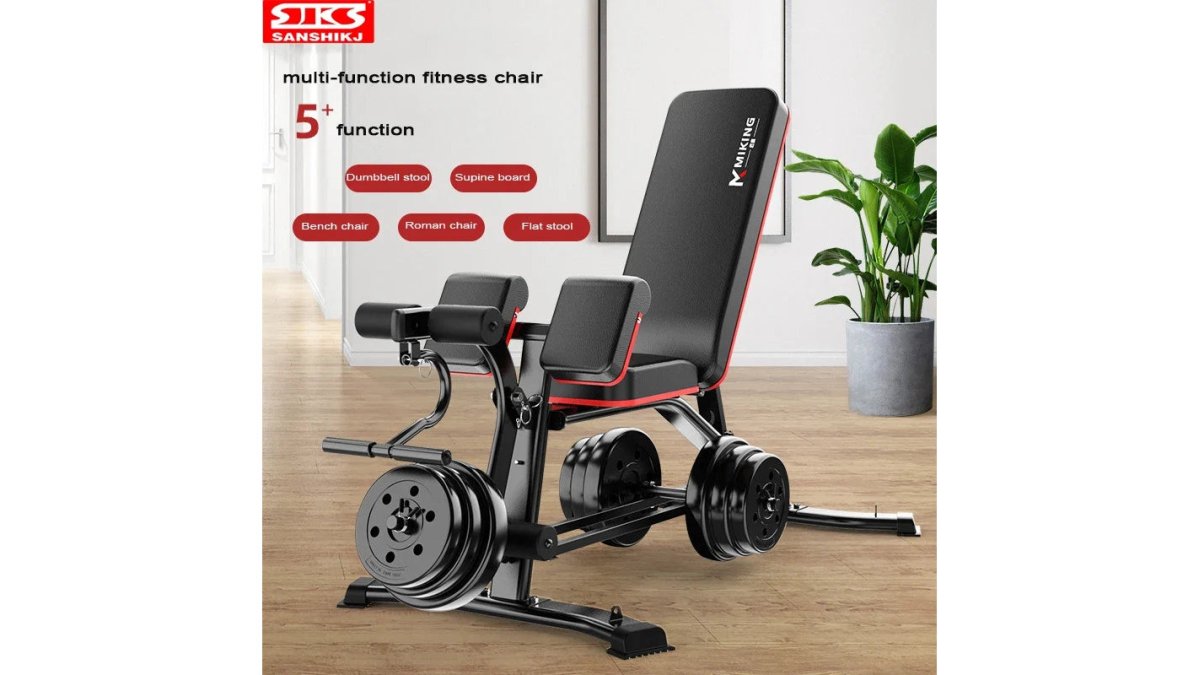
The routine progresses through compound movements first, when your energy is highest. Compound exercises like dumbbell squats and chest presses recruit multiple muscle groups simultaneously, maximizing caloric expenditure and hormonal response. Isolation exercises follow, targeting specific muscles after the heavy work is done.
Perform each exercise for 3 sets of 8-12 repetitions. The final rep of each set should feel challenging but maintainable. This rep range optimizes muscle hypertrophy while remaining accessible for home trainers.
Workout Structure:
- Dumbbell goblet squats: 3 sets of 10 reps
- Dumbbell bench press: 3 sets of 8 reps
- Dumbbell rows: 3 sets of 8 reps
- Dumbbell shoulder press: 3 sets of 10 reps
- Dumbbell bicep curls: 3 sets of 12 reps
- Dumbbell tricep extensions: 3 sets of 12 reps
- Dumbbell Romanian deadlifts: 3 sets of 10 reps
Rest 60-90 seconds between sets. This recovery window allows adequate ATP replenishment while maintaining elevated heart rate. Complete this routine Monday and Thursday, or any non-consecutive days that fit your schedule.
Durability, Maintenance, and Long-Term Performance
Most home gym equipment fails not from defective manufacturing but from poor maintenance. Adjustable dumbbells are durable when treated correctly. The mechanism requires minimal care, occasional wiping of dust and debris ensures smooth operation.
Check the locking mechanism monthly. Tighten any loose components before they worsen. A small maintenance ritual prevents small issues from becoming equipment failures. This is especially important if you train in a garage or outdoor space where moisture and temperature fluctuations accelerate wear.
Store adjustable dumbbells in a climate-controlled environment when possible. Extreme temperature swings and humidity promote rust and mechanism degradation. A simple cover protects them from dust and moisture without requiring dedicated storage space.
Drop-testing is a common concern. Controlled lowering of weight extends equipment lifespan significantly. This is where training discipline and equipment longevity intersect.
The dial or selector mechanism is the most vulnerable component. Avoid forcing adjustments. If resistance increases, stop and inspect before proceeding. Forcing a stuck mechanism risks permanent damage.
Adjustable dumbbells home fitness training solves the core problem that prevents most people from maintaining consistent strength work at home: space constraints combined with equipment costs. At PureFitnessWarehouse.com, we recommend adjustable dumbbells as the foundation of any home strength program because they remove friction from the training process.
The equipment itself is only part of the equation. Consistency matters more than intensity. A person who trains with moderate weight twice weekly outperforms someone who trains sporadically with heavy weight. Adjustable dumbbells make consistency achievable by fitting into real living spaces and removing the cost barrier to progressive training.
Start with a quality set covering 5 to 50 pounds. Focus on compound movements and progressive weight increments. Maintain the equipment through basic cleaning and mechanism checks. Track your weight progression to ensure continued strength gains. This straightforward approach builds genuine results.
American College of Sports Medicine guidelines on resistance training recommend progressive resistance training 2-3 times weekly for optimal strength development. National Institutes of Health research on muscle adaptation confirms that consistent progressive overload drives measurable hypertrophy and bone density improvements. Fitness industry analysis on home gym equipment trends shows adjustable dumbbells now represent the fastest-growing segment of home training equipment, reflecting their proven effectiveness for space-constrained training environments.
Shop PureFitnessWarehouse.com's collection of adjustable dumbbells and training accessories to build your home gym foundation. Our curated selection includes equipment designed for durability, safety, and consistent progressive training.
Frequently Asked Questions
How do adjustable dumbbells work and are they safe to use?
Most adjustable dumbbells use a dial-a-weight or pin-selector mechanism. You rotate a dial or move a pin to select your desired weight increment, which locks the plates in place. Modern systems are engineered for safety with secure locking mechanisms that hold the weight stable during exercises. The key is choosing equipment with a reliable adjustment system and testing the lock before each set to ensure proper engagement.
Can you build significant muscle mass using only adjustable dumbbells?
Yes. Muscle hypertrophy depends on progressive overload, proper form, and consistent training, not equipment type. Adjustable dumbbells allow you to increase weight incrementally, which is essential for strength gains and muscle growth. Full-body workouts using dumbbells for compound movements like chest presses, rows, and squats create the resistance needed for muscle development when paired with adequate nutrition and recovery.
Are adjustable dumbbells as durable as fixed-weight dumbbells?
Quality adjustable dumbbells are highly durable when maintained properly. The main difference is that adjustable models have moving parts (adjustment mechanisms and plates) that require care. Avoid dropping them repeatedly, keep the locking mechanism clean, and store them in a dry environment.
How much space do adjustable dumbbells actually save compared to a full dumbbell rack?
A full fixed-weight dumbbell set requires 20-40 square feet of floor space depending on weight range. A pair of adjustable dumbbells occupies roughly 2-3 square feet with their stand. For someone training in a small apartment or garage gym, this compact design is transformative, you get the versatility of multiple weights without the footprint. This makes adjustable dumbbells ideal for home gym setups where space is limited but training variety is essential.