

Table of Contents
- Why Affordable Protein Powder for Muscle Gain Without Artificial Sweeteners Is Worth the Search
- Quick Comparison: Cost-Per-Serving and Key Specs
- How Much Protein Do You Need for Muscle Growth?
- Whey vs Plant Protein for Muscle Building: Which Wins?
- Best Practices for Reading Supplement Labels
- Top Affordable Picks Without Artificial Sweeteners
- Taste Without Artificial Sweeteners: What to Expect and How to Improve It
- Digestive Health: Avoiding Bloating and Discomfort
- Frequently Asked Questions
Last Updated: September 12, 2026
Why Affordable Protein Powder for Muscle Gain Without Artificial Sweeteners Is Worth the Search
Finding affordable protein powder muscle gain without artificial sweeteners used to mean chalky texture and aftertaste. That trade-off is fading: clean-label protein is now mainstream and the price gap has narrowed. This guide breaks down cost per serving, label red flags, and which formulas deliver.
Most shoppers assume "natural" means "expensive." The opposite is often true once you calculate cost per gram of protein rather than staring at the tub price.
Below, we compare six formulas on cost per serving, protein source, and sweetener profile, then show you how to read a label without getting fooled by front-of-package claims.
Quick Comparison: Cost-Per-Serving and Key Specs
Tub price is a distraction. The only pricing metric that matters when you buy protein consistently is cost per gram of protein.
The math: take the tub price, divide by servings, then divide again by grams of protein per serving. That final number is what you actually pay for muscle-building fuel.
| Product | Price | Servings | Protein/Serving | Cost/Serving | Cost per Gram of Protein |
|---|---|---|---|---|---|
| PURE3 Whey Isolate (Chocolate) | $41.98 | ~30 | 25 g | ~$1.40 | ~$0.056 |
| PURE3 Whey Isolate (Vanilla) | $40.75 | ~30 | 25 g | ~$1.36 | ~$0.054 |
| Chocolate Whey Isolate, 1.54 lbs | $59.99 | ~20 | 25 g | ~$3.00 | ~$0.120 |
| Whey Protein - Vanilla (Grass-Fed) | $54.99 | ~24 | 25 g | ~$2.29 | ~$0.092 |
| Muscle Boosters White Cheddar Box | $39.99 | 10 | 22 g | ~$4.00 | ~$0.182 |
| Complete Meal Protocol (Plant-Based) | $29.99 | ~15 | 21 g | ~$2.00 | ~$0.095 |
Servings and protein-per-serving figures are approximate; verify against the current nutrition panel before you buy, since formulations and scoop sizes change.

How to Read the Numbers
Three patterns jump out once you run the division.
Isolate-based whey wins on cost per gram. The PURE3 formulas land near $0.05 per gram, roughly half the cost of the richer chocolate isolate and the grass-fed option. At two scoops a day, that gap is hundreds of dollars over a training year.
Single-serve and meal-replacement formats cost more per gram but buy convenience. You pay for portioning, flavor variety, and added micronutrients, a fair trade if you use them, a waste if not.
A bigger tub is not automatically cheaper. The 1.54-pound chocolate isolate costs more per gram than the larger PURE3 tub despite a similar ingredient philosophy. Always divide before you decide.
The Budget Math Most Shoppers Skip
If you train four days a week and take one scoop on training days, that is roughly 16 to 20 servings a month. At $0.056 per gram, a 25-gram scoop costs about $1.40, under $30 a month. At $0.120 per gram, the same habit costs about $60.
The takeaway is not that cheaper is always better. Cost per gram lets you compare formulas honestly, so you spend more only when a feature, enzyme fortification, third-party certification, a plant base, is worth the premium.
How Much Protein Do You Need for Muscle Growth?
Most lifters need 1.6 to 2.2 grams of protein per kilogram of body weight daily to maximize muscle protein synthesis. For a 175-pound (79 kg) athlete, that's roughly 126 to 174 grams per day.
The USDA Dietary Guidelines for Americans set the minimum daily allowance far lower, but that figure covers basic survival, not hypertrophy. Resistance training raises the requirement substantially.
Spread intake across three to five meals of 25 to 40 grams each. For protein powder muscle gain, it works best as a supplement to a solid diet, not a replacement.
Leucine is the amino acid that triggers muscle protein synthesis. Whey isolate delivers roughly 10-11% leucine by weight, which is why it outperforms most plant sources gram for gram. If you use plant protein, look for a blend of pea and rice to close the amino acid gap.
Whey vs Plant Protein for Muscle Building: Which Wins?
Whey wins on bioavailability and leucine content, but plant protein closes the gap when you blend sources. Whey isolate absorbs quickly, has a complete amino acid profile, and carries more leucine per gram.
Plant-based formulas built on pea protein isolate combined with rice protein match whey's amino acid profile closely. The NIH Office of Dietary Supplements notes that plant proteins can support muscle growth when total daily intake is adequate. The catch is volume: you often need more grams of plant protein to hit the same leucine threshold.
For dairy-tolerant lifters chasing maximum hypertrophy per gram, whey isolate is the efficient choice. For lactose sensitivity or a plant-based diet, a blended vegan formula works well when dosed correctly.
Best Practices for Reading Supplement Labels
The ingredient list, not the front label, tells you what you are actually buying. Front-panel claims like "clean," "natural," and "no junk" are marketing copy, not regulated terms. The back panel is where the truth lives.
Start With the Supplement Facts Panel
The Supplement Facts panel is the standardized box required on every dietary supplement sold in the U.S. Read it in this order:
- Serving size. The number the rest of the panel is built on. If the label says two scoops per serving, every number below doubles when you use two.
- Calories and macros. Compare protein, carbohydrate, and fat per serving. A lean isolate should show most of its calories coming from protein.
- Protein grams. This is your cost-per-gram denominator. Note it before you look at price.
- Other ingredients. This list sits below the panel and is where sweeteners, flavors, and fillers appear.
Red Flags: Ingredients to Avoid
Scan for these on any protein label before you buy:
- Sucralose and aspartame, artificial sweeteners linked to the aftertaste complaints most people report
- Sugar alcohols, erythritol and maltitol commonly cause bloating and digestive discomfort
- Proprietary blends, if the label hides individual protein amounts, you cannot verify the dose
- Artificial colors, added purely for appearance, never for performance
- Seed oils and fillers, cheap volume boosters that dilute protein density
A clean label lists three to five recognizable ingredients. If the list runs past ten items you cannot pronounce, keep walking.
How Sweetener Position Signals Dose
Ingredient lists are ordered by weight, from most to least. That single rule tells you a lot about how a product will taste.
If stevia or monk fruit appears near the end of the list, the formula uses very little, expect a restrained, lightly sweet flavor. If a sweetener appears early, the product leans on it heavily and its aftertaste is more pronounced. The difference is dose, not the sweetener.
What "Natural Flavors" Actually Means
"Natural flavors" is a legal catch-all term covering dozens of compounds derived from plant or animal sources, and the manufacturer is not required to disclose which ones. It does not guarantee the flavoring is free of solvents or carriers.
This does not make the term a red flag on its own, many clean formulas use it. But if a brand will not disclose what is behind the term when asked, treat it as a question mark.
Certifications That Matter
Third-party testing separates verified products from marketing claims. Look for NSF Certified for Sport, Informed Sport, or Non-GMO Project verification. These programs test for banned substances, heavy metals, and label accuracy.
The FDA's guidance on dietary supplement labeling requires manufacturers to list ingredients accurately, but it does not pre-approve products before sale. That gap is exactly why third-party certification carries weight.
A Thirty-Second Label Check
Before you buy, run this sequence: confirm the serving size, note the protein grams, scan the other-ingredients list for sucralose, aspartame, and sugar alcohols, check where the sweetener sits in the list, and look for a third-party certification seal. Pass all five and it is worth a closer look; fail on sweeteners or hide the protein dose in a blend and move on.
Top Affordable Picks Without Artificial Sweeteners
Every formula below skips sucralose, aspartame, and sugar alcohols. Each one uses either stevia, monk fruit extract, or no sweetener at all. Prices reflect current listings at PureFitnessWarehouse.com.
PURE3 100% Whey Protein Isolate (Chocolate and Vanilla)
PURE3 is the strongest value pick on this list. At $41.98 for chocolate and $40.75 for vanilla, both use 100% whey isolate with just three ingredients: whey protein isolate, natural flavors, and stevia extract. No fillers, gums, or artificial anything.
The isolate base means minimal lactose and fat per scoop, suiting anyone watching macros. Mixability is smooth without the grit of cheaper concentrates. Vanilla works as a neutral base for smoothies and baking; chocolate stands on its own with water.
Where it falls short: the flavor is restrained compared to artificially sweetened brands. If you're coming from a mainstream mass-market powder, expect a milder sweetness.
PURE3 100% Whey Protein Isolate (Chocolate)
Chocolate Whey Isolate Protein Powder, 1.54 lbs
Minimo Nutrition built this around the same three-ingredient philosophy: whey isolate, natural flavors, stevia. At $59.99 for 1.54 pounds, it costs more per tub than PURE3 but delivers a richer chocolate profile.
The isolate base provides more protein per serving than whey concentrate, which matters if you're minimizing carbs and fats. No GMOs, added sugar, or seed oils. The trade-off is portion size: 1.54 pounds goes fast at two scoops daily.
Milk & Egg Protein Signature Collection
NSP Nutrition's milk and egg blend at $73.99 is the old-school bodybuilding option, delivering 26 grams of protein, 2 grams of carbs, and 1 gram of fat per 120-calorie serving, one of the leanest macro profiles here.
The German Chocolate Cake flavor masks the milk-and-egg base well, and the formula is gentle on the stomach for anyone who reacts poorly to straight whey. Cost per serving runs higher than the isolates, so it suits lifters who prioritize the milk-egg amino profile over price.
Complete Meal Protocol (Plant-Based)
UpNourish's plant-based meal replacement at $29.99 is the cheapest per unit here and the only fully vegan option, packing 21 grams of complete plant protein, 54 superfoods, and 22 vitamins and minerals per serving.
It includes MCT oil for sustained energy plus probiotics and digestive enzymes to reduce bloating. Dairy-free, soy-free, gluten-free, and Non-GMO. If you want a shake that doubles as breakfast, this is the pick.
Muscle Boosters White Cheddar Box
Muscle Boosters at $39.99 flips the category on its head: instead of a sweet shake, you get 10 single-serve white cheddar packets with 22 grams of protein each. The blend combines whey isolate, beef isolate, and egg white for a complete amino profile.
Zero added sugar, no artificial sweeteners, no fillers. Mix it into eggs, rice, pasta, or potatoes for a savory protein boost. The single-serve format is genuinely useful for travel and meal prep.
Whey Protein - Vanilla (Grass-Fed, Enzyme-Fortified)
This grass-fed whey isolate at $54.99 is fortified with ProHydrolase and BioCore, two enzyme blends designed to improve protein digestion and absorption. It carries NSF Certified for Sport status, the gold standard for tested supplements.
The enzyme fortification targets bloating directly: if standard whey leaves you uncomfortable, this formula is built to address that. Cost per serving sits mid-pack, but the certification and digestive support justify it.
Taste Without Artificial Sweeteners: What to Expect and How to Improve It
Natural sweeteners taste different, and that's the honest starting point. Stevia carries a slight herbal note on the finish; monk fruit lands cleaner but costs more to produce. Neither mimics sucralose's flat, intense sweetness.
The fix is simple: stop expecting a milkshake. Treat unflavored or lightly sweetened protein as an ingredient, not a dessert.
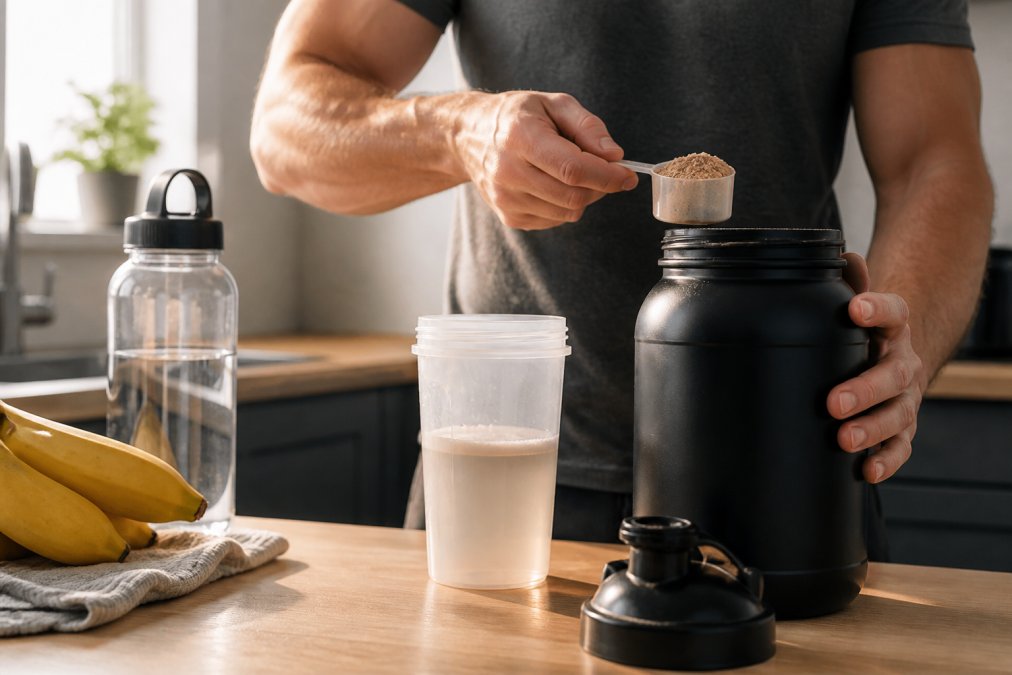
- Blend with frozen banana for natural sweetness and creaminess
- Add a teaspoon of cocoa powder to boost chocolate flavor without sugar
- Use milk instead of water for a richer base
- Drop in a date or two when blending for a caramel-like note
- Mix savory options into hot food rather than drinking them cold
Digestive Health: Avoiding Bloating and Discomfort
Bloating from protein powder usually traces to lactose, sugar alcohols, or a lack of digestive enzymes. Isolate-based whey removes most lactose. Formulas that skip erythritol and maltitol eliminate the sugar-alcohol trigger. Enzyme-fortified options address the third cause directly.
If you react badly to standard whey concentrate, switch to isolate first. If discomfort persists, look for added protease or a product like the enzyme-fortified vanilla whey above. Plant-based formulas with probiotics, such as Complete Meal Protocol, offer another path for dairy sensitivity.
The NIH's resource on dietary supplements recommends introducing any new supplement gradually to identify sensitivities. Start with half a scoop for the first few days.
Building muscle without wrecking your digestion or budget comes down to two habits: reading the back label and calculating cost per gram of protein. PureFitnessWarehouse.com stocks isolate-based formulas, enzyme-fortified whey, and plant-based meal replacements that skip artificial sweeteners entirely, with transparent pricing and third-party testing where it counts. Shop the protein collection at PureFitnessWarehouse.com and build your next training block on fuel that supports recovery.
Frequently Asked Questions
What is the best protein powder without artificial sweeteners?
The best option depends on your dietary needs and budget. For a pure whey isolate, PURE3 100% Whey Protein Isolate uses stevia and natural flavors, with no sucralose or aspartame. If you prefer plant-based, Complete Meal Protocol offers 21g of vegan protein with no artificial additives. For a savory option, Muscle Boosters White Cheddar Box provides 22g of protein per packet without added sugar. All three are third-party tested for quality.
What is the best cheap protein powder for muscle gain?
Affordable doesn't mean low quality. PURE3 100% Whey Protein Isolate (Vanilla) costs $40.75 and delivers fast-absorbing whey isolate for post-workout recovery. For a plant-based budget pick, Complete Meal Protocol at $29.99 includes 21g of protein plus digestive enzymes. Compare cost-per-serving: a 1.54 lb tub of Chocolate Whey Isolate at $59.99 provides roughly 20 servings, bringing each serving to about $3.00.
Is there a protein shake that doesn't use artificial sweeteners?
Yes. Many brands now sweeten with stevia leaf extract or monk fruit extract instead of sucralose or aspartame. For example, PURE3 100% Whey Protein Isolate uses stevia extract and natural flavors. Chocolate Whey Isolate Protein Powder contains only whey protein isolate, natural flavors, and stevia. Always check the ingredient list for terms like sucralose, acesulfame potassium, or aspartame to confirm.
Are stevia and monk fruit considered artificial sweeteners in protein powder?
No. Stevia and monk fruit are plant-based sweeteners, not artificial. Stevia comes from the leaves of the Stevia plant, and monk fruit extract is derived from a small melon. They provide sweetness without calories and do not have the same aftertaste as sucralose. The FDA recognizes both as generally safe. If you want to avoid artificial additives, stevia and monk fruit are good alternatives.
How can I tell if a protein powder contains artificial sweeteners?
Read the ingredient list on the label. Look for sucralose, aspartame, acesulfame potassium, or saccharin. These are the most common artificial sweeteners. If the label says 'natural flavors' and 'stevia extract' or 'monk fruit extract,' it's likely free of artificial sweeteners. Also check for sugar alcohols like erythritol or maltitol, which can cause bloating. Third-party tested products often list certifications like NSF Certified for Sport.