

Table of Contents
- How We Evaluated These Fitness Trackers
- Fitness Tracker Accuracy Comparison: Sensors, GPS, and Biometric Reliability
- Training Load and Recovery Metrics: What the Top Trackers Actually Measure
-
Top Fitness Trackers for Data-Driven Athletes: Ranked and Reviewed
- Garmin Forerunner 965: Best for Multisport GPS and Performance Analytics
- WHOOP 5.0: Best for 24/7 Recovery and Strain Monitoring
- Polar Vantage V3: Best for Elite Physiological Metrics
- Apple Watch Ultra 2: Best for Apple Ecosystem Athletes
- COROS Apex 2 Pro: Best Battery Life for Ultra-Endurance Athletes
- Oura Ring Gen3: Best for Discreet Recovery Tracking
- Fitbit Charge 6: Best Budget-Friendly Option with ECG
- How to Interpret Fitness Tracker Data for Smarter Training
- Which Fitness Tracker Should You Choose?
- Conclusion
Last Updated: August 7, 2026
Choosing the wrong fitness tracker leaves serious athletes training blind. At PureFitnessWarehouse.com, we've analyzed the best fitness trackers for data-driven athletes 2026, evaluating each device against metrics that matter: sensor accuracy, recovery analytics, GPS precision, and actionable training insights. Below, we rank seven top contenders.
Quick Picks:
- Best Overall GPS and Multisport: Garmin Forerunner 965, unmatched training analytics for serious competitors
- Best Recovery Monitoring: WHOOP 5.0, 24/7 physiological tracking without a screen
- Best Budget ECG Option: Fitbit Charge 6, ECG and GPS under $160
- Best for Apple Ecosystem: Apple Watch Ultra 2, premium durability with precision dual-frequency GPS
- Best Ultra-Endurance Battery: COROS Apex 2 Pro, outlasts every competitor in this list
How We Evaluated These Fitness Trackers
Our evaluation framework assessed each device across six criteria: biometric sensor reliability, GPS accuracy, sleep architecture analysis, training load calculations, battery longevity, and data interoperability. We prioritized devices delivering physiological metrics that serious athletes can act on, and weighted data ownership policies and API access heavily.
| Tracker | Best For | Battery Life | ECG | HRV | Price |
|---|---|---|---|---|---|
| Garmin Forerunner 965 | Multisport GPS | 23 days / 31 hrs GPS | No | Yes | ~$500-$600 |
| WHOOP 5.0 | 24/7 Recovery | Continuous (battery pack) | No | Yes | $199/yr |
| Polar Vantage V3 | Elite Physiology | Long | Yes | Yes | ~$700 |
| Apple Watch Ultra 2 | Apple Ecosystem | Extended (varies) | Yes | Yes | $799 |
| COROS Apex 2 Pro | Ultra-Endurance | Multi-day | No | Yes | $499 |
| Oura Ring Gen3 | Discreet Recovery | Up to 7 days | No | Yes | $299-$400 + sub |
| Fitbit Charge 6 | Budget ECG | ~7 days | Yes | Limited | $99-$160 |
Fitness Tracker Accuracy Comparison: Sensors, GPS, and Biometric Reliability
Sensor quality separates a useful training tool from an expensive pedometer. The most critical sensors are the optical heart rate sensor, accelerometer for cadence and stride length, and in premium devices, an electrocardiogram module for clinical-grade resting heart rate and atrial fibrillation detection.
Optical Heart Rate Sensors vs. ECG-Based Monitoring
Optical heart rate sensors use photoplethysmography to estimate heart rate continuously. They excel at resting heart rate and sleep tracking but lose accuracy during rapid intensity changes or high-impact activities.
ECG-based monitoring captures the heart's electrical activity directly. The Apple Watch Ultra 2, Polar Vantage V3, and Fitbit Charge 6 include ECG apps, providing clinically meaningful heart rhythm data optical sensors cannot replicate. For athletes managing cardiac health, this distinction is significant.
Multi-Frequency GPS and Elevation Gain Precision
Single-frequency GPS loses accuracy in canyons, dense tree cover, and urban environments. Multi-frequency GPS combining L1 and L5 signals dramatically reduces error. The Garmin Forerunner 965 uses multi-band positioning across GPS, Galileo, and GLONASS. The Apple Watch Ultra 2 uses precision dual-frequency GPS. The COROS Apex 2 Pro offers dual-band GPS with offline maps.
Elevation gain precision depends on barometric altimeters rather than GPS altitude. All premium devices include barometric altimeters, making them suitable for trail runners and cyclists where elevation data informs training load calculations.
Training Load and Recovery Metrics: What the Top Trackers Actually Measure
Training load quantifies physiological stress imposed by a workout. Recovery metrics assess how completely the body has adapted before the next stimulus. Sophisticated platforms calculate VO2 max, anaerobic threshold, and training effect scores distinguishing aerobic from anaerobic benefit.
HRV Monitoring and Readiness Scores
Heart rate variability is the most reliable non-invasive marker of autonomic nervous system recovery. Higher variability indicates better recovery; suppressed HRV signals accumulated fatigue or illness onset.
A readiness score synthesizes HRV, resting heart rate, sleep quality, and recent training load into a single daily number. WHOOP 5.0 and Oura Ring Gen3 use multi-night baselines rather than single-night snapshots, substantially reducing noise. The Garmin Forerunner 965 offers a training readiness score incorporating sleep, HRV status, recovery time, and acute training load.
Sleep Architecture and Recovery Analytics
Sleep architecture refers to cycling patterns of light sleep, deep sleep, and REM. Deep sleep drives physical tissue repair and growth hormone release; REM supports cognitive consolidation and stress regulation.
The Oura Ring Gen3 provides the most granular sleep staging with minute-by-minute temperature tracking. WHOOP 5.0 tracks sleep stages alongside respiratory rate and blood oxygen saturation. The Polar Vantage V3 offers sleep tracking with nightly recharge guidance. The Garmin Forerunner 965 provides sleep score breakdowns by stage.
Top Fitness Trackers for Data-Driven Athletes: Ranked and Reviewed
Garmin Forerunner 965: Best for Multisport GPS and Performance Analytics
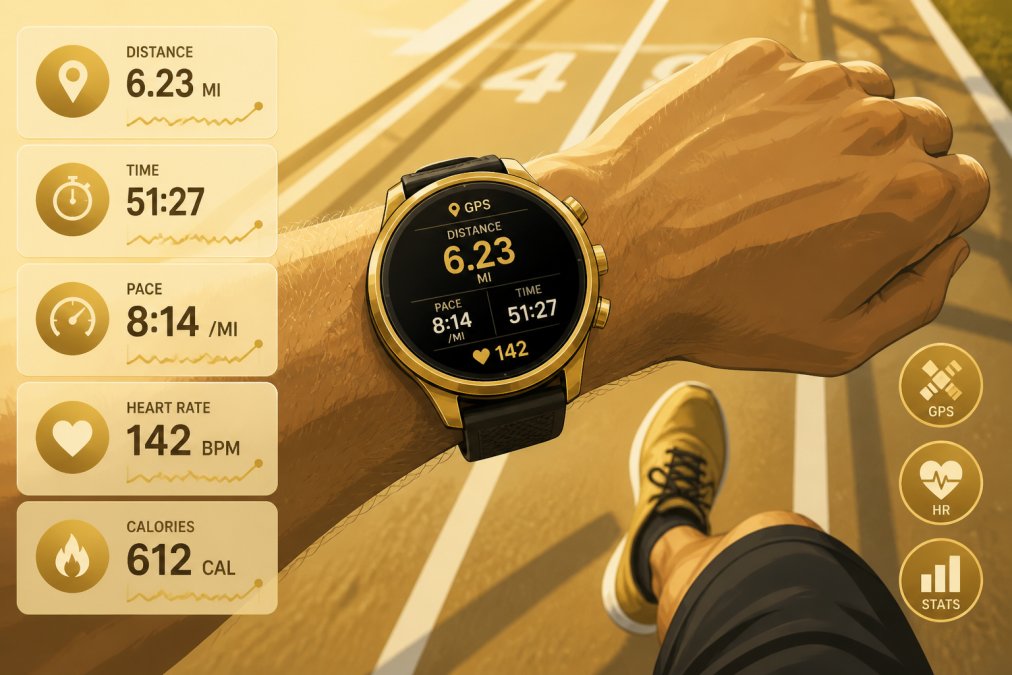
The Garmin Forerunner 965 is the most complete data platform for athletes competing across multiple disciplines. Its 1.4-inch AMOLED touchscreen delivers sharp analytics in direct sunlight. Multi-frequency GPS (GPS, Galileo, GLONASS) sets the standard for tracking accuracy. It calculates VO2 max, anaerobic threshold, training load balance, and daily training readiness. Built-in maps and turn-by-turn navigation make it a genuine navigation tool. Battery life reaches 23 days in smartwatch mode and 31 hours in GPS mode.
Pros: Exceptional GPS accuracy; comprehensive training load and recovery analytics; bright AMOLED display; built-in navigation
Cons: Higher price point; no ECG
Best for: Triathletes, runners, and cyclists wanting the deepest GPS and multisport analytics available.
WHOOP 5.0: Best for 24/7 Recovery and Strain Monitoring
WHOOP's screenless design eliminates notification interruptions and enables truly continuous biometric monitoring. It tracks strain, recovery, and sleep using HRV, resting heart rate, respiratory rate, blood oxygen saturation, and skin temperature. Any-Wear technology allows placement on bicep, wrist, or compatible apparel.
Its strength is longitudinal data trend analysis, surfacing weekly and monthly patterns revealing overtraining cycles most athletes miss in real time. The subscription model means lower upfront hardware cost but ongoing expenses accumulate.
Pros: Best-in-class recovery and sleep analytics; discreet screenless design; flexible wear positions; strong longitudinal data visualization
Cons: Requires continuous subscription; no on-device display; less detailed workout tracking than GPS watches
Best for: Athletes whose primary question is "am I recovered enough to train hard today?"
Polar Vantage V3: Best for Elite Physiological Metrics
The Vantage V3 includes ECG, optical heart rate tracking, skin temperature, and Polar's proprietary Orthostatic Test for autonomic nervous system assessment. The Orthostatic Test measures HRV during a structured lying-to-standing protocol, used in elite athletic programs. Combined with Training Load Pro and Muscle Load features, it provides physiological depth rivaling devices costing significantly more.
Pros: Elite heart rate accuracy; ECG; Orthostatic Test; comprehensive training load analysis
Cons: Higher price point; less intuitive interface; smaller app ecosystem
Best for: Serious endurance athletes and coaches prioritizing physiological precision.
Apple Watch Ultra 2: Best for Apple Ecosystem Athletes
The Apple Watch Ultra 2 is the most capable smartwatch and least specialized fitness tracker. Its 3,000-nit always-on LTPO2 OLED display is unmatched for outdoor visibility. Titanium case and sapphire crystal provide genuine durability. Precision dual-frequency GPS delivers accurate location tracking. Health sensors include optical heart rate, blood oxygen saturation, skin temperature, and ECG. Apple Health aggregates data across devices and apps; HealthKit provides API access for third-party integrations. The limitation is ecosystem lock-in, best suited for iPhone users.
Pros: Best display in category; ECG and advanced sensors; dual-frequency GPS; extensive third-party app ecosystem
Cons: Expensive; best for iPhone users only; shorter battery than dedicated GPS watches
Best for: iPhone-based athletes wanting a premium daily wearable with serious fitness tracking.
COROS Apex 2 Pro: Best Battery Life for Ultra-Endurance Athletes
The COROS Apex 2 Pro addresses battery longevity with multi-day GPS life outlasting every device in this comparison. Titanium bezel and sapphire glass match premium competitors on durability. Dual-band GPS with offline maps provides reliable navigation in areas without cell coverage. Training metrics include VO2 max, recovery advisor, and training load.
Pros: Outstanding battery life; reliable dual-band GPS with offline maps; durable titanium and sapphire construction
Cons: Display less vibrant than AMOLED competitors; fewer smartwatch features; smaller community ecosystem
Best for: Ultra-endurance athletes needing multi-day GPS tracking without recharging.
Oura Ring Gen3: Best for Discreet Recovery Tracking
The Oura Ring Gen3 is the most accurate sleep tracker in this comparison. Its ring form positions sensors directly over digital arteries, producing cleaner photoplethysmography data than most wrist-worn devices. Minute-by-minute skin temperature tracking detects early illness signs and recovery status changes. The readiness score synthesizes overnight data into daily recommendations.
Workout tracking is the weak point, no GPS and limited real-time coaching. It works best as a recovery-focused complement to a GPS watch.
Pros: Excellent sleep staging accuracy; discreet and comfortable ring design; strong readiness scoring; temperature tracking
Cons: No GPS; basic workout tracking; requires monthly subscription for full insights
Best for: Athletes wanting the most accurate passive recovery monitoring and already using a GPS watch.
Fitbit Charge 6: Best Budget-Friendly Option with ECG
The Fitbit Charge 6 makes ECG monitoring accessible at a fraction of premium device costs. Its machine-learning-enhanced optical heart rate sensor is Fitbit's most accurate. Built-in GPS removes phone dependency for distance tracking. Google integration adds practical smartwatch features: Google Maps, YouTube Music, Google Wallet. The EDA sensor for stress tracking combined with ECG gives meaningful cardiac and autonomic data without premium pricing.
Pros: ECG at accessible price; accurate heart rate; built-in GPS; Google integration
Cons: Advanced features need Premium subscription; smaller screen; less comprehensive training analytics
Best for: Athletes entering data-driven training wanting ECG and GPS without premium investment.
How to Interpret Fitness Tracker Data for Smarter Training
Raw data is only useful with a framework for interpretation. The most common failure is collecting months of analytics without understanding what numbers mean for your next training session.
Long-Term Data Trend Analysis: Spotting Patterns Over Weeks
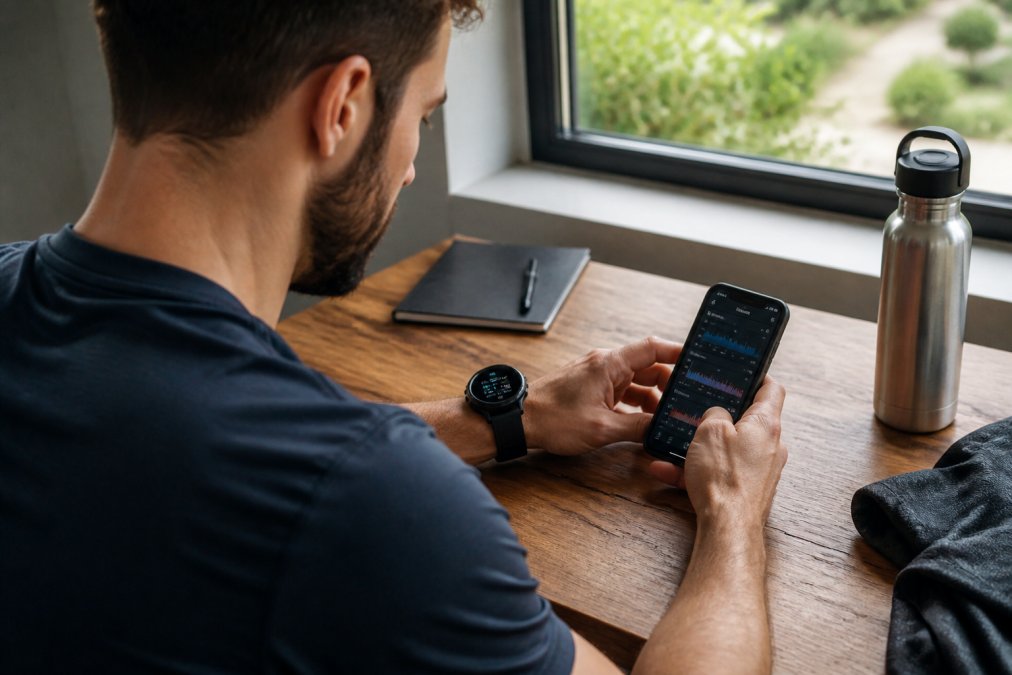
Single-day metrics are noisy. Long-term trend analysis over two to four weeks reveals signal beneath noise. Look for these patterns:
- Declining HRV trend over 10-14 days: Signals accumulated fatigue. Reduce training intensity before performance drops.
- Resting heart rate elevated 5+ beats above baseline for multiple consecutive days: Early indicator of overreaching or illness.
- Reduced deep sleep percentage during heavy training weeks: Body prioritizing physical recovery at cognitive restoration's cost.
- VO2 max plateau or decline despite consistent training: Training stimulus insufficient or recovery inadequate.
Data Interoperability, API Access, and Privacy
Data interoperability determines whether your training history is portable or permanently trapped in a single platform. Garmin Connect, Apple Health, and Polar Flow all offer data export and third-party integrations. Garmin's Connect IQ and Apple's HealthKit API allow developers building custom applications on your data. WHOOP provides a developer API for members enabling coaching platform and nutrition app integration.
COROS and Polar support Strava and TrainingPeaks sync, important for athletes using those platforms for training plan management. Fitbit's Google integration provides strong data portability through Google Health Connect.
Which Fitness Tracker Should You Choose?
The right choice depends on your primary training question, not the longest feature list.
Choose Garmin Forerunner 965 if GPS accuracy, multisport tracking, and training load analytics are priorities.
Choose WHOOP 5.0 if recovery optimization is your primary goal and you'll pay ongoing subscription for detailed 24/7 physiological monitoring.
Choose Polar Vantage V3 if you're a coached athlete or coach needing elite heart rate accuracy and physiological testing protocols.
Choose Apple Watch Ultra 2 if you're deep in the Apple ecosystem, need daily wearable durability, and value ECG alongside GPS.
Choose COROS Apex 2 Pro if you run ultras or multi-day trails requiring multi-day GPS tracking without recharging.
Choose Oura Ring Gen3 if sleep and recovery are your focus and you prefer a discreet non-wrist device complementing a separate GPS watch.
Choose Fitbit Charge 6 if building your first data-driven training practice and want ECG, GPS, and heart rate monitoring at accessible entry point.
The best fitness trackers surface actionable data rather than just collecting it. The device that improves your training is the one you'll wear consistently and interpret regularly.
Choosing the right fitness tracker is only one part of a data-driven training system. Recovery tools, training equipment, and nutritional support need to work together. PureFitnessWarehouse.com offers a curated selection of wearable trackers alongside specialized recovery solutions, training gear, and supplements designed to support every phase of your performance cycle. Shop PureFitnessWarehouse.com and build a complete training system around the data your tracker generates.
Frequently Asked Questions
What metrics should data-driven athletes track?
Data-driven athletes should prioritize heart rate variability, resting heart rate, training load, recovery score, sleep stages, VO2 max, blood oxygen saturation, and cadence. Tracking these physiological metrics together gives a complete picture of readiness and adaptation. Rather than chasing any single number, look for trends across multiple weeks. A consistently rising resting heart rate or declining HRV score, for example, often signals accumulated fatigue before you consciously feel it.
Are fitness trackers accurate enough for professional athletes?
Top-tier fitness trackers like the Garmin Forerunner 965 and Polar Vantage V3 deliver optical heart rate and GPS accuracy that is reliable for most training decisions. However, optical heart rate sensors can lose accuracy during high-intensity intervals or cold conditions. Wrist-based trackers are not a substitute for lab-grade VO2 max testing, but for daily training load monitoring, HRV trends, and sleep architecture analysis, they provide actionable data that serious athletes genuinely use.
How does HRV tracking help with athletic recovery?
Heart rate variability measures the variation in time between consecutive heartbeats. A higher HRV generally indicates the nervous system is well-recovered and ready for hard training. Trackers like WHOOP 5.0 and Oura Ring Gen3 calculate a daily readiness score based on HRV alongside sleep quality and resting heart rate. When HRV drops below your personal baseline for two or more consecutive days, that is a reliable signal to reduce intensity and prioritize recovery instead of pushing harder.
Which fitness tracker has the best data analysis app?
Garmin Connect offers the most comprehensive data visualization for athletes who want granular performance analytics, including training load charts, aerobic capacity trends, and elevation gain history. WHOOP's app excels specifically at recovery and strain coaching with clear daily recommendations. Polar Flow provides elite-level training load and physiological metrics breakdowns. The best app depends on your priority: GPS sport data favors Garmin, recovery focus favors WHOOP, and overall ecosystem convenience favors Apple Health.
Do I need a chest strap for accurate heart rate data?
For steady-state runs and recovery monitoring, wrist-based optical heart rate sensors on devices like the Garmin Forerunner 965 or Polar Vantage V3 are accurate enough for practical training decisions. During high-intensity interval training, sprint work, or heavy lifting, wrist sensors can lag or misread due to movement artifacts. If anaerobic threshold testing or precise interval pacing is your goal, pairing your watch with a chest strap transmitter will give more reliable beat-to-beat data.
This article was written using GrandRanker