

Table of Contents
- Why a Heart Rate Monitor Matters for Strength Training
- How Heart Rate Reveals Your Training Intensity
- Understanding Heart Rate Zones for Strength Training
- Chest Strap vs Smartwatch for Lifting: Which One Works Better
- Using Rest Time Between Strength Training Sets to Optimize Recovery
- Heart Rate Recovery Between Sets: What It Tells You
- Choosing the Right Heart Rate Monitor for Your Lifting Goals
- Common Mistakes When Using Heart Rate Data During Strength Training
- Frequently Asked Questions
Last Updated: October 16, 2026
Why a Heart Rate Monitor Matters for Strength Training
A heart rate monitor strength training tool reveals how hard your body is working during every set. Unlike cardio, where heart rate tells the whole story, lifting demands a different lens, but your heart rate still delivers critical insights about intensity, recovery, and whether you're actually building the adaptations you want.

A heart rate monitor bridges that gap. It transforms effort from a feeling into data.
Most strength athletes skip heart-rate tracking because they assume it's only for cardio. That assumption costs them. Your heart rate during a heavy squat set, during rest between lifts, and during recovery tells you whether your training load matches your recovery capacity. It shows you when you're pushing hard enough to drive adaptation, and when you're spinning your wheels.
The real value isn't the number itself. It's what the number tells you about whether your training is working.
How Heart Rate Reveals Your Training Intensity
Using a heart rate monitor strength training approach measures cardiovascular demand, which reflects overall training intensity. When you lift heavy, your heart rate spikes not just from the work, but from the nervous system activation and metabolic cost of moving weight.
Here's the disconnect most lifters miss: a heavy single at 90% of your max might elevate your heart rate less than a set of 15 reps at 60% max. Why? Heavier loads recruit more muscle fibers and spike your nervous system, but shorter duration limits total cardiovascular demand.
This matters because different training goals require different intensity profiles:
- Strength focus: Heavy loads, longer rest, moderate heart rate elevation
- Hypertrophy focus: Moderate loads, shorter rest, sustained heart rate elevation
- Endurance focus: Lighter loads, minimal rest, high sustained heart rate
Your heart rate during the set tells you whether you're matching the intensity profile to your goal. If you're chasing hypertrophy but your heart rate barely moves between sets, your rest periods are too long. If you're training for strength but your heart rate stays elevated throughout the session, you're not recovering enough between efforts.
A heart rate monitor makes this visible in real time. You stop guessing and start adjusting.
Understanding Heart Rate Zones for Strength Training
Heart rate zones divide your cardiovascular range into bands that correspond to training effects.
Zone 1 (50-60% max HR): Light activity. Recovery work, warm-ups, cool-downs. Your body is working but not stressed.
Zone 2 (60-70% max HR): Moderate intensity. Sustainable effort.
Zone 3 (70-80% max HR): Hard work. Elevated but manageable. Many lifters spend their main sets here, especially during moderate-rep ranges.
Zone 4 (80-90% max HR): Very hard. High demand. Heavy compounds or short-rest set schemes push you here. Your body is under significant stress.
Zone 5 (90-100% max HR): Maximum effort. Near-maximal or maximal work. Sprints, heavy singles, or high-intensity finishers land here.
For strength training, you don't need to live in Zone 5. In fact, many effective strength sessions spend more time in Zones 2-3 than in higher zones.
The mistake is treating zones as prescriptive rules instead of descriptive guides. Your zones tell you what's happening, not what should happen.
Chest Strap vs Smartwatch for Lifting: Which One Works Better
Chest straps and wrist-based monitors measure heart rate differently, and that difference matters during strength training.
Chest straps use electrocardiogram (ECG) sensors that detect electrical signals from your heart. They're highly accurate during steady-state activity because they measure the actual heartbeat.
Wrist-based monitors use optical sensors (usually green LEDs) that measure blood flow through the radial artery in your wrist. They're less affected by chest muscle activation, so they handle lifting better than chest straps in many cases.
For strength training specifically, wrist-based monitors often perform better because they avoid the chest-muscle-activation problem. However, accuracy depends on fit. A smartwatch worn too loose reads poorly. Worn snug, it tracks reasonably well.
The real-world choice: if you're doing heavy compound lifts with significant chest tension, a wrist-based monitor is usually more reliable. If you're doing isolation work or lower-body focused sessions, either works. The best monitor is the one you'll actually wear consistently.
PureFitnessWarehouse.com carries both options. The Smart Watch Fitness Tracker with Heart Rate and Blood Pressure Monitor at $43.60 offers wrist-based tracking at an accessible price point. For lifters wanting more features and longer battery life, the Fitness Tracker Smart Watch with AMOLED Display and 11-Day Battery at $527.83 provides advanced metrics and reliability during intense sessions.

Using Rest Time Between Strength Training Sets to Optimize Recovery
Rest intervals between sets directly control your heart rate trajectory. Longer rest allows your heart rate to drop. Shorter rest keeps it elevated. This relationship is fundamental to how training affects your body.
When you rest 3-5 minutes between heavy singles or doubles, your heart rate drops significantly. Your nervous system recovers. Your phosphocreatine system resets. This recovery is essential for maintaining strength and power on subsequent sets.
When you rest 60-90 seconds between moderate-load sets, your heart rate stays elevated. Your body never fully recovers between efforts. This sustained demand creates metabolic stress, which drives muscle growth. It's why shorter rest periods feel harder even though the weight is lighter.
Sports Bluetooth Call Long-Lasting Smart Watch →
Your heart rate during rest tells you whether your rest period matches your goal:
- Rest too short: Heart rate stays very high. You're accumulating fatigue faster than intended. Strength output will drop on later sets.
- Rest too long: Heart rate drops too much. You're not creating enough metabolic demand for hypertrophy. You're also spending unnecessary time in the gym.
- Rest just right: Heart rate drops enough to recover, but not so much that you lose training stimulus.
Most lifters guess at rest periods. A heart rate monitor removes the guesswork. If your goal is hypertrophy and your heart rate is still above 100 bpm at the start of your next set, you're maintaining the stimulus.
Track your rest-period heart rate for a week. You'll quickly learn what your body needs.
Heart Rate Recovery Between Sets: What It Tells You
Heart rate recovery, how fast your heart rate drops after a set ends, is a window into your cardiovascular fitness and recovery capacity.
A fast recovery (heart rate dropping 10-15 bpm within 30 seconds of finishing a set) signals good aerobic fitness and parasympathetic activation. Your body is efficiently returning to baseline. This is a positive sign that your conditioning work is paying off.
A slow recovery (heart rate staying elevated or dropping only 2-5 bpm in the same timeframe) suggests either high fatigue, poor aerobic fitness, or inadequate recovery between sessions. It doesn't mean something is wrong, but it's data worth noting.
During a strength session, monitor how your recovery rate changes:
- Set 1: Heart rate drops quickly. You're fresh.
- Set 5: Heart rate drops slowly. You're fatigued. This is normal.
- If recovery stays slow across all sessions: You may need more recovery days or reduced training volume.
Recovery rate also reveals overtraining.
A heart rate monitor transforms this invisible signal into actionable data. You stop guessing whether you're recovered and start knowing.
Choosing the Right Heart Rate Monitor for Your Lifting Goals
The right monitor depends on your priorities: accuracy, battery life, features, and price.
For lifters on a budget, the Waterproof Fitness Tracker Smartwatch with Heart Rate Monitor and Color Screen at $29.90 delivers basic heart rate tracking with 10-day battery life. It's waterproof and tracks multiple exercise modes including strength training. For consistent, no-frills monitoring during lifting sessions, this works.
For serious lifters wanting comprehensive data, the Sports Bluetooth Call Long-Lasting Smart Watch at $273.60 offers over 21 days of battery life and an AMOLED display. Extended battery means you're not charging mid-week. The larger display makes reading your metrics mid-session easier.

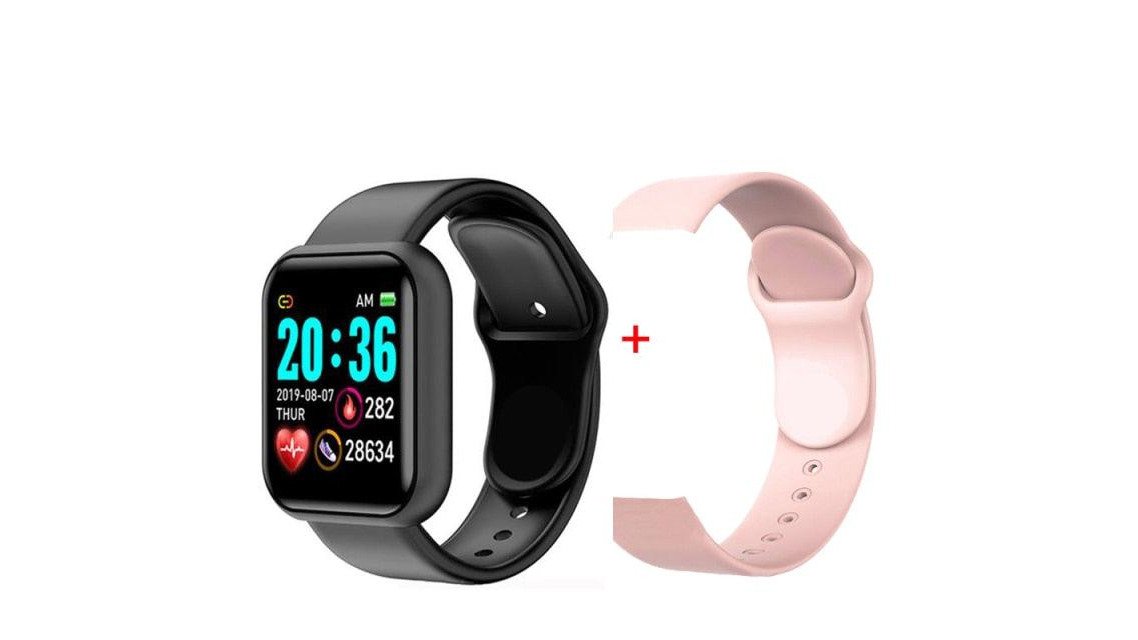
The choice comes down to these questions:
- How often do you train? Daily lifters benefit from longer battery life. Training 3-4 times per week? Budget models suffice.
- Do you need other metrics? Some monitors track blood pressure, sleep, or stress. Others focus purely on heart rate and activity. Decide what matters to your goals.
- Will you wear it outside the gym? If you want a monitor that doubles as daily wear, invest in a quality smartwatch. If it's gym-only, a basic model works fine.
- Do you need real-time feedback? A larger, brighter display matters if you're checking your heart rate between sets. A smaller screen is fine if you review data after training.
Start with what fits your budget and your use case. You can always upgrade later.
Common Mistakes When Using Heart Rate Data During Strength Training
The most common mistake is treating heart rate as the primary measure of training intensity. It's not. Load, volume, and movement quality matter more. Heart rate is supplementary data.
A second mistake is ignoring context. A heart rate of 130 bpm means something different in set 1 versus set 8.
Many lifters also chase high heart rates, thinking that elevated HR equals better training. Wrong.
Another error: assuming your maximum heart rate is 220 minus your age. That formula is rough and often inaccurate. Some people have genetic variation that makes their true max 10-20 bpm different from the formula predicts.
Finally, don't obsess over zones. Zones are useful guides, not laws. Your body doesn't know it's supposed to stay in Zone 3. Train according to your goals and your programming.
The goal isn't perfect heart rate management. It's using heart rate as one tool among many to understand whether your training matches your intent.
A heart rate monitor transforms how you understand your strength training. At PureFitnessWarehouse.com, we stock wearables designed to capture this data reliably during intense lifting, from budget-friendly options like our Waterproof Fitness Tracker to premium models with extended battery life.
| Monitor Type | Best For | Key Feature | Price Range |
|---|---|---|---|
| Budget Smartwatch | New lifters, occasional training | 10-day battery, basic tracking | $29.90 |
| Mid-Range Smartwatch | Regular lifters, daily wear | Balanced features, 5-7 day battery | $43.60 |
| Premium Smartwatch | Serious athletes, comprehensive data | 21+ day battery, advanced metrics | $273.60+ |
According to American Heart Association guidelines on exercise and cardiovascular health, understanding your heart rate response during training helps you optimize intensity for your specific goals. Research from Journal of Sports Sciences on heart rate monitoring in resistance training shows that lifters who track rest-period recovery improve their training consistency. The American College of Sports Medicine recommendations for exercise prescription emphasize that monitoring cardiovascular response during strength work provides valuable feedback for program adjustment.
Frequently Asked Questions
Do you really need a heart rate monitor for strength training?
A heart rate monitor isn't mandatory, but it provides valuable data that barbell numbers alone cannot show. It reveals how hard your cardiovascular system is working, helps you manage rest intervals between sets, and tracks recovery patterns. This real-time feedback lets you adjust training intensity, prevent overtraining, and make smarter decisions about when you're ready for the next set or session. For lifters focused on performance and recovery optimization, the data justifies the investment.
What should your heart rate be during strength training?
Heart rate during strength training depends on your goal and exercise type. Heavy compound lifts (squats, deadlifts) typically elevate heart rate to 60-85% of your maximum, while lighter accessory work may stay at 50-70%. There's no single 'correct' number, the key is understanding your baseline and tracking how your heart rate changes across different rep ranges and rest periods. Recovery between sets is more telling than peak exertion; a slower return to baseline signals better conditioning and readiness for the next set.
Should you use a chest strap or a smartwatch for strength training?
Chest straps measure electrical signals directly from your heart. Smartwatches are more convenient for everyday wear and tracking multiple metrics. For casual tracking and all-day wear, a smartwatch like the Garmin Vivoactive 5 ($527.83) balances convenience with solid accuracy. Many lifters use both.
How can heart rate data help you manage rest between sets?
Watch your heart rate recovery between sets to gauge nervous system readiness. If your heart rate drops 10-15 beats per minute within 60 seconds of finishing a set, you're recovering well and ready for the next one. If it's still elevated after 90 seconds, your body needs more rest. This approach removes guesswork from rest intervals and helps you match recovery time to your actual physiological state, not just a timer. Over time, faster recovery between sets signals improved cardiovascular fitness and training adaptation.