

Table of Contents
- How to Build a Home Gym on Budget: Start Here
- Best Budget Home Gym Equipment for Beginners
- Home Gym vs Gym Membership Cost Analysis
- Minimalist Home Gym Setup for Small Spaces
- Space Planning and Room Measurements
- Gradual Equipment Acquisition and Progressive Overload
- Safety, Maintenance, and Longevity
- Your Home Gym Journey Starts Now
- Frequently Asked Questions
Last Updated: September 1, 2026
How to Build a Home Gym on Budget: Start Here
Building a home gym on budget doesn't require expensive equipment or a dedicated space. You need a clear plan, smart purchasing decisions, and equipment that delivers results without breaking the bank. At PureFitnessWarehouse.com, we offer a comprehensive selection of fitness essentials designed to fuel your ambition.
The real challenge isn't finding cheap equipment, it's finding equipment that lasts, performs, and scales with your fitness journey. Many people buy the wrong items first, waste money on duplicates, and end up with a closet full of gear they never use. This guide walks you through building a home gym on budget that actually works.
Here's what we'll cover: essential equipment for beginners, cost comparisons with gym memberships, strategies for small spaces, how to acquire gear gradually, and maintenance tips that extend equipment lifespan. By the end, you'll have a concrete plan to start training today without overspending.
Best Budget Home Gym Equipment for Beginners
The foundation of any home gym on budget starts with multi-functional equipment that covers the most common exercises. You don't need 15 different machines, you need pieces that let you perform dozens of movements with minimal space and maximum versatility.
Adjustable Dumbbells and Weight Sets
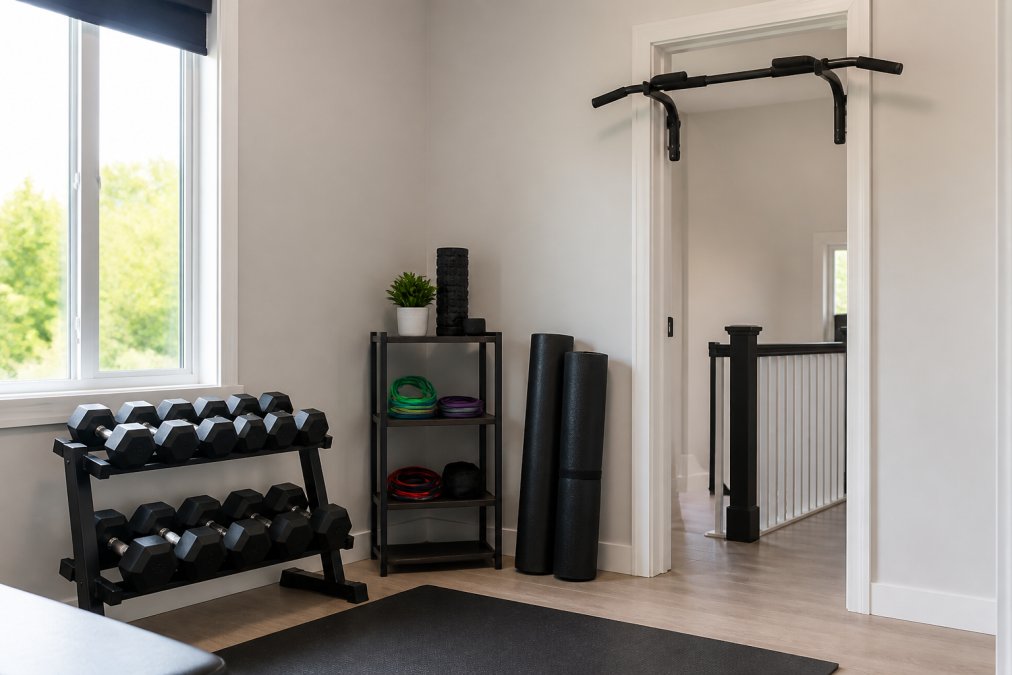
Adjustable dumbbells are the single best investment for a home gym on budget. A traditional dumbbell rack requires space for 10-15 pairs of fixed weights. Adjustable dumbbells replace all of them with one compact piece that adjusts from 5 pounds to 50+ pounds per hand.
The Portable Weight Barbell Set from PureFitnessWarehouse.com offers exactly this flexibility at $1,011.99. It supports both dumbbell and barbell-style training, stores easily in a closet or under a bed between sessions, and handles progressive overload, the principle of gradually increasing weight to build strength over time (peer-reviewed research). This is non-negotiable for long-term progress.

Why adjustable dumbbells matter: they let you perform every upper body exercise (bench press variations, rows, shoulder presses, curls) and lower body accessory work (lunges, goblet squats) without needing a garage full of iron. The knurling on quality dumbbells provides grip security during heavy lifts, and their durable construction means they'll outlast cheaper alternatives by years.
Budget alternative approach: if adjustable dumbbells feel expensive upfront, start with a single pair in a moderate weight (15-25 pounds) and add a second pair in a heavier weight later. This spreads the cost while still giving you functional equipment.
Pull-Up Bars and Resistance Bands
A pull-up bar mounted in your doorway costs under $100 and unlocks back, shoulder, and arm development that dumbbells alone can't provide. The Sports Products Fitness Equipment Indoor Pull-Up Bar at $54.99 uses heavy-duty steel pipe construction and fits standard doorframes without installation.
Resistance bands complement dumbbells by adding variable resistance, the band gets harder as you stretch it, forcing your muscles to work harder at the peak of each movement. A set of resistance bands costs $20-40 and takes up almost no space. They're portable, durable, and work for every muscle group.
Common mistake: buying a pull-up bar and never using it because you can't do a full pull-up yet. Start with resistance bands looped around the bar to reduce the load, then gradually use thinner bands as you get stronger. This is progressive overload in action.
Weight Benches and Flooring
An adjustable weight bench transforms your training options. The New Upgraded Multi-function Weightlifting Bench at $755.99 from PureFitnessWarehouse.com adjusts through multiple positions (flat, incline, decline) and functions as a dumbbell bench, Roman chair, and ab training platform. Quality matters here, a flimsy bench collapses under heavy loads and creates injury risk.
Flooring deserves attention most beginners skip. Rubber mats protect your floor from dropped weights, reduce noise (critical in apartments), and provide stability during standing exercises (the CDC). Mats also extend equipment lifespan by preventing corrosion and wear. Budget $50-100 for basic rubber flooring that covers your main training area.
Why this matters: a solid bench and protective flooring prevent expensive damage to your home and allow you to train harder without worrying about making noise or damaging surfaces.
Home Gym vs Gym Membership Cost Analysis
The decision between a home gym on budget and a traditional gym membership comes down to long-term cost, convenience, and commitment. Most people underestimate how much they'll save by training at home.
A typical gym membership costs $30-80 per month, or $360-960 annually (ihrsa.org). Over five years, that's $1,800-4,800 before annual price increases. A basic home gym on budget costs $800-1,500 upfront and requires zero monthly fees. You break even in 12-18 months, then save money every month after.
Beyond cost, consider convenience. A home gym eliminates commute time, eliminates waiting for equipment, and lets you train at 5 AM or 11 PM without restrictions. This matters more than most people realize, the gym that's most convenient is the one you'll actually use.
The trade-off: home gyms lack the social environment and professional guidance of a commercial gym. If community and coaching are essential to your motivation, a membership might deliver better results despite higher cost. But for pure strength training and conditioning, a home gym on budget wins on both cost and efficiency.
Minimalist Home Gym Setup for Small Spaces
Building a home gym on budget in a 400-square-foot apartment requires ruthless prioritization. You can't have everything, so you focus on equipment that delivers 80% of results with 20% of the space.
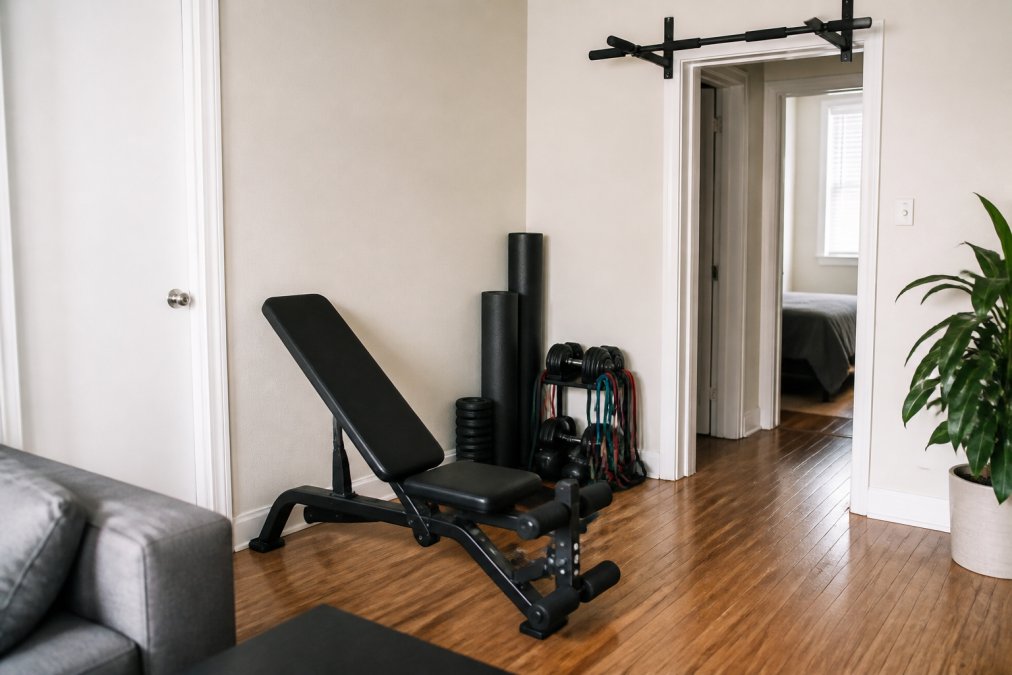
The minimalist approach: one pair of adjustable dumbbells (20-35 pounds), one pull-up bar, one set of resistance bands, and a foldable bench. This entire setup occupies less than 20 square feet when not in use and costs under $400 if you buy used or choose entry-level options.
Foldable and collapsible equipment is your friend in small spaces. Look for benches that fold against a wall, resistance bands that coil into a small bag, and dumbbells that stack vertically. The ONETWOFIT Pull Up Bar at $99.07 adjusts to fit door frames 24-36 inches wide and requires no wall drilling, making it ideal for renters and small apartments.
Storage solutions matter. Wall-mounted shelves hold dumbbells and bands. A closet rod stores resistance bands. A corner becomes your training zone with minimal permanent changes. Many people successfully train in spaces smaller than a walk-in closet by using vertical storage and equipment that serves multiple purposes.
The constraint is actually an advantage: you're forced to focus on compound movements (squats, presses, rows, deadlifts variations) that build the most muscle and strength. Isolation exercises and machines are nice-to-haves, not necessities.
Space Planning and Room Measurements
Before buying anything, measure your training space and plan equipment placement. Most people buy equipment first and realize it doesn't fit, a costly mistake.
Start with these measurements:
- Ceiling height (pull-up bars need 7+ feet of clearance)
- Floor space for standing exercises (6x6 feet minimum for comfortable movement)
- Doorway width (for pull-up bar installation)
- Wall space (for storage or equipment mounting)
- Existing furniture and traffic patterns
Map this on paper or use a simple sketch. Mark where your bench will sit, where you'll do standing exercises, and where storage will go. This prevents impulse purchases that don't fit your actual space.

Common mistake: buying a power rack (6x6 feet footprint) for a small apartment. A power rack is excellent for serious lifters but requires dedicated floor space. For small spaces, stick with adjustable dumbbells, a pull-up bar, and a foldable bench.
Vertical storage is critical in small spaces. Wall-mounted pull-up bars, hanging resistance bands, and shelving for dumbbells keep your floor clear and your space functional for other activities. A home gym on budget in a small space is only successful if it doesn't dominate the room.
Gradual Equipment Acquisition and Progressive Overload
The best home gym on budget is built slowly, not all at once. Starting with three essential pieces and adding equipment as you progress prevents waste and lets you learn what you actually use.
Month 1-2: Buy adjustable dumbbells and a pull-up bar. Train with these two pieces for 6-8 weeks. You'll discover which exercises you enjoy and which gaps exist in your training.
Month 3-4: Add a weight bench and resistance bands based on what you learned. Now you have four functional pieces covering every major movement pattern.
Month 5+: Add specialty equipment (kettlebells, barbell with plates, foam rollers) only if you've used the basics consistently and identified specific needs.
This approach saves money because you avoid buying equipment you won't use. It also lets you spread costs across several months instead of one large expense. Progressive overload, gradually increasing weight or difficulty, is how you build strength and muscle. The equipment enables this; the consistency and effort create results.
Many lifters make this mistake: they buy a complete home gym on budget upfront, use it intensely for 2-3 months, then stop. The equipment sits unused. By building gradually, you stay committed because you're investing in what you've proven you'll use.
Safety, Maintenance, and Longevity
Budget equipment often gets a bad reputation for durability. The reality is more nuanced: cheap equipment fails, but mid-range equipment lasts decades if maintained properly.
Safety first: inspect equipment before every session. Check dumbbells for cracks, benches for wobbly legs, and pull-up bars for rust or damage. A $50 dumbbell isn't worth a dropped weight on your foot. Replace damaged equipment immediately.
Maintenance extends lifespan dramatically. Clean metal surfaces with a dry cloth after sweaty sessions, sweat causes corrosion. Store equipment in a dry space (not a damp garage). Apply light machine oil to moving parts annually. Rubber mats should be rinsed occasionally and allowed to dry fully.
The resale value of home gym equipment is surprisingly good. Quality adjustable dumbbells, benches, and barbells hold 50-70% of their original value on the second-hand market. This means your $1,500 initial investment in a home gym on budget might sell for $750-1,000 if you ever decide to quit. Compare this to a $500/year gym membership with zero resale value.
Common mistake: storing equipment in uncontrolled environments (unheated garages, basements with moisture). Temperature swings and humidity damage metal plates and rubber components. A climate-controlled closet or spare room extends equipment life by years.
Floor protection matters more than most people realize. Dropping dumbbells or barbells on hardwood or tile causes expensive damage. Rubber mats aren't just for noise reduction, they're protection. A $100 mat investment prevents $1,000+ in floor repairs.
| Maintenance Task | Frequency | Impact |
|---|---|---|
| Inspect equipment for damage | Before each session | Prevents injury |
| Wipe down metal surfaces | After each session | Prevents rust and corrosion |
| Check bench stability | Weekly | Prevents collapse under load |
| Apply machine oil to moving parts | Annually | Keeps hinges and adjusters smooth |
| Replace worn rubber mats | Every 3-5 years | Maintains floor protection and stability |
Your Home Gym Journey Starts Now
Building a home gym on budget is one of the best fitness decisions you can make. You gain control over your training schedule, eliminate commute time, and save thousands of dollars compared to gym memberships. The constraint of limited space and equipment forces you to focus on what matters: progressive overload, consistent effort, and compound movements.
Start small. Pick up adjustable dumbbells and a pull-up bar this month. Add a bench and resistance bands next month. Train consistently with what you have. Let your equipment collection grow based on what you actually use, not what Instagram fitness accounts tell you to buy.
The second-hand market for fitness equipment is strong, check local listings for used dumbbells, benches, and barbells at 30-50% below retail prices. This stretches your budget further and lets you experiment with different equipment types before committing to new purchases.
At PureFitnessWarehouse.com, we understand that building a home gym on budget requires thoughtful equipment selection and realistic planning. Our curated catalog includes the adjustable dumbbells, pull-up bars, and weight benches that deliver results without premium pricing. Start with the Portable Weight Barbell Set or the ONETWOFIT Pull Up Bar, add the New Upgraded Multi-function Weightlifting Bench as your training evolves, and build the strength training setup that fits your space and goals. Shop our collection and create the home gym on budget that actually works for your life.

=== FAQ ANSWERS (audit these too, same rules) ===
[1] Q: What is the minimum budget to start a home gym? A: You can start a functional home gym for $300-500 by prioritizing adjustable dumbbells, a pull-up bar, and resistance bands. The Portable Weight Barbell Set ($1,011.99) offers a complete barbell setup if you want strength training from day one. Budget-conscious beginners often start with bodyweight exercises, a doorway pull-up bar ($54.99-$99.07), and resistance bands, then add equipment as their fitness commitment grows.
[2] Q: Is it cheaper to build a home gym or get a gym membership? A: A home gym typically breaks even within 12-18 months compared to a gym membership. If you invest $800-1,200 upfront, you'll save money after paying roughly $50-100 monthly for a commercial gym membership. Home gyms eliminate commute time, offer 24/7 access, and require no ongoing fees after the initial purchase. The real advantage emerges in years 2-3 when your equipment generates zero additional cost.
[3] Q: What equipment do I actually need to build strength at home? A: Essential strength training equipment includes adjustable dumbbells or weight plates, a barbell (if doing compound lifts), a bench press option, and a pull-up bar for upper body work. The Portable Weight Barbell Set provides barbell training capability in a compact footprint. Add resistance bands for variety and joint-friendly alternatives. Bodyweight exercises like push-ups, squats, and planks complement this core setup, allowing progressive overload as you gain strength.
[4] Q: How do I maximize a minimalist home gym setup in a small space? A: Choose multi-functional equipment: adjustable dumbbells replace 15+ fixed dumbbells, resistance bands serve multiple purposes, and a doorway pull-up bar requires no floor space. Stack equipment vertically on shelves or wall-mounted racks. Use collapsible or foldable benches that store under beds. Rubber mats protect floors and can be rolled up after workouts. This approach delivers full-body strength training in 50-100 square feet, perfect for apartments or small rooms.
[5] Q: Should I buy used or new home gym equipment? A: Used equipment saves 30-50% compared to new prices, making it ideal for budget-conscious builders. Buy used for fixed dumbbells, weight plates, and benches from local marketplaces. Purchase new adjustable equipment, pull-up bars, and safety-critical items like benches with adjustable backs to ensure proper function and durability. Used barbell plates hold value well, but inspect for rust, cracks, or bent bars. New equipment often includes warranties and guarantees proper weight specifications.
[6] Q: What maintenance keeps budget home gym equipment durable? A: Protect weight plates and barbells from rust by storing them in a dry space and wiping moisture after workouts. Use rubber flooring or mats to prevent floor damage and reduce noise. Check pull-up bar mounting hardware monthly for tightness. Clean resistance bands after use and store away from direct sunlight to prevent degradation. Inspect benches for loose bolts before each session. Proper maintenance extends equipment life by 5-10 years, maximizing your initial investment.
Frequently Asked Questions
What is the minimum budget to start a home gym?
You can start a functional home gym for $300-500 by prioritizing adjustable dumbbells, a pull-up bar, and resistance bands. The Portable Weight Barbell Set ($1,011.99) offers a complete barbell setup if you want strength training from day one. Budget-conscious beginners often start with bodyweight exercises, a doorway pull-up bar ($54.99-$99.07), and resistance bands, then add equipment as their fitness commitment grows.
Is it cheaper to build a home gym or get a gym membership?
A home gym typically breaks even within 12-18 months compared to a gym membership. If you invest $800-1,200 upfront, you'll save money after paying roughly $50-100 monthly for a commercial gym membership. Home gyms eliminate commute time, offer 24/7 access, and require no ongoing fees after the initial purchase. The real advantage emerges in years 2-3 when your equipment generates zero additional cost.
What equipment do I actually need to build strength at home?
Essential strength training equipment includes adjustable dumbbells or weight plates, a barbell (if doing compound lifts), a bench press option, and a pull-up bar for upper body work. The Portable Weight Barbell Set provides barbell training capability in a compact footprint. Add resistance bands for variety and joint-friendly alternatives. Bodyweight exercises like push-ups, squats, and planks complement this core setup, allowing progressive overload as you gain strength.
How do I maximize a minimalist home gym setup in a small space?
Choose multi-functional equipment: adjustable dumbbells replace 15+ fixed dumbbells, resistance bands serve multiple purposes, and a doorway pull-up bar requires no floor space. Stack equipment vertically on shelves or wall-mounted racks. Use collapsible or foldable benches that store under beds. Rubber mats protect floors and can be rolled up after workouts. This approach delivers full-body strength training in 50-100 square feet, perfect for apartments or small rooms.
Should I buy used or new home gym equipment?
Used equipment saves 30-50% compared to new prices, making it ideal for budget-conscious builders. Buy used for fixed dumbbells, weight plates, and benches from local marketplaces. Purchase new adjustable equipment, pull-up bars, and safety-critical items like benches with adjustable backs to ensure proper function and durability. Used barbell plates hold value well, but inspect for rust, cracks, or bent bars. New equipment often includes warranties and guarantees proper weight specifications.
What maintenance keeps budget home gym equipment durable?
Protect weight plates and barbells from rust by storing them in a dry space and wiping moisture after workouts. Use rubber flooring or mats to prevent floor damage and reduce noise. Check pull-up bar mounting hardware monthly for tightness. Clean resistance bands after use and store away from direct sunlight to prevent degradation. Inspect benches for loose bolts before each session. Proper maintenance extends equipment life by 5-10 years, maximizing your initial investment.
This article was written using GrandRanker