

Table of Contents
- Measure and Plan Your Workout Zone in a Small Bedroom
- Clear and Declutter Your Bedroom Workout Area
- Small Bedroom Home Gym Ideas: Layout and Arrangement
- Small Space Workout Equipment: Compact Options That Work
- Bedroom Workout Storage Ideas: Restore Your Room After Exercise
- Workouts for Small Spaces: Bodyweight and Limited-Equipment Routines
- Safety, Noise, and Environment: Bedroom-Specific Considerations
- Design and Motivation: Make Your Workout Zone Inviting
- Frequently Asked Questions
Last Updated: October 10, 2026
Measure and Plan Your Workout Zone in a Small Bedroom
Learning how to create a workout zone in a small bedroom starts with honest measurements. You need to know exactly how much space you have before you buy equipment or move furniture around.
Calculate Your Movement Footprint
The first step is figuring out your actual workout footprint. This is the space your body needs to move safely without hitting walls, furniture, or the ceiling.
Stand in your bedroom and do a few basic movements. Reach your arms overhead. Step forward and back. Do a small squat. Mark the boundaries of where your body travels during these motions.
Most people need a rectangle about 6 feet long and 4 feet wide for basic bodyweight exercises. If you plan to do jumping movements or use a jump rope, add another foot of clearance in all directions. A yoga mat typically measures 24 inches by 72 inches, which gives you a solid reference point for floor space.
Write down these measurements:
- Length of usable floor space
- Width of usable floor space
- Distance from floor to lowest ceiling obstruction
- Distance from your planned workout area to walls and furniture
Account for Ceiling Height and Wall Space
Ceiling height matters more than most people realize. If you're planning to do overhead presses, jump rope, or any movement where your arms go above your head, you need at least 12 inches of clearance above your fingertips.
Measure from the floor to the ceiling in your planned workout zone. If you have 8-foot ceilings (standard in most homes), you have roughly 96 inches of vertical space. Subtract your height plus 12 inches.
Wall space is equally important. Can you mount a mirror? Do you have room for wall-mounted storage? Is there a corner where you could tuck resistance bands or a yoga mat?

Create a simple sketch of your bedroom layout. Mark the bed, dresser, closet, and any other permanent fixtures. Then draw your proposed workout zone. This visual plan prevents mistakes before you start rearranging.
Clear and Declutter Your Bedroom Workout Area
A cluttered bedroom won't become a functional workout space, it'll just become a cluttered bedroom with exercise equipment in it.
Start by removing everything from your planned workout zone. This means moving the nightstand, clearing the floor, and temporarily relocating any items stored under the bed in that area.
Be ruthless. If something doesn't serve your sleep or your workouts, it doesn't belong in this zone. Bedroom clutter creates visual noise that undermines motivation.
Next, think about traffic flow. You need a clear path from your bedroom door to your workout zone. If you have to step over items to reach your exercise space, you've created friction.
Once your zone is clear, vacuum or sweep it. A clean floor is safer and more inviting.
Small Bedroom Home Gym Ideas: Layout and Arrangement
How you arrange your space determines whether your small bedroom home gym feels functional or cramped.
Corner and Wall Placement Strategies
Corners are your best friend in a small bedroom. A corner naturally defines your workout zone and uses space that's otherwise wasted.

Place a yoga mat in one corner. Position a wall mirror on the wall adjacent to the corner, this gives you feedback on your form without taking up floor space. Hang resistance bands on a hook above the mat or on the wall beside it.
If you have a second corner, use it for storage. This keeps your equipment organized and your main workout area clear.
Against a wall (not in a corner), you can add a simple bench or a storage shelf. The key is keeping everything vertical when possible. Wall-mounted solutions free up your floor space for movement.
Vertical Storage to Maximize Floor Space
Vertical storage is non-negotiable in a small space. Every inch of wall space is real estate.
Install simple wall hooks for resistance bands, jump ropes, and towels. A tension rod mounted between two walls can hold multiple resistance bands. Over-the-door organizers work well for smaller items.
Wall-mounted shelves keep equipment visible and accessible. You're more likely to use what you can see and reach easily. Avoid stacking items in deep storage, out of sight becomes out of mind.
Consider a pegboard on one wall. It's affordable, flexible, and lets you customize your storage layout as your equipment collection grows.
Small Space Workout Equipment: Compact Options That Work
Not all equipment works in a small bedroom. You need tools that deliver results without dominating your space.
Essential Compact Equipment by Budget and Goal
For strength work on a tight budget: Resistance bands are the MVP of small-space training. They're portable, affordable, and effective.
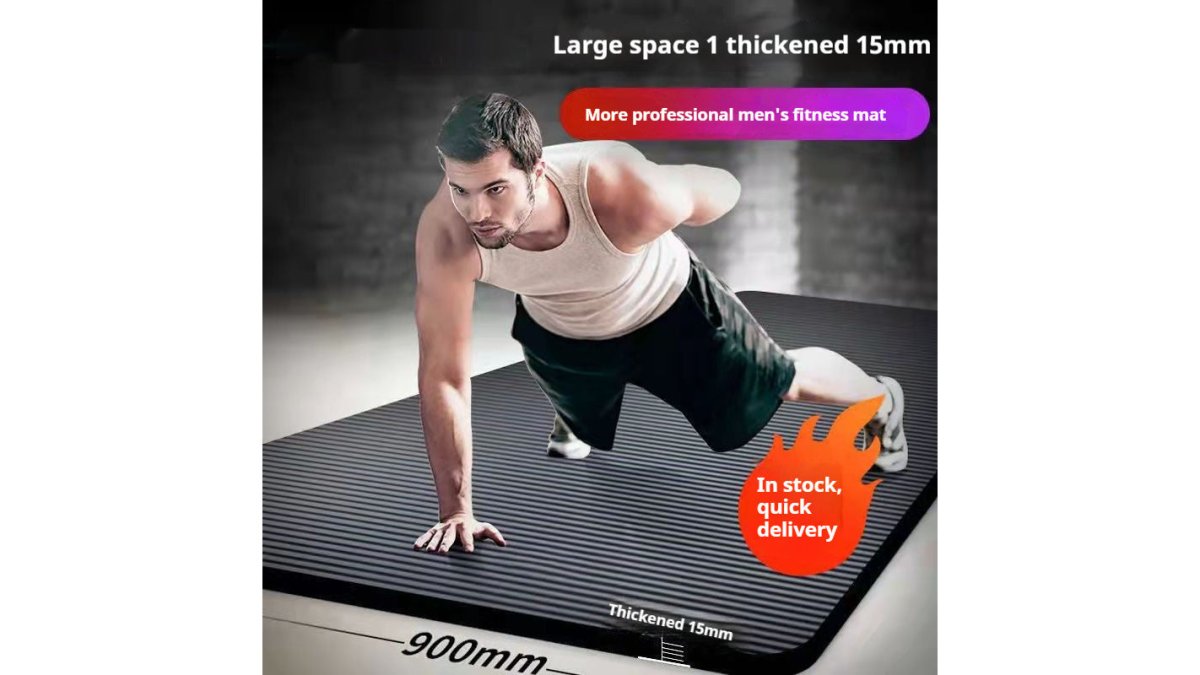
For flexibility and core work: A quality yoga mat is essential. The Fitness Yoga Mat from PureFitnessWarehouse.com is 10mm thick, measuring 61 by 183 centimeters, which provides cushioning for floor work without consuming excessive storage space.
For cardio in a confined space: A jump rope is compact and effective. The Jump Rope Mat Larger Non-Slip Indoor Outdoor Exercise Fitness Mat from PureFitnessWarehouse.com is specifically designed for rope jumping indoors.

For bodyweight training: You don't need equipment. Your body is enough. But if you want to add difficulty, resistance bands and a pull-up bar (mounted in a doorframe) work well.
Start with one or two pieces of equipment. Master those before adding more. A cluttered small bedroom home gym defeats the purpose.
Bedroom Workout Storage Ideas: Restore Your Room After Exercise
The secret to maintaining a small bedroom workout space is being able to restore it to a bedroom when you're done exercising.
Foldable and Multifunctional Furniture
A yoga mat rolls up into a cylinder about 10 inches in diameter and 24 inches long. Store it vertically in a corner or under the bed. When you're done, it takes 30 seconds to roll it up and put it away.
Resistance bands fold flat and fit in a small bag. A jump rope coils into a compact bundle. The key is choosing equipment that doesn't demand permanent real estate.
Avoid heavy, stationary equipment like weight racks or machines. These tools are incompatible with a bedroom that needs to function as a bedroom.
Under-Bed and Wall-Mounted Storage Solutions
Under-bed storage is underutilized in small spaces. A flat storage container slides under your bed and holds rolled mats, towels, or smaller equipment. When guests visit, your workout gear is invisible.
Wall-mounted shelves keep items off the floor and organized. A simple shelf 12 inches wide and 24 inches long can hold multiple rolled mats and storage bins.
Hooks on the back of your bedroom door hold resistance bands, towels, or a jump rope. This uses space that's otherwise wasted.
Workouts for Small Spaces: Bodyweight and Limited-Equipment Routines
Your small bedroom home gym doesn't need fancy equipment to deliver results. Bodyweight exercises work everywhere.
Full-Body Bodyweight Routines
A complete full-body workout in a small space takes 30 minutes and requires zero equipment.
Do these movements in sequence with 30 seconds rest between exercises:
- Push-ups (3 sets of 8-12 reps)
- Bodyweight squats (3 sets of 15 reps)
- Glute bridges (3 sets of 12 reps)
- Plank holds (3 sets of 30-60 seconds)
- Lunges, alternating legs (3 sets of 10 reps per leg)
This routine hits every major muscle group. Do it three times per week with rest days between sessions.
As you get stronger, add resistance bands to increase difficulty. Loop a band around your chest during push-ups. Place a band around your legs during squats.
Cardio and Mobility Work Without Impact
Jump rope is the most efficient cardio tool for a small bedroom. Thirty seconds of jumping elevates your heart rate significantly. Do 30 seconds on, 30 seconds rest, for 10 rounds. That's a complete cardio session in 10 minutes.
If noise is a concern (and it often is in a bedroom), use the Jump Rope Mat from PureFitnessWarehouse.com. The mat absorbs impact and reduces noise transmission to neighbors or family below.
For mobility work, use your yoga mat. Spend 10 minutes stretching major muscle groups: hamstrings, hip flexors, shoulders, and back. Consistency matters more than intensity for mobility.
Safety, Noise, and Environment: Bedroom-Specific Considerations
A small bedroom workout space has unique constraints that a dedicated gym doesn't face.
Protect Flooring and Minimize Noise
Your bedroom floor wasn't designed for the impact of jumping or heavy footsteps. Protect it with a mat. The Fitness Yoga Mat from PureFitnessWarehouse.com provides cushioning for floor work. For jump rope, the dedicated jump rope mat absorbs impact and protects your floor while reducing noise.
Noise travels downward and through walls. If you live in an apartment or above another unit, be mindful of impact exercises during early morning or late evening hours. Bodyweight exercises like push-ups and planks are quiet. Jumping, heavy footsteps, and dropping weights are not.
Consider your neighbors. A 6 a.m. jump rope session might disturb someone sleeping below you. Choose low-impact cardio alternatives if noise is a real constraint.
Ventilation, Temperature, and Lighting
Bedrooms are typically cooler than workout spaces need to be. You'll generate heat during exercise. Open a window or use a fan to maintain airflow. Poor ventilation creates an uncomfortable workout environment and makes the room smell stale.
Temperature matters too. A cool bedroom is great for sleeping but uncomfortable for intense exercise. If your room gets too warm, consider timing your workouts for cooler parts of the day or opening windows during exercise.
Lighting affects motivation and performance. Natural light is ideal. If you're working out in dim light, add a bright lamp or light strip. You're more likely to stay consistent in a space that feels energizing.
Design and Motivation: Make Your Workout Zone Inviting
A functional workout zone is one thing. An inviting space is what keeps you coming back.
Add a large mirror if wall space allows. Seeing your form provides feedback and creates a sense of presence.
Personal touches matter. A motivational quote on the wall. A small plant in the corner. A water bottle holder.
Consider a small Bluetooth speaker for music. Sound transforms the space. The right playlist makes a 30-minute workout feel shorter and more engaging.
Keep the space clean. Wipe down your mat after sweaty sessions. Roll up your resistance bands. Put your towel in the laundry.
Creating a workout zone in a small bedroom is entirely feasible with thoughtful planning and the right equipment.
Frequently Asked Questions
How much floor space do you actually need to create a workout zone in a small bedroom?
Most effective small bedroom workouts require a minimum of 6 feet by 6 feet (36 square feet) for bodyweight exercises, stretching, and light cardio. If you're adding equipment like a yoga mat or jump rope, plan for at least 4 feet of clear width and 6 feet of length. Measure your available space before buying equipment to avoid overcrowding.
What small space workout equipment works best for a bedroom with limited room?
Resistance bands, yoga mats, and jump rope mats are ideal for small bedrooms because they take minimal floor space and store easily. The Fitness Yoga Mat ($89.89) provides cushioning for bodyweight exercises in just 61 by 183 centimeters. Resistance bands ($11.32) offer full-body training without requiring floor footprint. Avoid heavy dumbbells and large machines; instead, focus on portable, stackable, or wall-mounted options that support strength and cardio without dominating your room.
How do you reduce noise when working out in a bedroom?
Use a thick exercise mat designed for impact absorption. The Jump Rope Mat ($58.20) is specifically engineered to reduce noise with its 8mm TPE cushioning and non-slip surface. Place mats on carpet when possible, avoid jumping or high-impact moves directly on hard floors, and schedule intense cardio during daytime hours. Resistance band work and bodyweight exercises like push-ups and planks are naturally quiet alternatives to jumping.
What's the best way to store workout equipment so your bedroom doesn't look like a gym?
Use vertical storage to keep equipment off the floor: wall-mounted hooks for resistance bands, under-bed storage containers for mats and smaller items, and corner shelving for accessories. Roll your yoga mat and store it in a closet or under the bed. Foldable equipment like some benches and mirrors that mount to walls help restore your bedroom's appearance after workouts. Choose multifunctional furniture like storage ottomans that serve as both seating and equipment storage.