

Table of Contents
- What Is Creatine Loading?
- The Creatine Loading Phase Protocol
- Maintenance Phase and Daily Dosage
- Creatine Supplementation Timing for Peak Performance
- Do You Actually Need to Cycle Creatine?
- How Long to Cycle Off Creatine and Why
- Side Effects, Safety, and Non-Responders
- Conclusion
- Frequently Asked Questions
Last Updated: September 21, 2026
What Is Creatine Loading?
Creatine loading is a supplementation strategy where you take higher doses of creatine monohydrate for a short period to quickly saturate your muscles with creatine. The goal is to speed up the process of building intramuscular creatine stores, which support ATP production during high-intensity exercise.

Your muscles store creatine as phosphocreatine, which regenerates ATP during intense workouts. Loading accelerates this buildup compared to standard daily dosing.
Loading isn't mandatory, you can reach full muscle saturation without it, but it compresses the timeline from several weeks to just 5-7 days.
The Creatine Loading Phase Protocol
The standard creatine loading phase involves taking 20 grams per day, split into four 5-gram doses. You take one dose every 3-4 hours for 5-7 consecutive days. This high intake floods your system and saturates muscle tissue quickly.

Here's how a typical loading week looks:
- Day 1-7: 20 grams daily (four 5-gram servings, spaced 3-4 hours apart)
- Timing: Take doses with meals and carbohydrates to improve absorption
- Hydration: Drink at least 3-4 liters of water daily during loading
- Example: 7am dose + 11am dose + 3pm dose + 7pm dose
Splitting doses maximizes bioavailability; your body absorbs smaller amounts more efficiently than one large dose.
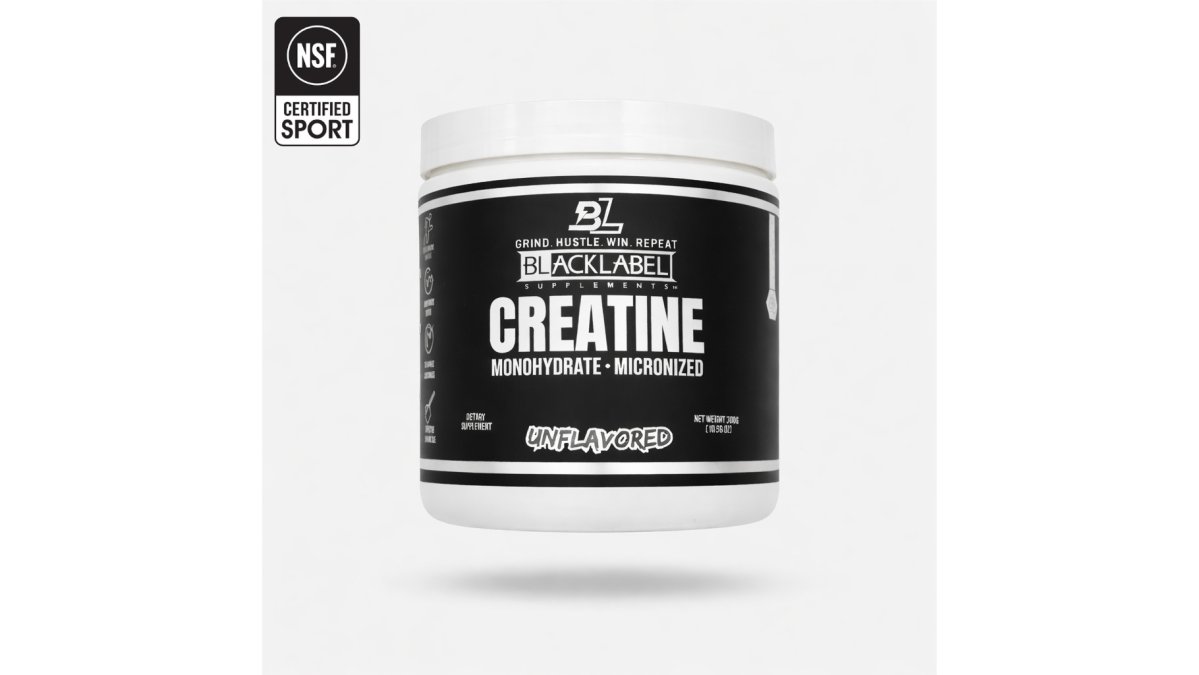
Many people report mild gastrointestinal distress during loading, bloating, cramping, or nausea. This happens because large amounts of creatine draw water into your digestive tract. Taking smaller, frequent doses and staying hydrated helps minimize this. Products like Arq8 Nano-Creatine are designed to dissolve clear and sit gently on digestion, reducing bloat compared to standard creatine monohydrate.
Maintenance Phase and Daily Dosage
After loading, you enter the maintenance phase with 3-5 grams daily to keep muscles saturated long-term.
Take maintenance daily, ideally post-workout with carbs and protein. Consistency matters more than exact timing.
Skipping loading and going straight to maintenance takes 3-4 weeks instead of one week to reach full saturation.
Maintenance dosing options:
- Standard approach: 5 grams daily, every day
- Conservative approach: 3 grams daily if you weigh under 150 pounds
- Higher approach: 5-7 grams daily if you weigh over 200 pounds or are very active
Your body weight and training volume affect how much creatine you need to maintain saturation. Heavier athletes and those doing intense anaerobic training benefit from the higher end of the range.

Creatine Supplementation Timing for Peak Performance
Consistency matters more than timing, take creatine every single day.
Taking creatine post-workout with carbs and protein offers a slight edge: insulin spikes enhance creatine uptake via the SLC6A8 transporter, and muscles are primed to accept nutrients after training.
Best timing strategy:
- Take creatine with your post-workout meal
- Pair it with 40-80 grams of carbs and 20-40 grams of protein
- Consume this within 1-2 hours after finishing your workout
Taking it with any meal works fine. Daily consistency over months and years is key; missing a dose or two won't hurt, but skipping weeks will.
Pre-workout timing is ineffective because creatine builds up over time, not acutely.
Caffeine and Creatine: Debunking the Interaction Myth
What the research actually shows:
Practical timing with caffeine:
- If you take caffeine pre-workout: Consume your creatine dose post-workout as usual. The 3-4 hour gap between caffeine and creatine is more than enough to avoid any theoretical interaction.
- If you take caffeine post-workout: You can combine it with your creatine dose. The insulin spike from post-workout carbs will enhance creatine uptake regardless of caffeine presence.
- Daily caffeine users: If you drink coffee every morning and take creatine at lunch or post-workout, no adjustment is needed. Consistent daily caffeine use does not impair creatine accumulation.
Supplement companies market "caffeine-free" creatine as superior, but this is unsupported marketing. Standard monohydrate works equally well with or without caffeine.
Do You Actually Need to Cycle Creatine?
The practical reason to cycle creatine is cost and convenience, not biological necessity. If you want to take a break for a month or two, you won't lose all your gains. Your intramuscular creatine stores will decline gradually over 4-6 weeks, but the strength and muscle you built stays with you.
How Long to Cycle Off Creatine and Why
If you decide to stop taking creatine, your muscle creatine content returns to baseline over 4-6 weeks. This is the washout period. You don't lose muscle or strength immediately, those adaptations remain. You just lose the acute performance boost that creatine provides.
Timeline after stopping:
- Week 1-2: Performance remains high; creatine stores decline slowly
- Week 3-4: Noticeable drop in strength and power output
- Week 5-6: Full washout; intramuscular creatine returns to pre-supplementation levels
Side Effects, Safety, and Non-Responders
Creatine is well-tolerated by most people. The most common side effect is water retention; you may gain 1-3 pounds of water weight in the first week of loading. This is intracellular water, not fat. It's normal and expected.
Understanding Non-Responders and Adjusting Your Protocol
About 20-30% of people are non-responders to creatine. Their muscles don't accumulate creatine as efficiently, so they see minimal performance gains. Non-response isn't a sign that creatine is bad; it's individual variation in how your body processes and retains it.
Non-response typically stems from one of three factors:
-
Low baseline muscle creatine stores, Vegetarians and vegans start with naturally lower intramuscular creatine because they consume no dietary creatine (found only in animal products). They often respond better than omnivores, not worse, because they have more room to accumulate it.
-
Creatine transporter efficiency, Your muscles use a specific transporter protein (SLC6A8) to pull creatine from the bloodstream into cells (pubmed.ncbi.nlm.nih.gov). Genetic variation in this transporter's expression means some people's muscles simply can't uptake creatine as readily, regardless of dose or timing.
-
Phosphocreatine system saturation baseline, Athletes with naturally high muscle fiber type II (fast-twitch) composition and those already doing high-volume anaerobic training may already have near-maximal phosphocreatine stores, leaving little room for supplementation to add benefit.
How to diagnose non-response:
Load for 7 days with the standard 20 grams daily, then maintain 5 grams daily for 4-6 weeks. Track three metrics:
- Strength gains, Do your 1-rep max or working sets increase by 5-10% compared to the 4 weeks before loading?
- Power output, Do explosive movements (vertical jump, sprint time, kettlebell swings) improve measurably?
- Body composition, Do you gain 2-4 pounds of lean mass (muscle + water) in the first 2 weeks?
Adjustment strategies for non-responders:
-
Increase maintenance dose to 7-10 grams daily, Some non-responders show modest gains at higher doses, though the effect is inconsistent. This approach costs more but is worth a 4-week trial.
-
Switch creatine forms, Monohydrate remains the most researched and cost-effective.
-
Extend the loading phase to 10 days, Some individuals respond to a longer saturation window. Instead of 5-7 days at 20 grams daily, try 10 days at 15 grams daily to reduce GI stress while allowing slower accumulation.
-
Pair creatine with high-glycemic carbs and caffeine, Insulin spikes and caffeine may enhance transporter activity. Post-workout, combine your creatine dose with 80-100 grams of white rice or dextrose and 200 mg of caffeine. This is speculative but worth testing for 4 weeks.
-
Accept non-response and discontinue, If you're a true non-responder and higher doses or adjusted protocols don't work, creatine simply isn't your supplement. Your money is better spent on other interventions (progressive overload, sleep, protein intake) that will deliver measurable returns.
Conclusion
Cycling creatine for optimal results comes down to consistency and understanding your own response. Load for 5-7 days with 20 grams daily if you want fast saturation, then maintain with 3-5 grams daily. Time your dose post-workout with carbs and protein when possible, but prioritize daily intake over perfect timing. You don't need to cycle off unless you want a mental break, continuous use is safe and effective.
Frequently Asked Questions
How to take creatine for optimal results?
Start with a loading phase: consume 20 grams daily (split into 4 doses of 5 grams) for 5-7 days to saturate muscles quickly. Follow with a maintenance phase of 3-5 grams daily. Take creatine with carbohydrates and protein post-workout to enhance absorption. Stay hydrated throughout supplementation. Our Creatine Monohydrate Powder delivers 5 grams per scoop, making dosing straightforward and consistent for both loading and maintenance phases.
Does creatine need to be cycled?
Research shows creatine can be taken continuously without cycling, though some athletes prefer cycling for psychological reasons or to reset intramuscular stores. If you cycle, use 8-12 weeks on followed by 4-8 weeks off. The key is that continuous use remains safe and effective. Long-term studies support ongoing supplementation without washout periods, so cycling is optional based on personal preference and training goals.
What happens to your muscles when you stop taking creatine?
When you stop creatine, intramuscular creatine stores deplete gradually over 2-4 weeks. Muscle strength and power may decline slightly, though muscle mass gained during supplementation typically remains if you maintain resistance training. ATP production returns to baseline levels. Your muscles don't shrink; they simply lose the ergogenic benefit creatine provided. This is why many athletes choose continuous supplementation rather than cycling.
Is it better to take creatine every day or only on workout days?
Daily intake is more effective than workout-day-only dosing. Creatine works by building up in muscle tissue over time, so consistent daily supplementation maintains higher intramuscular saturation. Whether you train or rest, daily doses keep muscle creatine content elevated for optimal ATP production and anaerobic capacity. Missing doses on rest days reduces overall effectiveness and extends the time needed to reach muscle saturation.