

Table of Contents
- What You'll Need Before You Start Training Grip at Home
- Why Grip Strength for Deadlifts Fails (and How to Fix It)
- Step 1: Build a Base With Static Holds and Dead Hangs
- Step 2: Add Forearm Exercises for Deadlift Strength
- Step 3: Use the Best Grip Strengtheners for Deadlifts
- Step 4: Learn How to Use Lifting Straps for Deadlifts
- Step 5: Match Your Grip to Your Deadlift Style
- Common Mistakes That Stall Grip Progress
- Frequently Asked Questions
Last Updated: September 14, 2026
What You'll Need Before You Start Training Grip at Home
Improving grip strength for deadlifts at home starts with three things: something to hang from, something to squeeze, and something to hold. Improving grip strength for deadlifts at home starts with three things: something to hang from, something to squeeze, and something to hold.
The pull-up bar matters most: a doorway or wall-mounted unit gives you dead hangs, which build the support grip that limits your deadlift. Then an adjustable hand gripper covers crush strength, and lifting straps let you keep pulling heavy while your grip catches up.

Basic Equipment for Home Grip Work
You don't need a commercial gym's worth of gear. Here's what covers 90% of home grip training:
- Pull-up bar or doorway bar for dead hangs and towel pull-ups
- Adjustable hand gripper for crush grip and progressive overload
- Lifting straps so heavy pulls don't stall while your hands develop
- A thick towel for towel pull-ups and fat bar training substitutes
- Chalk or liquid chalk for consistent friction on the bar
Household Substitutes for Fat Bar and Thick-Handle Training
A standard barbell is about 28-29 mm in diameter; a true fat bar runs 50 mm or more, and that extra diameter is what makes thick-handle work brutal on the forearms. You can fake it with items already in your kitchen or garage.
- Rolled bath towel over a pull-up bar: wrap it two or three times until the effective diameter is roughly 2 inches. Do dead hangs and towel pull-ups on it. The towel compresses, so the hand has to work harder to maintain the wrap.
- PVC pipe or a length of 2-inch schedule-40 pipe: slide it over a barbell sleeve or use it as a standalone handle for loaded carries. A 2-inch pipe is close to a true fat bar diameter.
- Rice bucket: fill a 5-gallon bucket two-thirds with dry rice. Drive your hand to the bottom, spread the fingers, and rotate. This trains the finger extensors and small hand muscles that grippers miss. Two to three minutes per hand is plenty.
- Sand bucket: same idea with play sand, but heavier resistance. Start with dry sand and add a splash of water as it gets easy.
- Thick rope or a knotted towel: drape it over the pull-up bar for rope hangs, or loop it through a loaded plate for a homemade rolling-handle hold.
- Two smooth-sided plates pinched together: a classic plate pinch. Start with two 10-lb plates and work up. This is the cheapest way to train pinch grip at home.
What You Actually Need to Buy
If you want one piece of purpose-built gear, an adjustable hand gripper is the highest-value purchase: it covers crush grip, fits in a desk drawer, and its resistance range lets you progress for months. A pair of lifting straps is the second purchase, not because straps build grip, but because they let you keep deadlifting heavy while your hands catch up.
Everything else can be improvised. A towel, a bucket of rice, a length of pipe, and a pull-up bar will carry you through your first six months of grip training.
Why Grip Strength for Deadlifts Fails (and How to Fix It)
Your grip fails on deadlifts because the forearms are the smallest muscle group in the chain and fatigue first. The fix isn't gripping harder, it's training the forearms like any other muscle: progressive overload, adequate recovery, and specific work for each grip type.
Most lifters tack on a few sets of wrist curls at the end of a session when their hands are already fried. That's backwards, grip responds to the same principles as your quads or back and needs to be trained fresh.
Step 1: Build a Base With Static Holds and Dead Hangs
Static holds build the foundation. A dead hang means hanging from a bar with a pronated grip, arms straight, shoulders engaged, for time, training support grip and tendon strength in your hands and wrists.
Start with three sets of 20-30 seconds. Add five seconds per week. When you can hang for 60 seconds, add weight with a dip belt or hold a dumbbell between your feet.
Dead Hangs and Static Holds for Support Grip
Support grip is what holds a loaded barbell and what fails on a heavy deadlift. Dead hangs train it directly, as do static barbell holds: load a bar to your working deadlift weight, pick it up, and stand there.
- Dead hangs: 3 sets, 20-60 seconds, pronated grip
- Barbell static holds: 3 sets, 15-30 seconds at 90-100% of your deadlift working weight
- Plate pinches: 3 sets, 20-30 seconds, two plates pinched smooth-side out
Step 2: Add Forearm Exercises for Deadlift Strength
Forearm exercises for deadlift strength target the muscles that close and stabilize your hand. The two big ones are wrist flexion and extension, trained with simple dumbbell or barbell movements at home.
Wrist flexion (curling the wrist toward the palm) trains the flexors that drive crush grip. Wrist extension (bending the wrist back) trains the extensors that stabilize the wrist under load and help prevent tendonitis. Train both.
Wrist Flexion, Wrist Extension, and Pronated vs Supinated Work
Pronated grip means palms facing away, like a standard overhand deadlift; supinated means palms facing toward you, like an underhand curl. Both recruit the forearm differently and deserve attention.
| Exercise | Grip Type | Target | Sets/Reps |
|---|---|---|---|
| Wrist curls | Supinated | Forearm flexors | 3 x 12-15 |
| Reverse wrist curls | Pronated | Forearm extensors | 3 x 12-15 |
| Reverse curls | Pronated | Brachioradialis | 3 x 10-12 |
| Towel pull-ups | Pronated | Crush and support grip | 3 x 6-10 |
Forearm hypertrophy follows the same rules as any other muscle. Work in the 8-15 rep range, add load over time, and give the tissue 48 hours before training it hard again.
Step 3: Use the Best Grip Strengtheners for Deadlifts
The best grip strengtheners for deadlifts are adjustable hand grippers, lifting straps, and grip-enhancing accessories that match your training phase. A gripper builds crush strength in isolation, straps let you keep pulling heavy while your hands recover, and gloves protect the palms so callus management doesn't interrupt training.

For adjustable resistance at home, the Men's Grip Professional Fitness Equipment covers a 10kg to 40kg range and fits in a desk drawer, which makes it easy to hit crush grip work on off days. If palm protection is the bigger issue, the 3MM Microfiber Gym Gloves reduce friction and callus buildup without killing bar feel.
Step 4: Learn How to Use Lifting Straps for Deadlifts
Knowing how to use lifting straps for deadlifts is a skill, not a crutch. Straps wrap around the bar and transfer load from your hands to your wrists, letting you pull heavier than your grip allows, but overuse means your grip never gets the stimulus to grow.
Use straps on your heaviest sets, top singles, and high-volume pulling where grip would fail before your back does. Train working sets without them, that split keeps grip progressing while your deadlift climbs.
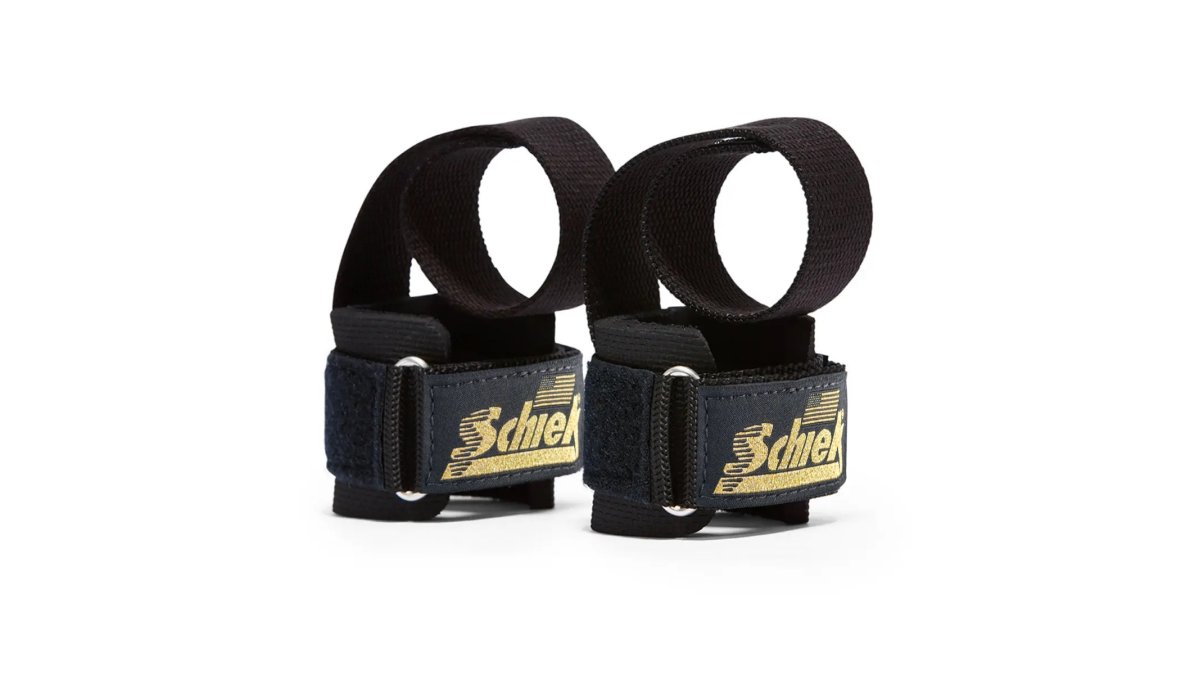
The Model 1000PLS Power Lifting Straps use a neoprene wrist support with nylon straps, and they're made in the USA. For pushing movements where you want wrist support and palm protection rather than a strap, the Ronnie Coleman Signature Series RC 1907 Platinum Ultimate Grip is the pick.

Step 5: Match Your Grip to Your Deadlift Style
Grip strength for deadlifts changes with the style you pull. Conventional, sumo, and trap bar deadlifts all load the hands differently, and your grip training should reflect that.
- Conventional deadlift: standard overhand grip, or switch to mixed grip on heavy sets
- Sumo deadlift: narrower grip width, more demand on the support grip at lockout
- Trap bar deadlift: neutral grip, easiest on the hands, good for high-volume grip work
- Mixed grip: one hand pronated, one supinated, reduces bar roll but can create asymmetry if overused
- Hook grip: thumb wrapped under the fingers, the strongest legal grip, but it takes weeks to tolerate
Common Mistakes That Stall Grip Progress
Grip progress stalls for predictable reasons: training the forearms to failure every session, ignoring the wrists, and never varying grip width. The forearms are small and recover slowly, so more isn't better.
- Training grip after a heavy pull day instead of fresh
- Skipping wrist extension work, which leaves the joint unstable under load
- Never using chalk, so sweat limits your sets before your muscles do
- Ignoring callus management, which leads to tears that cost you training days
- No progressive overload, the same holds at the same weight for months
- Chasing a new personal best on grippers every session, which turns a strength tool into a fatigue tool
Recovery and Overtraining Signals to Watch
Forearm overtraining shows up as persistent elbow tenderness, weak hands on warm-up sets, or grip that worsens week over week. Tendonitis prevention is load management: cap grip work at two or three sessions per week and back off at the first sign of nagging elbow pain.
Signs you need to deload grip work:
- Elbow or wrist pain that lingers past 48 hours
- Grip strength dropping on sets that used to feel easy
- Calluses that stay inflamed and tender
Why Tendons, Not Muscles, Are Usually the Limiting Factor
Forearm muscles recover in roughly 48 hours, but tendons and connective tissue around the elbow recover much more slowly (pubmed.ncbi.nlm.nih.gov). That mismatch is why lifters who add grip work every session feel fine for two or three weeks, then wake up with medial elbow pain, the classic "golfer's elbow" pattern grip-heavy training can provoke (mayoclinic.org).
The fix is to treat grip work like tendon work, not muscle work. That means:
- Higher frequency, lower intensity on most days. Short, submaximal holds most days beat one all-out session.
- Slow, controlled loading. Add five seconds to a hold or 2.5 lb to a pinch before you add a set.
- Isometric holds over max attempts. Isometrics load the tendon without the eccentric stress that irritates it.
- Wrist extensor work every session. The extensors balance the flexors and take strain off the elbow.
A Simple Deload Protocol for Grip
When warning signs show up, don't stop training, cut volume and keep the pattern:
- Week 1 of deload: drop grip work to one session. Cut total sets by half. Keep the same exercises.
- Week 2 of deload: if pain is gone, return to two sessions at 60-70% of your previous volume.
- Return to full volume only when a warm-up set feels normal and elbow tenderness is gone for at least three consecutive days.
If pain persists past two weeks of reduced loading, or you feel numbness or tingling in the fingers, see a physician or physical therapist rather than train through it (Cubital Tunnel Syndrome - OrthoInfo). Ignored grip injuries linger for months.
Callus and Skin Management
Skin tears are the most avoidable grip setback, a callus that rips mid-deadlift can cost a week of pulling. Manage it like load:
- File calluses down with a pumice stone or callus file after showers, when the skin is soft. Don't shave them flat, leave a little thickness.
- Moisturize daily. Dry calluses crack; cracked calluses tear.
- Use chalk, not gloves, for heavy pulls. Gloves bunch and change bar diameter; chalk keeps friction consistent without altering the pull.
- Stop a set if you feel a hot spot. A hot spot is a tear waiting to happen.
Grip progress is limited by tendons and skin long before it's limited by muscle. Train the forearms hard, but train the tendons and hands patiently, that's the difference between a lifter who adds 50 lb to their deadlift grip in a year and one who spends that year nursing elbow pain.
Frequently Asked Questions
How can I improve my deadlift grip strength without a gym?
You can improve grip strength for deadlifts at home using dead hangs from a pull-up bar, towel pull-ups, plate pinches, and adjustable hand grippers. Static holds with a loaded barbell or heavy dumbbells also work. Aim for 3-4 sessions per week, holding each position for 20-45 seconds. Add farmer's walks with heavy grocery bags or water jugs if you lack weights. The key is progressive overload: increase time or resistance every week.
Are grip strengtheners effective for deadlifting?
Yes, grip strengtheners build crush grip, which helps with holding a barbell. However, deadlifts rely more on support grip, so combine grippers with static holds and dead hangs. Use an adjustable hand gripper like the Men's Grip Professional Fitness Equipment ($23.65) for 2-3 sets of 10-15 reps per hand. Pair it with forearm exercises and barbell holds for best results. Grip strengtheners alone won't replace sport-specific holds.
How often should I train grip strength for deadlifts?
Train grip 2-3 times per week on non-consecutive days. If you deadlift heavy twice weekly, add one dedicated grip session on a separate day. Keep sessions short: 10-15 minutes of static holds, farmer's walks, and forearm work. Watch for forearm fatigue and tendonitis signs. If your grip feels drained during deadlifts, reduce volume. Recovery matters as much as training for tendon strength and hand health.
What are the best home exercises for forearm hypertrophy?
For forearm hypertrophy, try wrist flexion and wrist extension with dumbbells or resistance bands, reverse curls, and pronated and supinated wrist curls. Plate pinches and towel pull-ups also add size. Perform 3 sets of 12-15 reps per exercise, 2-3 times weekly. Use a fat bar or thick grip attachment to increase difficulty. Progressive overload and adequate protein intake support muscle growth. Track circumferences monthly for visual progress.