

Table of Contents
- Why Quiet Home Gym Flooring Matters in Apartments
- How Impact Noise and Vibration Travel to Downstairs Neighbors
- Best Home Gym Flooring for Apartments: Material Comparison
- Home Gym Flooring Thickness: What Depth You Actually Need
- Apartment Treadmill Mat Selection and Sound Reduction
- Rental-Friendly Flooring: Removable Options Without Lease Conflicts
- Installation, Maintenance, and Long-Term Care
- Frequently Asked Questions
Last Updated: October 6, 2026
Why Quiet Home Gym Flooring Matters in Apartments
Working out in a shared living space creates a real problem: impact noise travels downward. When you're jumping, dropping weights, or even walking heavily on a treadmill, the vibration moves through your floor into the apartment below. Your neighbors hear it. They feel it.

Quiet home gym flooring for apartment living solves this problem at the source. The right surface absorbs impact before it becomes noise, protecting both your neighbor relationships and your lease.
The challenge isn't just about being considerate. It's practical. Many apartments have thin concrete slabs or wood subfloors that transmit sound easily. Standard gym equipment on bare floors creates noise levels that travel through walls, ceilings, and structural elements.
This guide covers the materials, thickness, and installation methods that actually work in shared spaces. We'll explain why certain floors reduce noise better than others, what depth you actually need, and how to set up a quiet home gym that your downstairs neighbors won't hear.
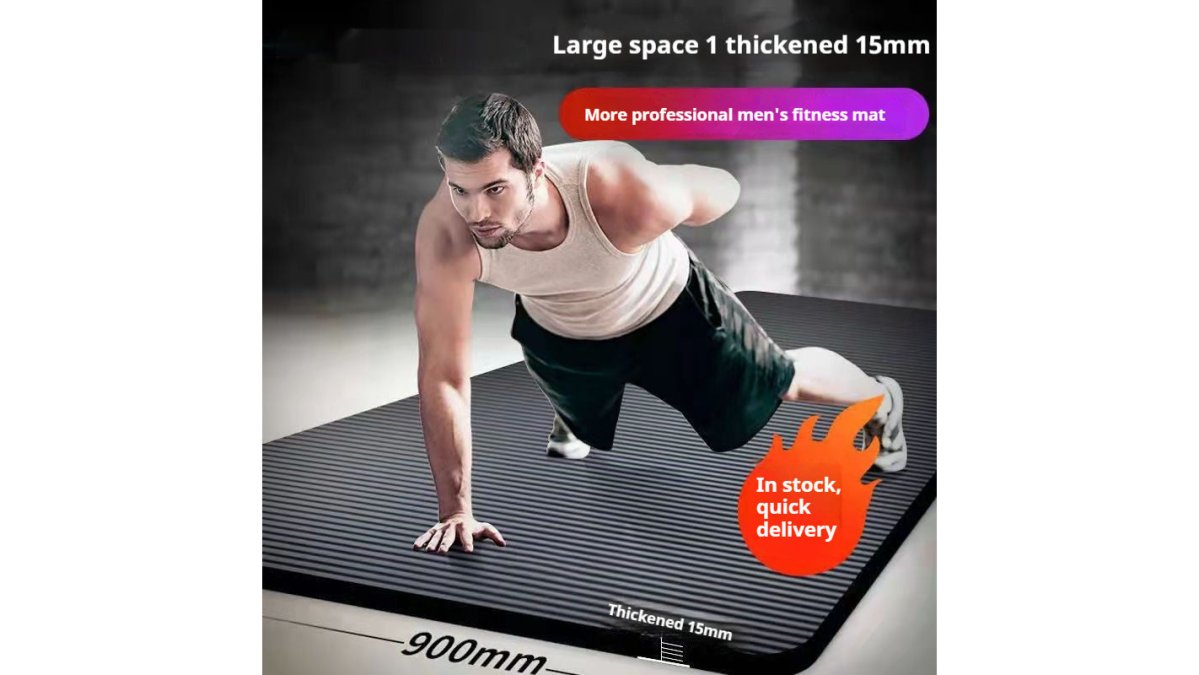
How Impact Noise and Vibration Travel to Downstairs Neighbors
Impact noise happens when your foot, weight, or equipment strikes the floor. That strike creates vibration that travels through the building's structure. In apartments, this vibration moves downward through the floor slab, through the ceiling cavity below, and into your neighbor's space where it becomes audible sound.

The transmission path matters. A thin floor with minimal cushioning transfers vibration efficiently. Add a shock-absorbing layer, and you interrupt that path. The vibration dissipates into the flooring material instead of traveling through the structure.
Frequency also plays a role. Lower-frequency impacts (like a heavy step or dumbbell drop) penetrate deeper into building materials and travel farther. Higher-frequency sounds (like footsteps on hard surfaces) are easier to absorb.
Downstairs neighbors hear the most obvious problem, but the real issue is structural transmission. The noise isn't just airborne sound bouncing around the apartment below. It's vibration moving through concrete, wood, and steel.
The thickness and density of your flooring material determine how much vibration it can absorb. Thin mats do some work. Thick, dense systems do far more. This is why apartment dwellers need to think about flooring differently than someone with a house or a dedicated gym space.
Best Home Gym Flooring for Apartments: Material Comparison
The right material depends on your workout type, budget, and space. Each option has trade-offs. Here's what actually works.
Rubber Gym Flooring: Shock Absorption and Durability
Rubber is the most effective material for quiet home gyms. It absorbs impact energy, reduces vibration transmission, and handles heavy use without degrading. Recycled rubber and virgin rubber both work, though virgin rubber tends to be quieter and cleaner.
Rubber flooring typically comes in interlocking tiles or rolls. Tiles are easier to install and remove (important for renters), while rolls provide seamless coverage. Thickness ranges from 0.5 inches to 1 inch. Thicker rubber absorbs more impact and reduces more noise.
The downside: rubber can smell, especially when new. Ventilation helps, and the smell fades over weeks. Rubber is also heavier than foam, making it harder to move if you rearrange. Cost varies widely depending on thickness and quality. Budget-friendly options exist, but they're often thinner and less effective at noise reduction.
Rubber works best for strength training, CrossFit-style workouts, and any activity involving dropped weights or heavy impact. It's durable enough for years of use and handles sweat and moisture without breaking down.
Foam vs Rubber Gym Flooring: Which Reduces Noise Better
This comparison comes up constantly, and the answer is straightforward: rubber reduces noise better than foam.
Foam is lighter, cheaper, and easier to handle. It provides cushioning and some shock absorption. But foam has lower density and compresses more easily, which means it doesn't absorb impact as effectively. Over time, foam breaks down under heavy use and loses its cushioning properties.

Rubber is denser, more durable, and absorbs impact more completely. It doesn't compress as much, so it maintains its performance over years. The trade-off is weight and cost.
For apartment living, rubber is the better choice if noise reduction is your priority. Foam works for low-impact activities like yoga or Pilates, where impact noise isn't a concern. But if you're jumping, running, or lifting weights, rubber outperforms foam.
Some people combine both: foam mats for comfort in low-impact zones, rubber for high-impact areas. This approach balances cost and performance.
Luxury Vinyl and Interlocking Tiles for Quiet Workouts
Luxury vinyl flooring and interlocking plastic tiles offer middle-ground options. They're quieter than bare floors but not as effective as rubber at absorbing impact.
Luxury vinyl (LVP) is affordable and looks good. It's water-resistant, easy to clean, and comes in many styles. But it doesn't absorb much vibration. It's best used as a top layer over a rubber or foam base, not as a standalone solution for noise reduction.
Interlocking tiles (plastic or composite) are modular and renter-friendly. They lock together without adhesive, so you can remove them without damaging the floor. They provide some cushioning but are thinner than rubber options. They work well for light workouts but not for heavy impact activities.
For apartments, interlocking tiles are useful if you need flexibility and easy removal. Combine them with a rubber base layer for better noise reduction.
Home Gym Flooring Thickness: What Depth You Actually Need
Thickness directly affects noise reduction. Thicker flooring absorbs more impact energy before it reaches the structural floor below.
Minimum effective thickness is 0.5 inches. This provides basic cushioning and reduces some vibration. But 0.5 inches isn't enough for heavy impact activities in apartments.
Ideal thickness for apartment home gyms is 0.75 to 1 inch. This range absorbs most impact noise from typical workouts while remaining practical to install and remove. A 1-inch rubber floor reduces impact noise by 15-20 decibels compared to a bare floor, which is significant.
Some people go thicker, up to 1.5 inches. This maximizes noise reduction but increases cost, weight, and installation complexity. For most apartments, 1 inch is the sweet spot.
Jump Rope Mat Larger Non-Slip Indoor Outdoor Exercise Fitness Mat Crossrope →
Density matters as much as thickness. A dense 0.75-inch rubber floor outperforms a light 1-inch foam floor. When comparing products, check both the thickness and the density specification.
Layering also works. A 0.5-inch rubber floor over a 0.5-inch foam base provides 1 inch of total cushioning with different absorption characteristics. This approach can be more effective than a single 1-inch layer.
Apartment Treadmill Mat Selection and Sound Reduction
Treadmills create continuous impact noise, not just occasional impacts. A treadmill running for 30 minutes generates steady vibration that travels through the floor.
A dedicated treadmill mat reduces this noise significantly. The mat sits under the treadmill and absorbs the impact from the belt and deck. Rubber mats work best for treadmills because they handle repetitive impact without breaking down.
Thickness matters for treadmills. A 0.75-inch rubber mat under a treadmill reduces noise more effectively than thinner mats. Some people use 1-inch mats for maximum isolation.
Placement also helps. Placing the treadmill away from shared walls and above the center of the apartment (not near the neighbor's bedroom) reduces the impact on neighbors. If possible, place the treadmill on an interior wall rather than an exterior wall.
Treadmill mats are often separate from the rest of your gym flooring. You might use a general rubber floor for free weights and strength training, then add a thicker treadmill mat specifically for the treadmill. This targeted approach is cost-effective and practical.
PureFitnessWarehouse.com carries mats designed for this purpose. The Jump Rope Mat Larger Non-Slip Indoor Outdoor Exercise Fitness Mat at $58.20 provides cushioning and noise reduction for cardio workouts.
Rental-Friendly Flooring: Removable Options Without Lease Conflicts
Renters face a specific challenge: you can't permanently install flooring without risking your security deposit or violating your lease.
Interlocking tiles are the most renter-friendly option. They lock together without adhesive and sit on top of the existing floor. You can remove them completely without leaving any damage. This approach works well for apartments where you can't modify the floor.
Rubber rolls and mats can also be removable if you don't glue them down. They'll shift slightly during use, but they stay in place enough for most workouts. This flexibility is valuable for renters who might move.
Before installing any flooring, check your lease. Some leases prohibit adding flooring without permission. Others allow it as long as you remove it when you move. A few leases require written approval. Knowing your lease terms prevents conflicts later.
If your lease prohibits flooring, talk to your landlord. Many landlords accept removable flooring if you promise to take it with you. Showing them a plan for noise reduction often leads to approval.
Document the floor condition before you install anything. Take photos of the existing floor. This protects you if the landlord later claims damage that was already there.
Installation, Maintenance, and Long-Term Care
Installation depends on your flooring type. Interlocking tiles are the easiest: they stack and lock together. No tools or adhesive required.
Rubber rolls and mats require more planning.
For apartments, avoid permanent installation if possible. Removable systems are easier to take with you when you move.
Maintenance is straightforward. Rubber and foam mats attract dust and sweat. Wipe them down regularly with a damp cloth. Vacuum them weekly to remove dust and debris.
Odor is common with new rubber flooring. Ventilate the space well. Open windows and run a fan. The smell fades within 2-4 weeks as the material off-gasses.
Check your flooring periodically for damage. Cracks, tears, or compression indicate the material is breaking down. Rubber typically lasts 5-10 years with regular use.
If you're using removable flooring, keep the material clean and in good condition so you can take it with you when you move.
Building a quiet home gym in an apartment is achievable with the right flooring. Rubber absorbs impact noise, reduces vibration transmission, and protects your neighbor relationships.
At PureFitnessWarehouse.com, we understand the challenge of home workouts in shared spaces. Our curated selection of gym flooring and mats helps you train effectively without creating noise conflicts.
Frequently Asked Questions
What thickness of quiet home gym flooring do I need to protect downstairs neighbors?
Aim for at least 0.5 inches of cushioning material, though 0.75 to 1 inch provides noticeably better vibration absorption. Thicker flooring dampens low-frequency impact noise that travels through building structures. Rubber and foam materials at these depths significantly reduce sound transmission compared to thin mats. If your apartment has concrete floors, even 0.5 inches helps; if you have wood joists, thicker is better since wood amplifies vibration more readily.
Is foam or rubber gym flooring better for reducing noise in apartments?
Rubber flooring generally outperforms foam for noise reduction because of its denser composition and superior vibration dampening. Rubber absorbs both impact noise and the low-frequency vibrations that travel through walls and floors to neighbors. Foam mats offer good cushioning for joint protection but are less effective at blocking sound transmission. For apartments, rubber or a rubber-foam composite is the smarter choice if noise reduction is your priority.
Can I use a regular yoga mat as my apartment home gym flooring?
Yoga mats work for low-impact activities like stretching, yoga, and Pilates, but they lack the thickness and density needed for jumping, plyometrics, or treadmill workouts in shared spaces. A quality yoga mat like the Jump Rope Mat (8mm thick, $58.20) can supplement your setup for specific exercises, but you'll need dedicated gym flooring underneath for heavier equipment and high-impact movements to truly protect neighbors from noise.
What makes apartment treadmill mats different from regular gym flooring?
Apartment treadmill mats are engineered specifically to reduce motor noise and vibration from continuous belt movement. They're typically thicker (0.75 to 1.5 inches) and made from dense rubber or foam composites that absorb both the repetitive impact of footfalls and the mechanical vibration of the treadmill motor. Standard gym flooring can work under a treadmill, but dedicated mats provide superior noise isolation and protect your equipment from moisture and wear.