

Table of Contents
- What Professional Grade Supplements Actually Mean
- How to Read Supplement Labels for Quality Indicators
- Third-Party Tested Supplements: What the Certifications Mean
- Supplement Quality Certifications You Should Recognize
- Assessing Purity, Potency, and Manufacturing Standards
- Dietary Supplement Safety: Red Flags and Verification Steps
- Your Checklist: 7 Steps to Select Professional Grade Supplements
- Frequently Asked Questions
Last Updated: October 10, 2026
What Professional Grade Supplements Actually Mean
"Professional grade" is not a regulated term defined by the FDA or any federal agency. Unlike "organic" or "non-GMO," which have legal standards, "professional grade" is a marketing label manufacturers apply freely. This distinction matters because it means you cannot rely on the phrase itself as proof of quality, you must verify the criteria behind it.
Instead of treating "professional grade" as a category, think of it as a claim that should be backed by measurable evidence. A professional-grade supplement typically meets these verifiable criteria:
Third-party testing by an independent lab. The manufacturer did not test the product themselves. An external laboratory verified that the supplement contains what the label claims and is free from significant contaminants. This is the single strongest signal because it removes the financial incentive to overstate potency or hide problems.
Transparent ingredient disclosure. Every active ingredient is listed by name with its exact amount in milligrams or grams. There are no proprietary blends that hide dosages, and no vague terms like "performance matrix" or "herbal complex."
Manufacturing documentation. The facility follows Good Manufacturing Practices (GMP) as defined by the FDA, and the manufacturer can provide evidence, such as a current GMP certificate or audit report, upon request. This means batch records, quality control procedures, and environmental monitoring are documented.
Dosages aligned with research. The amount of each active ingredient per serving matches or exceeds the doses used in published clinical studies showing effectiveness. A creatine supplement with only 1 gram per serving, for example, would not meet this criterion because research shows 3-5 grams daily is needed for measurable results.
Contaminant screening results. The supplement has been tested for heavy metals (lead, cadmium, arsenic), microbial contamination (bacteria, mold, yeast), and, for athletic products, banned substances. These results are documented in a Certificate of Analysis that the manufacturer makes available.
These criteria exist because your body absorbs what you consume. A supplement missing active ingredients, contaminated with heavy metals, or inconsistent in potency won't support your performance goals, no matter how hard you train. Professional grade means the manufacturer has invested in verification at multiple steps, not just claimed quality on the label.
How to Read Supplement Labels for Quality Indicators
The Supplement Facts label is your first tool for assessing quality. It lists active ingredients, their amounts per serving, and inactive components. Professional grade supplements display this information clearly and completely, with no hidden proprietary blends that obscure what you're actually consuming.
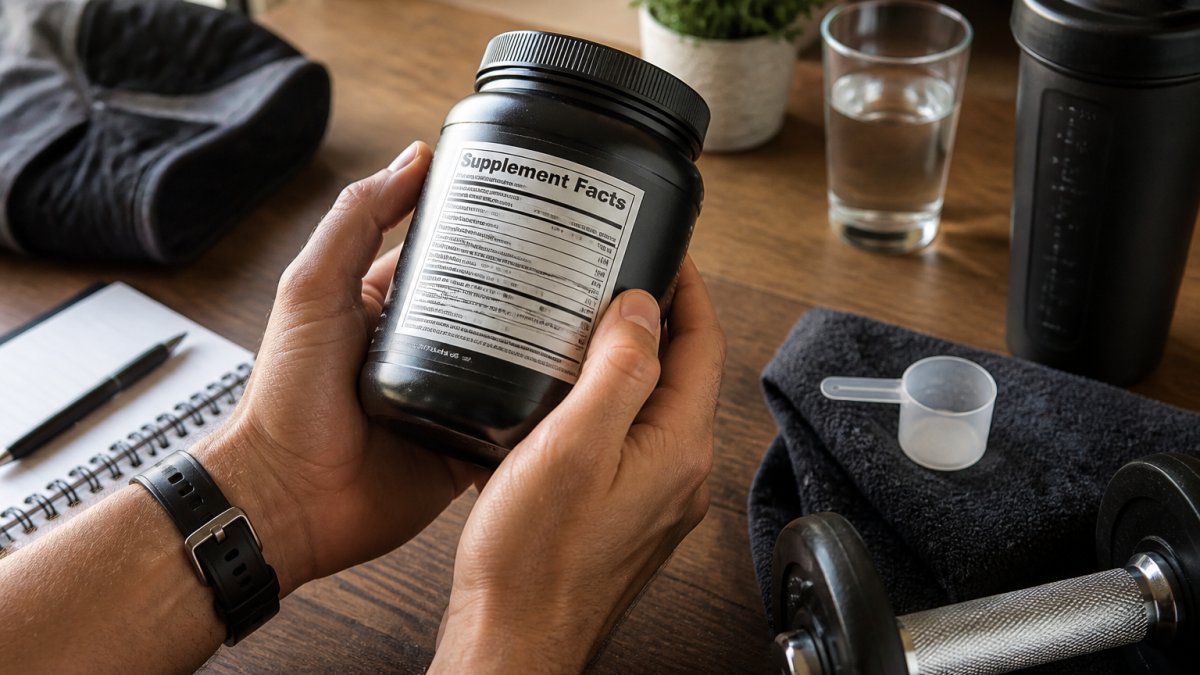
Ingredient Identity and Amount
Look for specific ingredient names and exact dosages. Vague terms like "herbal blend" or "performance matrix" hide the actual amounts you're getting. Professional grade labels list each ingredient separately with its milligram or gram amount.
For example, if a label says "Beta-Alanine 3g," you know exactly how much you're consuming. Compare this to a proprietary blend that lists ingredients without amounts, you have no way to verify if you're getting a therapeutic dose or a token amount.
Check whether dosages match research-backed amounts. A creatine monohydrate supplement should contain at least 3-5 grams per serving to be effective. Our Creatine Monohydrate product delivers exactly that, with transparent micronized formulation and unrefined mineral salt for optimal hydration support.

Active vs. Inactive Ingredients
Active ingredients are what produce the intended effect. Inactive ingredients are fillers, binders, and flavorings. Professional grade supplements minimize unnecessary additives and use inactive ingredients that support absorption and stability.
Stevia extract and natural flavors are preferred over artificial sweeteners. Microcrystalline cellulose is common as a binder but should appear in small amounts. If the inactive ingredient list is longer than the active list, that's a red flag.
Third-Party Tested Supplements: What the Certifications Mean
Third-party testing means an independent laboratory, not the manufacturer, analyzed the supplement. This removes the financial incentive to overstate potency or hide contamination. However, not all third-party testing is identical, different certifiers test for different things, and a certification seal on a bottle does not guarantee the product was tested for everything you might assume.
Understanding what each certification verifies:
NSF Certified for Sport tests for over 270 banned substances (relevant to competitive athletes), verifies that label claims match actual contents, and confirms the facility follows GMP (NSF International Product Certification Steps). It does not test for all heavy metals or all microbial contaminants, it focuses on what matters most for athletes: label accuracy and banned-substance contamination.
USP Verified confirms that a supplement contains the ingredients listed in the amounts stated on the label, tests for acceptable levels of common contaminants (heavy metals, microbial), and requires ongoing compliance audits. It does not test for banned athletic substances and is broader in scope than NSF for general consumers.
Informed Choice certification focuses on contamination risk for athletes, testing for banned substances and common contaminants. It does not verify label accuracy or dosage amounts, only that banned compounds are absent.
What a certification does NOT guarantee:
A certification seal means the product passed testing on the day it was tested. It does not mean every batch is identical, that the supplement will work for your specific goal, or that it contains the optimal form of an ingredient. A certified supplement could still contain an ingredient form with poor bioavailability, or a dose below what research shows is effective. Certification verifies quality control and safety, not efficacy.
How to Verify a Certification and Locate Testing Documentation
Do not assume a logo on a bottle is current. Certifications expire and must be renewed. To verify:
-
Check the certifier's website directly. NSF, USP, and Informed Choice all maintain searchable databases of certified products. Search by product name or manufacturer. If the product does not appear in the database, the certification may be expired or the claim may be false.
-
Request a Certificate of Analysis (CoA). This is the lab's detailed report. Professional-grade manufacturers provide it on their website, on the product page, or upon email request. If a manufacturer refuses or says "it's proprietary," that is a red flag. A CoA should include:
- The specific product name and batch number
- The date the sample was tested
- The testing methods used (e.g., "ICP-MS for heavy metals," "HPLC for potency")
- Quantitative results (exact amounts found, not just "pass/fail")
- Detection limits for contaminants (e.g., "Lead: <0.5 ppm detected")
- The lab's name, address, and accreditation status
- A signature or seal from the lab
-
Match the batch number on your bottle to the CoA. Supplements are produced in batches. A CoA for batch #12345 applies only to bottles labeled with that batch number. If your bottle shows batch #12346, you need the CoA for that batch. Professional-grade manufacturers test every batch or use a validated sampling protocol and document it.
Understanding Testing Scope: Finished Product vs. Ingredient Testing
Some manufacturers test only the raw ingredients before mixing them into the final product. Others test the finished supplement after it is packaged. Finished-product testing is more rigorous because it catches contamination that may occur during manufacturing or packaging.
When reviewing a CoA, confirm it tested the finished product, not just ingredients. The report should state "finished product" or "final formulation." If it only covers ingredients, ask the manufacturer for a finished-product CoA.
Supplement Quality Certifications You Should Recognize
NSF Certified for Sport is widely recognized in fitness communities. It requires testing for over 270 banned substances and verification that label claims match actual contents. Our PRE GAME supplement carries NSF Certified for Sport status, ensuring customizable caffeine intake without hidden compounds.
USP Verified indicates that a supplement contains the ingredients listed in the amounts stated, with acceptable levels of contaminants. This certification requires ongoing compliance audits.
Informed Choice certification focuses on sport contamination risk, testing for substances banned by major athletic organizations. It's particularly relevant for competitive athletes.
Third-party certifications cost manufacturers money, which is why professional grade supplements carry them and budget options don't. The presence of a certification is a strong signal of commitment to quality.
Assessing Purity, Potency, and Manufacturing Standards
Purity means the supplement contains no unwanted substances. Potency means it contains the amount of active ingredient claimed on the label. Both are verified through third-party testing and good manufacturing practices.
Good Manufacturing Practices and Facility Standards
Good Manufacturing Practices (GMP) are FDA guidelines that set minimum standards for supplement facilities (the FDA). A GMP-certified facility maintains controlled environments, documents every batch, and has quality control procedures in place.
Professional grade manufacturers go beyond minimum GMP. They implement additional testing, maintain tighter environmental controls, and use validated equipment. This reduces batch-to-batch variation and contamination risk.
When evaluating a supplement, look for language indicating GMP compliance. Our Creatine Monohydrate is produced in facilities that follow strict manufacturing guidelines, ensuring consistency across every batch.
Bioavailability and Ingredient Form
Bioavailability is how well your body absorbs and uses an ingredient. Different forms of the same ingredient have different absorption rates. Micronized creatine, for example, absorbs better than standard creatine powder because of its finer particle size.
Professional grade supplements use ingredient forms optimized for absorption. Whey protein isolate (like our PURE3 100% WHEY PROTEIN ISOLATE) is more bioavailable than whey concentrate because it has less lactose and fat, allowing faster absorption post-workout.

Dietary Supplement Safety: Red Flags and Verification Steps
Safety verification protects you from contamination, mislabeling, and unwanted interactions. Professional grade supplements undergo multiple safety checks before reaching you.
Contaminant Screening and Heavy Metal Testing
Heavy metals like lead, cadmium, and arsenic can accumulate in supplements, especially those derived from plant sources. Professional grade supplements test for these contaminants at levels well below FDA limits.
Microbial contamination, bacteria, mold, yeast, is another safety concern. Proper manufacturing, storage, and testing prevent this. A professional grade supplement's Certificate of Analysis will show microbial testing results.
Checking for Drug Interactions and Contraindications
Some supplements interact with medications or health conditions. Before starting any new supplement, review potential interactions with your healthcare provider.
Check the supplement label for warnings and contraindications. Professional grade formulations list these clearly. Our PERFORMANCE STACK, for example, includes guidance on caffeine tolerance and cycling recommendations to maximize effectiveness and safety.

Your Checklist: 7 Steps to Select Professional Grade Supplements
-
Verify third-party certification. Look for NSF Certified for Sport, USP Verified, or Informed Choice seals. Request a Certificate of Analysis if not provided.
-
Read the Supplement Facts label completely. Check ingredient names, exact amounts, and whether proprietary blends obscure dosages.
-
Confirm GMP compliance. The label or website should state that the facility follows Good Manufacturing Practices.
-
Match dosages to research. Compare the amount of active ingredient to published studies on effectiveness. Therapeutic doses matter.
-
Assess ingredient form. Micronized creatine, whey isolate, and other optimized forms signal professional grade quality.
-
Check for contamination testing. Heavy metals, microbial, and banned substance testing should be documented.
-
Review manufacturer transparency. Professional grade companies provide accessible testing documentation and clear contact information for questions.
| Step | What to Check | Why It Matters |
|---|---|---|
| Certification | NSF, USP, or Informed Choice seal | Proves independent verification |
| Label | Ingredient names and exact amounts | Ensures you know what you're taking |
| GMP Status | Manufacturing facility compliance | Confirms quality control standards |
| Dosage | Active ingredient amount matches research | Determines if it will be effective |
| Form | Micronized, isolate, or optimized versions | Affects how well your body absorbs it |
| Testing | Heavy metals, microbial, contamination results | Confirms safety and purity |
| Transparency | Available Certificates of Analysis | Shows manufacturer confidence |
Professional grade supplements are an investment in your performance. They deliver the active ingredients you're paying for, in forms your body can use, from facilities that maintain rigorous standards. PureFitnessWarehouse.com curates supplements that meet these criteria, from our PERFORMANCE STACK for comprehensive athletic support to our PURE3 100% WHEY PROTEIN ISOLATE for post-workout recovery. Start with the checklist above, verify third-party testing, and choose supplements backed by manufacturing transparency and evidence-based dosing. Your training deserves supplements that actually work.
Frequently Asked Questions
What does professional grade mean for supplements?
Professional grade supplements are formulated with higher purity standards, stricter manufacturing controls, and verified ingredient identity and potency. Unlike mass-market supplements, they typically undergo third-party testing, use research-backed doses, and exclude unnecessary fillers or additives. The term reflects manufacturing rigor and ingredient quality rather than a single regulatory definition, look for third-party certifications, transparent labeling, and documented testing as proof of professional-grade status.
What certifications should I look for when buying supplements?
Look for NSF Certified for Sport, USP (United States Pharmacopeia) verification, and Informed Choice certification. These indicate that a product has passed independent testing for label accuracy, purity, and contaminant screening. NSF Certified for Sport is particularly valuable if you're an athlete, as it verifies the product doesn't contain banned substances. Check the manufacturer's website or the product label for these seals and verify them on the certifying organization's database.
How can you check whether a supplement has been independently tested?
Look for a third-party testing seal on the label or packaging, then verify it on the certifying body's website. Request or download the Certificate of Analysis from the manufacturer, this document shows exactly what contaminants and active ingredients were tested. Check the testing scope to confirm it includes potency verification, heavy metal screening, and microbial contamination checks. Reputable brands like PureFitnessWarehouse's PÜR-ISHH Creatine Monohydrate openly display third-party testing results and manufacturing transparency.
What should you look for on a supplement label to assess quality?
Check for exact ingredient amounts listed in the Supplement Facts panel, avoid proprietary blends that hide individual doses. Verify that active ingredients match clinical research doses, confirm the manufacturer's name and address, and look for expiration dates and lot numbers. Identify the ingredient form (e.g., micronized creatine absorbs better than standard creatine). Scan for artificial additives, unnecessary fillers, and allergen warnings. Third-party testing seals and clean formulation claims (no artificial sweeteners or flavors) signal quality manufacturing.