
Table of Contents
- What Defines a Premium Fitness Equipment Brand?
- Commercial vs Home Gym Equipment Quality: Why the Difference Matters
- The Total Cost of Ownership: Why Cheap Gear Costs More
- Ergonomics in Fitness Equipment Design: Protecting Your Body and Your Progress
- Fitness Equipment Warranty Comparison: What Coverage Actually Means
- Beyond Steel and Padding: The Hidden Costs of Budget Equipment
- Making the Smart Investment: How to Choose What Fits Your Goals
- Conclusion: Invest in the Equipment That Invests in You
- Frequently Asked Questions
Last Updated: September 9, 2026
What Defines a Premium Fitness Equipment Brand?
Premium fitness equipment is gear engineered to a higher standard of materials, tolerances, and service life than typical retail fitness products. The difference shows up in the steel gauge, the welds, the powder coating, and the bearings, not in a logo.
The premium fitness equipment category earns its label through measurable attributes: heavier steel frames, commercial-grade upholstery, precise machine calibration, and warranty coverage measured in years rather than months. These are not cosmetic upgrades. They change how the equipment performs under repeated, high-intensity training and how it holds up against daily wear and tear.
Before comparing price tags, understand that a brand's reputation rests on structural integrity and serviceability. Can you source spare parts in five years? Does the manufacturer publish detailed specifications? Those answers separate true premium brands from marketing claims.
Commercial vs Home Gym Equipment Quality: Why the Difference Matters
Commercial gym equipment is built for continuous use across hundreds of users per day, while home equipment typically assumes one or two workouts daily. That distinction drives every design decision, from frame thickness to upholstery durability.
Most home users do not need true commercial specification, but they benefit from equipment built on commercial principles. A commercial-grade treadmill rated for 20 hours of daily use will shrug off your one-hour session for decades (the CDC). The gap that matters is between cheap home gear and quality home gear, not between home and commercial categories.
| Equipment Type | Typical Build Standard | Expected Service Life | Best For |
|---|---|---|---|
| Budget home gear | Thin steel, plastic pulleys | 1-3 years | Occasional use, short-term |
| Premium home gear | Commercial-grade steel, sealed bearings | 8-15 years | Regular training, long-term |
| Commercial spec | Heavy-gauge steel, industrial design | 15+ years | Facilities, high-volume use |
The takeaway: buy equipment engineered above your current usage level. That buffer protects your training performance when life gets busy and you train harder than planned.
The Total Cost of Ownership: Why Cheap Gear Costs More
Budget equipment fails in predictable ways: fraying cables, bent guide rods, worn bushings, and upholstery that tears within months. Each failure costs money to repair or forces a full replacement, and the downtime interrupts your training consistency.
A simple total cost of ownership calculation exposes the real economics. Divide the purchase price by the expected years of service, then add estimated maintenance. A $300 treadmill lasting 18 months costs roughly $200 per year (consumer.ftc.gov). A $1,200 treadmill lasting a decade costs $120 per year, with fewer interruptions and better resale value at the end.
Preventative maintenance on quality equipment is minimal: lubricate moving parts, tighten hardware, and keep the frame clean. Budget gear often cannot be serviced at all because spare parts availability is nonexistent once the model changes.
Ergonomics in Fitness Equipment Design: Protecting Your Body and Your Progress
Ergonomics in fitness equipment design is the science of matching machine geometry to human biomechanics so movement patterns stay safe and effective. Poor ergonomics do not just feel uncomfortable; they alter your lifting mechanics and increase injury risk over time.
A well-designed machine aligns pivot points with your natural joint rotation. The seat height, pad angles, and handle positions accommodate a range of body sizes without forcing awkward compensations. This matters more as you progress, because heavier loads magnify even small biomechanical flaws.
Budget equipment often cuts corners on adjustability. A bench with three backrest angles instead of seven, or a pulley system with fixed handle positions, forces your body to adapt to the machine rather than the reverse. That compromise shows up in training performance plateaus and nagging joint pain.
For home users in tight spaces, adjustable, compact equipment like an adjustable magnetic barbell dumbbell preserves ergonomic range without dominating your living room. Look for equipment that fits your proportions, not just your budget.

Fitness Equipment Warranty Comparison: What Coverage Actually Means
Fitness equipment warranty comparison reveals more about build confidence than any marketing claim. A manufacturer willing to back a frame for 10 years is signaling they expect it to last that long. A 90-day warranty signals the opposite.
Warranty coverage typically splits into tiers: lifetime on frames, 2-5 years on moving parts, and 90 days to 1 year on upholstery and consumables (the FTC). Read the exclusions carefully. Many budget warranties exclude commercial use, which quietly voids coverage for anyone training intensely at home.
The practical test is serviceability. Quality brands stock replacement parts for years and support DIY repairs with published diagrams. Budget brands often replace the entire unit under warranty or offer refunds, because parts are not available. That distinction matters when a cable snaps 14 months into ownership.
Beyond Steel and Padding: The Hidden Costs of Budget Equipment
The visible components of a machine, the frame and pads, are only part of the cost equation. Hidden elements like powder coating quality, corrosion resistant weights, and internal cable routing determine how equipment ages. The most significant hidden cost of budget equipment isn't physical, it's the absence of a digital ecosystem that modern athletes rely on for tracking, programming, and motivation.
The Physical Hidden Costs: Material Science Matters
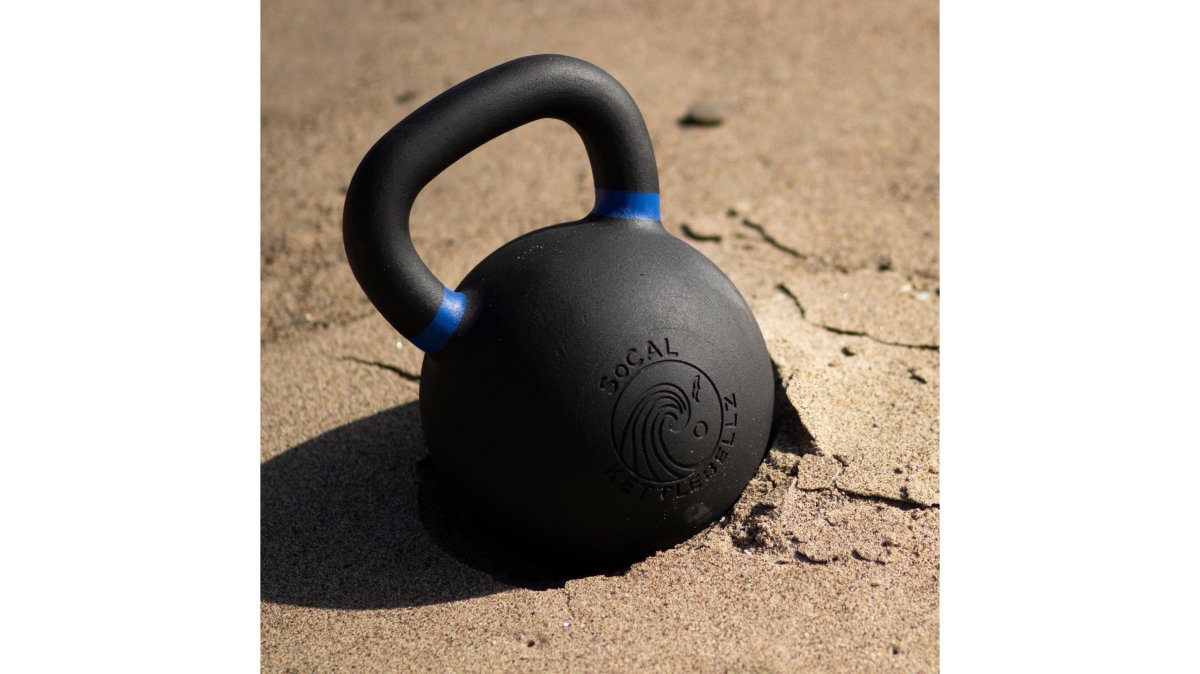
Consider the powder coated kettlebell design philosophy. The textured powder coating provides grip even during sweaty sessions, while industrial-grade cast iron is buffed smooth to remove imperfections that cause friction or discomfort. Color-coded handles aid quick identification during circuit training. These details are not decoration; they are functional decisions that extend equipment life and improve user experience.
Budget equipment skips these refinements. Raw steel rusts. Poor coatings peel. Rough castings irritate hands and tear up flooring. The result is equipment that looks tired within a year and performs worse under high-intensity training. The metallurgy and coating science are the first line of defense against the elements, and the first place budget brands cut corners.
The Digital Hidden Cost: Why Premium Hardware Must Sync With Your Software
Today's premium fitness equipment is no longer just a mechanical device; it is a data-generating node in your personal training ecosystem. Top-tier brands have built their reputations on integrating high-quality hardware with sophisticated software platforms. But the principle extends beyond smart bikes and treadmills. A premium strength machine or smart dumbbell now offers:
- Bluetooth or ANT+ connectivity to sync with apps like Apple Fitness+, Whoop, or TrainingPeaks.
- Integrated sensors that track rep counts, range of motion, and estimated power output.
- API access or app integration that allows your equipment to feed data directly into your training log, eliminating manual entry and improving accuracy.
Budget equipment is almost always 'dumb.' It has no sensors, no connectivity, and no way to integrate with the digital tools that serious athletes use to measure progress. This is a hidden cost because it forces you to either train without data or manually track every workout, which is time-consuming and prone to error.
The Environmental Hidden Cost: A Sustainability Angle Competitors Miss
Environmental sustainability also separates premium manufacturers. Higher-grade steel and durable coatings mean fewer replacements, which means less manufacturing waste and lower shipping emissions over the equipment's life. A machine that lasts 15 years instead of three represents a meaningful reduction in resource consumption.
But the modern premium brand goes further. Many are now adopting circular economy principles:
- Recycled Materials: Using a higher percentage of recycled steel and aluminum in frames.
- Repairability by Design: Publishing repair manuals and selling spare parts directly, extending the product's useful life and keeping it out of landfills.
- Take-Back Programs: Offering to recycle or refurbish old equipment when you upgrade, ensuring the raw materials are recovered.
Budget brands have no incentive for any of this. Their business model depends on rapid replacement cycles. When you buy budget, you are not just buying a lower-quality product; you are buying into a system that generates more waste and consumes more resources over time.
The Psychological Hidden Cost: How Quality Affects Adherence
Finally, consider the psychological impact of equipment quality. Premium equipment feels solid, moves smoothly, and inspires confidence. That psychological boost translates into more consistent training and better adherence to your program. The haptic feedback of a smooth, weighted cable stack or the silent, stable rotation of a competition-grade bearing reinforces the value of your effort. Cheap, wobbly equipment undermines motivation and makes every session feel like a compromise. When the tool feels professional, the user behaves more professionally. The hidden cost of budget gear is not just the replacement price, it's the slow erosion of your training discipline.
Making the Smart Investment: How to Choose What Fits Your Goals
Choosing premium fitness equipment starts with an honest assessment of your training frequency, goals, and available space. A competitive weightlifter needs different gear than a yoga practitioner in a small apartment.
Match the equipment to your specific training demands. For strength training, look for adjustable weight sets that grow with your progress, like a portable weight barbell set that stores compactly between sessions. For conditioning work, competition kettlebells in a range of sizes from 8 kg to 32 kg offer scalable intensity without occupying excessive floor space.


Consider the psychological impact of equipment quality. Premium equipment feels solid, moves smoothly, and inspires confidence. That psychological boost translates into more consistent training and better adherence to your program. Cheap, wobbly equipment undermines motivation and makes every session feel like a compromise.
Conclusion: Invest in the Equipment That Invests in You
The argument for premium fitness equipment is not about luxury; it is about the mathematics of long-term ownership, training consistency, and injury prevention. Quality gear costs less per year than budget replacements, protects your body through proper ergonomics, and supports your progress without mechanical interruptions.
At PureFitnessWarehouse.com, we curate equipment that balances commercial-grade durability with practical home use, from competition kettlebells to compact adjustable barbells. Every product is selected to support data-driven training and measurable progress toward your personal best. Shop our fitness equipment collection and build a home gym that performs as hard as you do.
Frequently Asked Questions
Is expensive gym equipment actually better for performance?
Yes, for most serious trainees. Premium equipment directly improves training performance through more precise biomechanics, smoother movement paths, and consistent resistance. When a machine's path of motion matches your joints' natural angles, you can push closer to failure with less risk of compensation. Higher-quality steel and upholstery also hold up under heavy loads, so your form won't break down due to wobbling or worn padding. The result is more effective sets and measurable progress over time.
What should I consider before buying exercise equipment?
Start with your training goals, available space, and budget. Then weigh build quality, warranty coverage, and ergonomics. Look for commercial-grade construction with solid steel frames and powder-coated finishes. Check the warranty terms carefully: a longer warranty on frames and moving parts signals manufacturer confidence. Consider the total cost of ownership, including potential repairs and replacement. For home use, measure your space and consider equipment like an adjustable magnetic barbell set that stores compactly between sessions.
How does equipment quality impact injury prevention?
Equipment quality directly affects injury risk through biomechanics and stability. Poorly designed machines can force joints into unnatural movement patterns, especially during high-intensity training. Premium equipment features better ergonomics, such as correctly positioned pivot points and anatomically aligned handles, which reduce stress on knees, shoulders, and lower back. High-quality padding and upholstery maintain proper support during heavy lifts. Solid construction prevents dangerous wobbling or tipping, while smoother moving parts reduce the risk of sudden jerks that can strain muscles.
What is the difference between commercial and home gym equipment quality?
Commercial equipment is engineered for continuous use in fitness facilities and must withstand hundreds of workouts daily. It uses heavier steel gauges, commercial-grade upholstery, and more durable moving parts. Home gym equipment often prioritizes compact size and lighter weight, which can mean thinner frames. However, premium home equipment like competition kettlebells or powder-coated options bridges this gap, offering commercial-grade durability in a home-friendly format. If you train intensely, choosing equipment built to commercial standards ensures it lasts longer and performs safely.