
Table of Contents
- What Makes Premium Fitness Gear Different
- Durability of Gym Equipment and Long-Term Value
- Material Quality and Manufacturing Precision
- Safety Standards for Exercise Machines and Injury Prevention
- Premium vs Budget Lifting Gear Comparison
- Total Cost of Ownership and Resale Value
- Is Premium Fitness Gear Worth the Investment
Last Updated: August 23, 2026
What Makes Premium Fitness Gear Different
Premium fitness gear isn't just about the brand name stamped on the side. The difference runs deep into how equipment is engineered, manufactured, and tested before it reaches your hands. When you're evaluating why premium fitness gear costs more, you're really comparing two fundamentally different approaches to durability, safety, and performance.
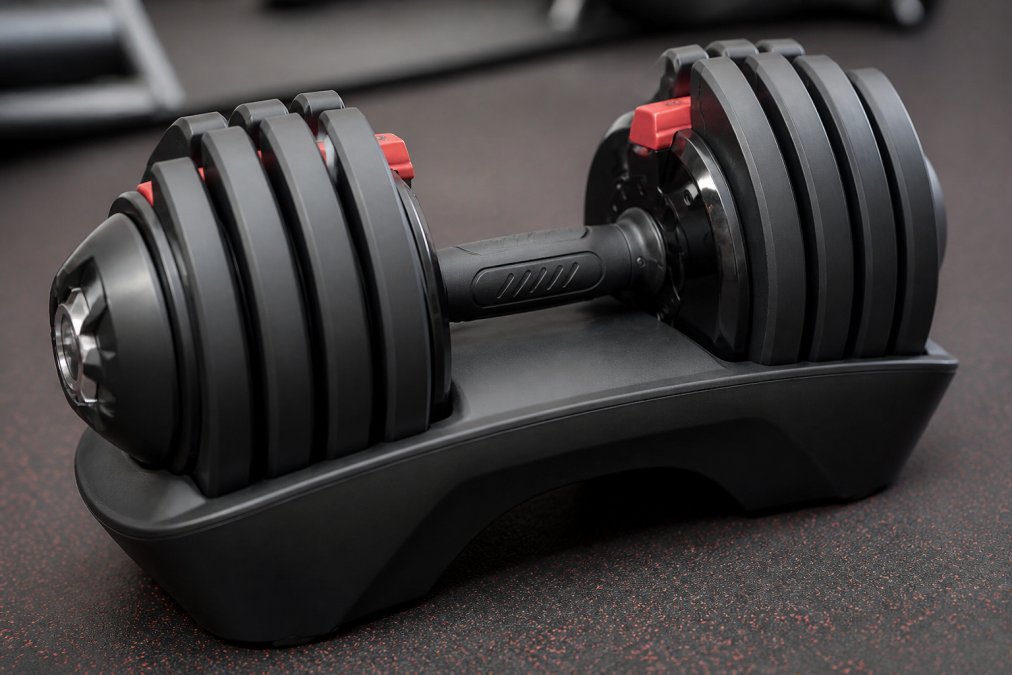
The core distinction comes down to precision engineering. Budget equipment gets the job done in theory. Premium equipment gets the job done consistently, year after year, under stress. A budget dumbbell might feel fine for your first three months. A premium dumbbell from PureFitnessWarehouse.com, like the Intelligent And Fast Adjustable Dumbbell, is built with high-precision silicon steel and engineered to handle thousands of repetitions without degradation. That's not marketing, that's material science meeting manufacturing standards.

Commercial-grade standards exist for a reason. They define how equipment should perform under repeated, intensive use. Equipment that meets these standards costs more to produce because it requires tighter tolerances, better materials, and more rigorous quality control. Budget manufacturers often skip these steps to hit a lower price point. Premium manufacturers embrace them because they know their customers will use the equipment hard and expect it to last.
The warranty coverage tells you something too. Premium equipment often carries multi-year warranties because manufacturers are confident in their structural integrity. They've tested the equipment extensively. They know how it will perform over time. That confidence translates into longer coverage and better service support when issues arise.
Safety standards for exercise machines are non-negotiable in premium equipment (the CDC). Load-bearing capacity, handle grip durability, joint stability, these aren't optional features. They're engineered requirements. Premium manufacturers design equipment to exceed safety thresholds, not just meet them (astm.org). This prevents injury and keeps you training consistently without worrying about equipment failure mid-workout.
Durability of Gym Equipment and Long-Term Value
The durability of gym equipment is where premium gear separates itself from budget alternatives. Durability isn't just about how long something lasts, it's about how reliably it performs for years without degradation in safety or functionality.
A budget kettlebell might chip, crack, or develop surface rust after six months of regular use. The handle grip deteriorates. The weight distribution becomes uneven. A premium kettlebell maintains its integrity through thousands of training sessions. The powder-coated finish resists wear. The cast iron stays smooth. The weight stays true. This is the difference between equipment that survives and equipment that performs.
Long-term investment thinking changes how you evaluate cost. If a budget kettlebell costs half as much but lasts two years, while a premium kettlebell costs more but lasts ten years, the math shifts dramatically. The premium option becomes the economical choice over time. You're not just buying durability, you're buying consistency and reliability that supports your training without interruption.
Wear and tear affects every piece of equipment, but premium gear is designed to age gracefully. The materials resist oxidation. The joints stay tight. The structural integrity holds. Budget equipment often degrades faster because manufacturers use cheaper materials and simpler construction methods. Premium manufacturers engineer equipment to withstand thousands of cycles of stress without losing performance.
Many fitness practitioners find that investing in durable equipment actually reduces frustration and supports better training adherence (peer-reviewed research). When your equipment works flawlessly every session, you focus on your workout, not on whether something will break. That consistency matters for long-term progress.
The resale value of premium equipment tells another story. If you ever decide to upgrade or change your training focus, premium gear is easier to sell. That residual value effectively reduces your true cost of ownership.
Material Quality and Manufacturing Precision
Material quality determines everything about how equipment performs and lasts. Premium fitness gear uses industrial-grade materials selected specifically for their durability and performance characteristics under stress.
Consider the difference in cast iron. Budget cast iron is poured and cooled quickly. It's rough, uneven, and prone to cracking. Premium cast iron is poured carefully, cooled slowly, and buffed smooth to remove imperfections. This precision engineering prevents friction, discomfort, and premature wear. The Powder Coated Kettlebell from PureFitnessWarehouse.com represents this approach, industrial-grade cast iron buffed smooth and coated with a textured powder finish that provides grip without sacrificing durability.

Manufacturing standards define how precisely equipment is made. Premium manufacturers maintain tighter tolerances. Every component is checked. Welds are inspected. Surfaces are finished to exacting standards. Budget manufacturers use looser tolerances to speed production and reduce costs. The result is equipment that works but lacks the precision and consistency of premium gear.
Steel pipe construction in premium equipment differs significantly from budget alternatives. Premium steel is selected for its strength-to-weight ratio and resistance to fatigue. The pipes are welded with precision, and joints are reinforced. A premium pull-up bar like the Sports Products Fitness Equipment Indoor Pull-Up Bar uses heavy-duty steel pipe construction engineered to support serious training without flex or movement. Budget bars often use thinner steel and simpler welds that compromise safety and performance.
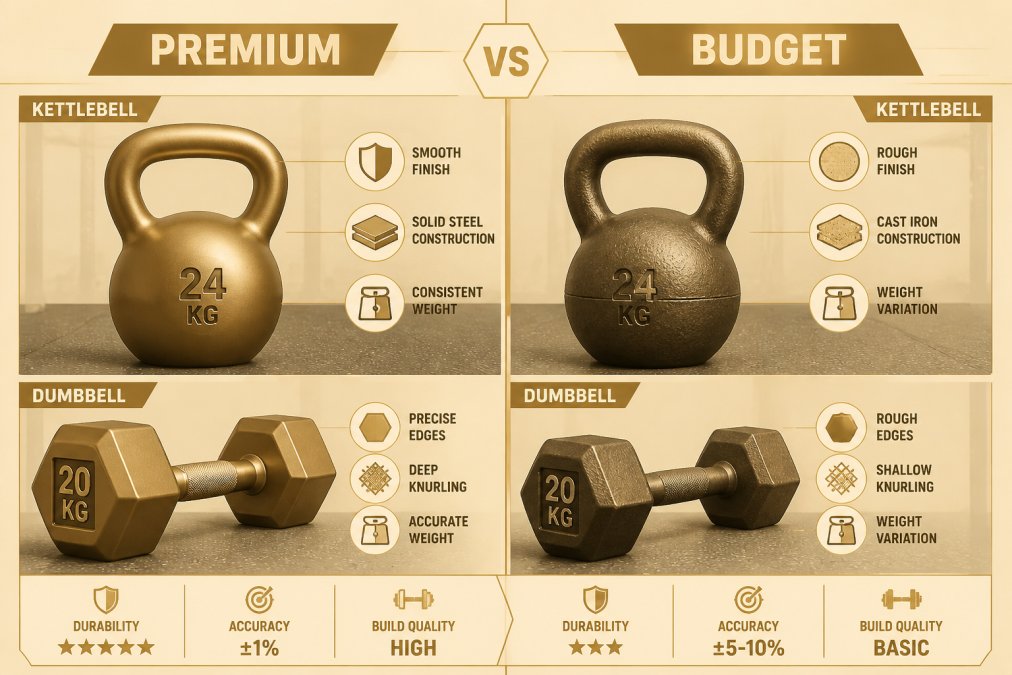
The precision engineering extends to every detail. Handle diameter, grip texture, weight distribution, joint angles, premium manufacturers optimize these elements. Budget manufacturers use standard, generic specifications. That attention to detail compounds across hundreds of training sessions, creating a noticeably better experience and longer equipment life.
Manufacturing precision also affects safety. Uneven weight distribution in a dumbbell creates imbalances that stress your joints. Inconsistent handle diameter causes grip fatigue and increases injury risk. Premium manufacturers control these variables. Budget manufacturers often don't. Over time, these small differences in manufacturing precision accumulate into meaningful differences in safety and training quality.
Safety Standards for Exercise Machines and Injury Prevention
Safety standards for exercise machines exist to protect users from preventable injuries. Premium equipment is engineered to exceed these standards, not just meet them. This distinction matters because it directly affects your injury prevention and training consistency.
Biomechanics inform premium equipment design. How your body moves through an exercise, where forces concentrate, what angles stress joints, premium manufacturers study these factors. They design equipment to support natural movement patterns and reduce stress on vulnerable areas. Budget equipment often uses generic designs that don't account for individual biomechanics or movement variability.
User safety is non-negotiable in premium equipment. Load-bearing capacity is tested and verified. Handles are designed to prevent slipping. Joints are reinforced to eliminate flex. Moving parts are guarded. Surfaces are smooth to prevent abrasion. These aren't optional features, they're engineered requirements that prevent injury.
Ergonomics in premium equipment means your body is supported properly throughout movement. The angle of a bench, the height of a bar, the distance between handles, these details affect how safely and effectively you can train. Premium manufacturers optimize these dimensions. Budget manufacturers use standard sizes that work for most people but aren't ideal for anyone.
Advanced features in premium equipment often include safety mechanisms that budget gear lacks. Automatic weight selection on adjustable dumbbells like the Intelligent And Fast Adjustable Dumbbell prevents sudden weight shifts. Stabilizing bars on treadmills provide security. Reinforced joints eliminate movement that could cause injury. These features add cost but dramatically improve safety.
Injury prevention is ultimately about consistency. When your equipment is safe and reliable, you can train hard without worrying about equipment failure causing injury. You can focus on form and progression. That consistency supports better long-term results and keeps you training without setbacks.
Premium vs Budget Lifting Gear Comparison
The comparison between premium and budget lifting gear reveals meaningful differences across multiple dimensions. Understanding these differences helps you make informed decisions about where to invest in your training.
| Aspect | Premium Gear | Budget Gear |
|---|---|---|
| Material Quality | Industrial-grade steel/iron, precision finished | Standard materials, rough finish |
| Manufacturing Precision | Tight tolerances, inspected welds | Loose tolerances, minimal inspection |
| Durability | Consistent performance for years | May degrade faster |
| Safety Standards | Exceeds requirements, tested extensively | Meets minimum standards |
| Warranty Coverage | Multi-year coverage | Often shorter coverage |
| Resale Value | Retains significant value | Retains less value |
| User Experience | Smooth, reliable, consistent | Functional but variable quality |
| Long-term Cost | Often lower total cost of ownership | May have higher replacement frequency |
Premium lifting gear from sources like PureFitnessWarehouse.com represents this higher tier. The Powder Coated Kettlebell uses industrial-grade cast iron with a textured powder coating that provides grip while resisting wear. Budget kettlebells often use cheaper cast iron that chips and develops rough spots that damage your hands and equipment.
Adjustable dumbbells illustrate the gap clearly. A premium adjustable dumbbell uses precision mechanisms that lock weights securely and smoothly. Budget adjustable dumbbells often have loose connections that rattle and shift. Over hundreds of workouts, this difference compounds into a noticeably better training experience with premium equipment.
Cost efficiency over time is the real comparison. Budget gear requires replacement more frequently. Premium gear stays reliable for years. When you factor in replacement frequency, shipping costs, and the inconvenience of broken equipment, premium gear often costs less over a decade of training.
Total Cost of Ownership and Resale Value
Total cost of ownership means looking beyond the initial purchase price to understand the true expense of equipment over its useful life. This perspective reveals why premium fitness gear often represents better value than the sticker price suggests.
Calculate TCO by adding the purchase price, maintenance costs, repair costs, and replacement frequency. A premium treadmill from PureFitnessWarehouse.com like the Everfit Electric Treadmill costs more upfront but runs reliably for a decade with minimal maintenance. Over ten years, the premium treadmill can offer better value despite the higher initial investment.

Maintenance and preventative maintenance differ between premium and budget equipment. Premium equipment is engineered to require minimal maintenance. The bearings are sealed. The electrical components are protected. Budget equipment often requires more frequent maintenance to stay functional. You'll spend more time troubleshooting and more money on repairs.
Resale value matters more than many people realize. Premium equipment retains value because buyers know it will last. When you decide to upgrade or change your training focus, you can sell premium gear quickly and recover a meaningful portion of your investment. Budget equipment is harder to sell because potential buyers worry about durability and reliability.
The operational environment affects durability significantly. Equipment in a humid environment, like a basement or garage, experiences more stress. Premium equipment with sealed bearings and corrosion-resistant finishes handles these conditions better. Budget equipment deteriorates faster in challenging environments, making the durability advantage of premium gear even more valuable.
Supply chain and inflation have affected equipment pricing across the board. Premium manufacturers have absorbed some costs through efficiency improvements, while budget manufacturers have been forced to cut corners further. This gap has widened, making premium equipment a relatively better value than it was five years ago.
Many fitness practitioners find that investing in premium equipment early saves money over five to ten years. You buy once, use consistently, and sell for a meaningful return. Budget equipment requires more frequent replacement, creating a cycle of ongoing expenses.
Is Premium Fitness Gear Worth the Investment
The answer to whether premium fitness gear is worth the investment depends on your training timeline, intensity, and commitment to consistency. For most serious fitness practitioners, premium gear is the economical choice over five years or longer.
If you're committed to training seriously for years, premium equipment supports that commitment. The reliability means you train without interruption. The safety means you train without injury risk. The durability means your equipment lasts as long as your commitment. Premium gear from PureFitnessWarehouse.com is designed for practitioners who view fitness as a long-term pursuit, not a temporary phase.
The psychological impact of equipment quality matters more than many guides acknowledge. When you use premium equipment, you feel the difference immediately. The smooth finish on a kettlebell. The solid construction of a pull-up bar. The responsive feel of an adjustable dumbbell. That quality creates confidence and supports better training focus. You're not distracted by worries about equipment failure or safety.
Training adherence improves when equipment is reliable. You show up to train because you know your equipment will work. You push harder because you trust the equipment to handle the load. That consistency compounds over months and years into meaningful progress that budget equipment might not support.
The investment becomes clearer when you project forward. Where will you be in five years? If fitness is a core part of your life, premium equipment supports that identity. If you're uncertain, budget equipment makes sense while you figure out your commitment level. But if you're serious about training, premium gear is often the more economical choice.
Premium fitness gear costs more because it's engineered to perform consistently under stress, manufactured to exacting standards, and designed to last for years without degradation. At PureFitnessWarehouse.com, we've built our catalog around equipment that supports serious training with reliability and safety you can trust. Explore our selection of premium dumbbells, kettlebells, and exercise machines, each piece engineered to help you train harder and progress further. Shop with confidence, knowing your equipment will support your goals for years to come.
Frequently Asked Questions
Q: Why does premium fitness gear cost so much more than budget alternatives?
A: Premium fitness gear costs more because of superior material quality, precision engineering, rigorous safety testing, and longer equipment longevity. Manufacturers invest in high-grade steel, advanced coatings, and strict quality control processes that budget brands skip. A premium adjustable dumbbell like the Intelligent And Fast Adjustable Dumbbell ($985.96) uses high-precision silicon steel and durable nylon coating, whereas budget options use lower-grade materials prone to wear and rust. Over time, premium gear maintains performance and safety, reducing replacement costs and injury risk.
Q: What are the primary differences between budget and premium gym gear?
A: Premium gym equipment offers superior durability of gym equipment, better ergonomic design, stricter safety standards for exercise machines, and longer warranty coverage. Budget gear often uses thinner materials, inconsistent manufacturing tolerances, and minimal testing. Premium kettlebells feature smooth, buffed finishes and color-coded handles for safety, while budget versions may have rough edges and unclear markings. Premium treadmills like the Everfit ($334.38) include consistent motor performance and structural integrity, whereas budget models may have unstable frames or unreliable electronics that may fail.
Q: Does investing in premium fitness gear actually improve training results?
A: Premium gear improves training consistency and safety rather than directly boosting performance. Quality equipment reduces injury risk, allowing you to train more frequently without setbacks. A stable, durable piece of equipment like a precision pull-up bar ($54.99) enables consistent form and progressive overload, both essential for strength gains. Budget equipment that wobbles, breaks, or causes discomfort interrupts training adherence. Additionally, premium gear's reliability means fewer workouts missed due to equipment failure, directly supporting your ability to reach personal bests.
Q: How do I know if premium fitness gear is worth the extra cost for my situation?
A: Premium fitness gear is worth the investment if you train regularly (4+ days per week), plan to use equipment for 5+ years, or have a history of equipment failure frustrating your progress. Calculate total cost of ownership: a $985.96 premium dumbbell used for 10 years costs roughly $98 annually. If you train casually or are still experimenting with fitness, budget gear may suffice initially. However, once you've committed to consistent training, premium equipment's durability, safety, and performance consistency often justify the upfront investment.
This article was written using GrandRanker