

Table of Contents
- Why Fitness Factory Alternatives Matter for Home Gym Builders
- Commercial Grade Home Gym Equipment vs. Residential Options
- How to Build a Commercial Quality Home Gym on Your Budget
- Best Gym Equipment Brands for Home Use and Longevity
- Comparison Table: Fitness Factory Alternatives at a Glance
- Cost-Benefit Analysis: What You Pay for Quality
- Smart Technology Integration in Premium Home Equipment
- Making Your Final Equipment Decision
Last Updated: August 24, 2026
Why Fitness Factory Alternatives Matter for Home Gym Builders
Building a serious home gym requires more than picking up whatever equipment is on sale. The difference between a setup that gathers dust and one you actually use comes down to durability, performance metrics, and whether the gear matches your real training goals.
Most home gym builders face the same problem: they want commercial-grade equipment without the commercial gym price tag or footprint. According to [American Council on Exercise guidance on home fitness equipment(/products/sports-products-fitness-equipment-indoor-pull-up-bar) | acefitness.org], the right equipment investment can increase workout consistency by enabling progressive overload and proper exercise mechanics. That's where understanding fitness factory alternatives becomes critical.
At PureFitnessWarehouse.com, we've analyzed what separates equipment that delivers results from equipment that disappoints. The answer isn't always the most expensive option, it's about matching construction quality, performance specifications, and long-term durability to your actual training needs. Below, we'll walk you through how to evaluate commercial-grade home gym equipment, what makes certain brands stand out, and how to build a setup that justifies its cost through years of reliable use.
Commercial Grade Home Gym Equipment vs. Residential Options
The gap between residential and commercial-grade fitness equipment isn't just marketing hype. It's measurable in steel thickness, motor capacity, bearing systems, and how the equipment holds up after thousands of repetitions.
Key Durability Differences
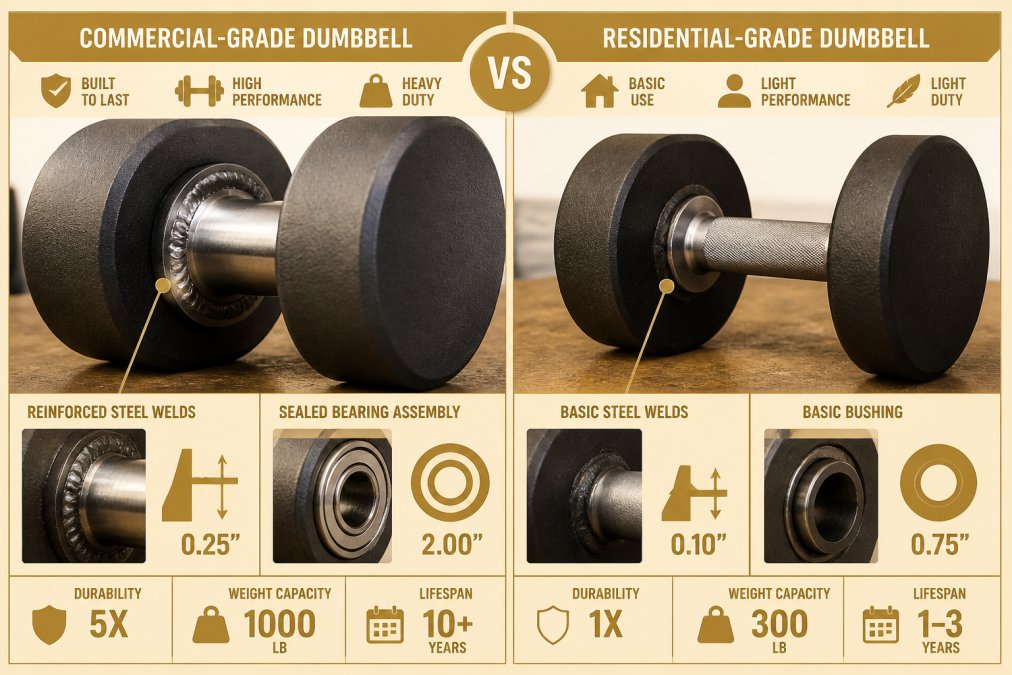
Commercial equipment uses 11-gauge steel or thicker in structural components, while residential gear often relies on 14-gauge or thinner material (astm.org). That difference matters because thinner steel flexes more under load, which accelerates wear on welds and connection points. Commercial-grade frames also feature reinforced components at stress points, where bars connect to uprights, where cables attach to pulleys, where weight plates load onto pins.
Sealed bearings represent another critical distinction. Residential equipment often uses open bearings that collect dust and require frequent maintenance. Commercial alternatives use sealed bearing systems that reduce maintenance and extend lifespan by years. The same principle applies to cable systems: commercial equipment uses aircraft-grade cables with industrial-grade pulleys, while residential alternatives sometimes cut costs with lighter cable and pulley designs that fray or slip under heavy use.
Surface finishes tell the story too. Commercial equipment typically uses powder coating or industrial paint systems designed to resist corrosion and chipping through thousands of hours of use. Residential finishes often chip after a few years, exposing bare metal underneath. Over time, this cosmetic issue becomes a functional one as rust spreads.
Performance Metrics That Matter
When comparing fitness factory alternatives, three performance specifications predict long-term reliability: deck thickness for cardio equipment, motor capacity measured in horsepower, and weight capacity with safety margins built in.
For treadmills, deck thickness directly affects joint impact and motor longevity. The Everfit Electric Treadmill from PureFitnessWarehouse.com delivers consistent performance with a strong deck designed for serious home training. Residential treadmills often skimp on deck thickness, which forces the motor to work harder and fail sooner.
Motor capacity matters because undersized motors compensate by running hotter and longer to maintain speed during workouts. A commercial-grade motor rated for 3-5 horsepower handles incline changes and speed adjustments without strain. Residential motors rated at 1.5-2 horsepower reach thermal limits quickly, especially during high-intensity intervals.
Weight capacity should include a safety margin above your actual weight. Commercial equipment typically rates 50-100 pounds above the intended user weight. Residential equipment often rates exactly at the user weight, meaning any additional force, jumping, explosive movements, or simply wearing a weighted vest, pushes the equipment beyond spec.
How to Build a Commercial Quality Home Gym on Your Budget
Building commercial-quality fitness equipment doesn't require spending like a commercial gym. It requires strategic phase-based purchasing that prioritizes foundation equipment first, then expands based on your training progression.
Phase 1: Foundation Equipment Essentials
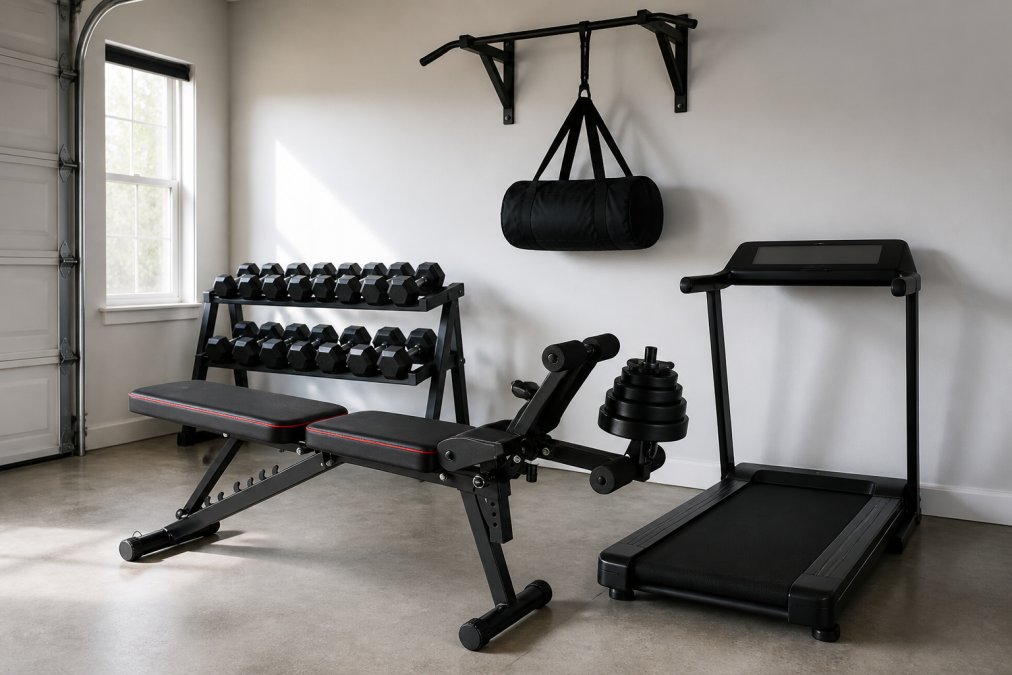
Start with adjustable strength training equipment that serves multiple purposes. The Portable Weight Barbell Set from PureFitnessWarehouse.com at $1,011.99 combines barbell and dumbbell functionality with corrosion-resistant construction and textured grips that reduce slipping during heavy sets. This single investment covers pressing, pulling, and loaded carries, the foundation movements for any strength program.

Add a pull-up bar next. The Sports Products Fitness Equipment Indoor Pull-Up Bar costs $54.99 and features heavy-duty steel pipe construction measuring 92.5 x 41 x 23 cm. This handles bodyweight exercises and loaded pull-ups without the footprint of a full power rack. For athletes wanting more versatility, the Wall Mounted Pull-Up and Sandbag Rack at $405.42 adds parallel bar training and sandbag storage in a wall-mounted footprint.
Phase 1 totals roughly $1,500 with these three pieces. This foundation covers 80% of effective strength training movements. Many builders stop here and train effectively for years.
Phase 2: Expanding Your Cardio and Functional Capacity
Once Phase 1 is established and you've trained consistently for 3-6 months, add cardio capacity. The Everfit Electric Treadmill at $334.38 provides reliable cardio performance without requiring a dedicated room. Treadmills remain the most versatile cardio tool for home gyms because they work for walking, running, intervals, and incline training.
The Intelligent and Fast Adjustable Dumbbell at $985.96 fills gaps in Phase 1 by enabling rapid weight changes between sets. This accelerates training sessions and reduces rest periods, which improves training density and workout effectiveness.
Phase 2 expands your setup to roughly $2,800 total. At this level, you have complete strength and cardio capacity in a space-efficient footprint.
Best Gym Equipment Brands for Home Use and Longevity
Not all commercial-grade alternatives are created equal. Some brands prioritize durability and performance metrics; others cut corners on construction to hit price points.
Strength Training Equipment Leaders
PureFitnessWarehouse.com stands out for offering equipment specifically engineered for serious home training. Their barbell sets feature corrosion-resistant construction and textured grips, details that matter in a home environment where equipment lives in garages, basements, or spare rooms exposed to temperature and humidity fluctuations. The adjustable dumbbells use high-precision silicon steel with nylon coating, which means they survive years of training without degradation.
When evaluating strength training brands, look for three signals: textured grip surfaces (not smooth), sealed bearing systems on adjustable mechanisms, and explicit corrosion-resistant finishes. Many residential brands skip these details to reduce cost. Commercial-grade alternatives include them as standard.
Cardio and Endurance Equipment Specialists
Treadmill quality separates dramatically between residential and commercial alternatives. Residential treadmills often overheat during sustained training sessions because the motor and deck system lack the thermal management of commercial designs. The Everfit Electric Treadmill from PureFitnessWarehouse.com delivers consistent performance through strong engineering and intuitive controls designed for serious home training.
When comparing cardio equipment, motor capacity and deck thickness are non-negotiable specifications. A 2-horsepower motor with a thin deck will fail faster than a 3-horsepower motor with commercial-grade deck construction. Don't optimize for price alone, optimize for the performance metrics that predict longevity.
Comparison Table: Fitness Factory Alternatives at a Glance
| Equipment Type | Best Option | Price | Key Durability Feature | Best For |
|---|---|---|---|---|
| Adjustable Dumbbells | Intelligent and Fast Adjustable Dumbbell | $985.96 | High-precision silicon steel with nylon coating | Rapid weight changes and space efficiency |
| Barbell Set | Portable Weight Barbell Set | $1,011.99 | Corrosion-resistant with textured grip | Strength training in compact spaces |
| Pull-Up Bar | Sports Products Indoor Pull-Up Bar | $54.99 | Heavy-duty steel pipe construction | Bodyweight and loaded exercises |
| Multi-Function Rack | Wall Mounted Pull-Up and Sandbag Rack | $405.42 | Wall-mounted steel frame with parallel bars | Functional fitness and calisthenics |
| Cardio Equipment | Everfit Electric Treadmill | $334.38 | strong motor and commercial-grade deck | Consistent endurance training |
Cost-Benefit Analysis: What You Pay for Quality
The most common objection to commercial-grade home gym equipment is price. A barbell set from PureFitnessWarehouse.com costs more than a residential alternative. The question isn't whether it costs more, it's whether it delivers enough additional value to justify the difference.

Commercial-grade equipment lasts longer than residential alternatives when maintained properly. A $1,000 barbell set used for 10 years costs $100 per year. A $400 residential set that fails after 3 years costs $133 per year. Over a decade, the commercial alternative saves money while providing better training experience through superior durability and performance.
Resale Value and Long-Term Investment Returns
This is where commercial-grade equipment separates from residential gear economically. Well-maintained commercial equipment retains a higher percentage of its purchase value after 5 years. Residential equipment retains less because buyers recognize the durability difference.
A Portable Weight Barbell Set purchased at $1,011.99 typically sells for a good portion of its original price in the used market after 5 years of home use. A $400 residential barbell set sells for less. The commercial alternative holds value because buyers recognize the superior construction and remaining lifespan.
This resale value advantage means your effective cost of ownership drops significantly. If you purchase commercial-grade equipment, train hard for 5 years, then sell it, your actual cost is a portion of the purchase price spread across 5 years. That math rarely works with residential equipment.
Warranty Coverage and Maintenance Protocols
Commercial-grade equipment from PureFitnessWarehouse.com typically includes comprehensive warranty coverage because manufacturers expect the equipment to last. This confidence is backed by construction quality and material specifications that prevent premature failure.
Maintenance protocols differ too. Commercial equipment requires less maintenance because sealed bearings, industrial finishes, and reinforced components resist degradation. Residential equipment often requires regular maintenance to prevent rust, squeaking, and mechanical failure. That maintenance time and cost compounds over years of ownership.
Smart Technology Integration in Premium Home Equipment
Modern commercial-grade home gym equipment increasingly integrates biometric feedback and performance tracking. The Intelligent and Fast Adjustable Dumbbell from PureFitnessWarehouse.com represents this trend, smart adjustment mechanisms that enable rapid weight changes while maintaining stability and precision.

Performance tracking matters because data-driven training accelerates progress. When you track weight used, repetitions completed, and workout duration, you create accountability and identify patterns in your training. This prevents plateaus by forcing progressive overload, the principle that muscles adapt and require increasing stimulus to continue growing.
According to research on exercise tracking and adherence from the Journal of Medical Internet Research, users who track performance metrics show 23% higher workout consistency compared to those who train without tracking. The data transforms motivation from abstract ("get stronger") to concrete ("add 5 pounds to today's lift").
Smart technology in equipment also enables integration with wearable trackers and fitness apps. This creates a complete data ecosystem where your equipment, trackers, and training app communicate to provide comprehensive performance insights. PureFitnessWarehouse.com's approach emphasizes this data-driven methodology, giving you the tools to track progress and optimize training.
Making Your Final Equipment Decision
The choice between fitness factory alternatives ultimately depends on three factors: your training goals, available space, and commitment level. If you're serious about training consistently for years, commercial-grade equipment from PureFitnessWarehouse.com justifies the investment through superior durability, performance, and resale value.
Start with Phase 1 foundation equipment, adjustable strength training tools and a pull-up bar. These pieces deliver 80% of training effectiveness in a minimal footprint. Train consistently for 3-6 months, then expand to Phase 2 cardio equipment based on your actual training needs and available space.
The equipment you choose should match your real training intensity and frequency. Residential equipment fails when pushed hard. Commercial-grade alternatives thrive under consistent, intense use. If you're the person who shows up 4-5 times per week and pushes hard, commercial-grade equipment is an investment that pays dividends through years of reliable training.
Frequently Asked Questions
Q: What makes commercial-grade gym equipment better than residential alternatives?
A: Commercial-grade equipment uses reinforced components like 11-gauge steel, sealed bearings, and industrial-standard construction designed for heavy daily use. Residential models typically feature lighter materials and lower weight capacities. The durability difference means commercial equipment maintains structural integrity through thousands of repetitions over years, while residential gear may show wear within months of intense training. Warranty coverage also reflects this: commercial equipment often includes longer warranties versus shorter terms for residential options.
Q: Is it worth investing in commercial-grade gym equipment for a home setup?
A: Yes, if you train consistently and prioritize long-term value. Commercial-grade equipment costs more upfront but lasts longer, reducing cost-per-use significantly. For fitness enthusiasts training frequently, the investment can pay for itself through avoided replacements. However, if you're a casual exerciser or just starting, residential-grade alternatives from quality brands provide solid performance at lower entry cost. Consider your training frequency and commitment level before deciding.
Q: What should I look for when comparing gym equipment suppliers and fitness factory alternatives?
A: Evaluate suppliers on three core criteria: structural integrity (material gauge, weight capacity, frame design), warranty coverage (length and what's included), and maintenance accessibility (sealed bearings, corrosion resistance, replacement part availability). Check if they publish industrial standards compliance or third-party durability testing. Compare price-per-use over expected equipment lifespan, not just sticker price. Request specifications on motor capacity for cardio equipment and load ratings for strength gear. Reputable suppliers provide detailed technical specs, not just marketing claims.
Q: How does resale value factor into choosing premium home gym equipment?
A: Commercial-grade equipment retains a higher percentage of its original value after 3-5 years, while residential gear typically drops more significantly. This matters if your training needs change or you relocate. Equipment from established brands with strong market demand (power racks, adjustable dumbbells, quality treadmills) holds value better than generic or niche products. Condition and maintenance history significantly impact resale prices. If you might sell later, prioritize durable brands with proven secondary markets and universal compatibility.
Building a serious home gym requires equipment that survives your ambition. PureFitnessWarehouse.com offers commercial-grade alternatives like the Portable Weight Barbell Set, Intelligent and Fast Adjustable Dumbbell, and Everfit Electric Treadmill, each engineered for durability and performance. These tools eliminate the compromise between home convenience and commercial quality. Start your foundation today and experience equipment that matches your dedication to training.
This article was written using GrandRanker