

Table of Contents
- What Are Muscle Recovery Supplements?
- Top Supplements for Muscle Recovery and Growth
- When to Take Protein Powder for Muscle Growth
- How Much Protein Do I Need for Muscle Growth?
- Building Your Recovery Supplement Stack
- Supplement Safety and What to Avoid
- Conclusion
Last Updated: August 30, 2026
What Are Muscle Recovery Supplements?
Muscle recovery supplements are products designed to support the body's natural repair processes after intense training, reduce exercise-induced inflammation, and accelerate the return to peak performance. These supplements work by replenishing nutrients depleted during workouts, supporting muscle protein synthesis, and maintaining electrolyte balance, all critical factors in how quickly your body bounces back from training stress.
At PureFitnessWarehouse.com, we offer a comprehensive selection of fitness essentials. The best supplements for muscle recovery and growth address three core needs: restoring amino acids for muscle repair, replenishing energy substrates like creatine, and maintaining the micronutrient status that enables cellular recovery. Without these elements, even perfect training and nutrition can't produce optimal results.

Recovery isn't passive. Your muscles don't repair themselves during rest, they repair themselves through a specific cascade of biochemical events triggered by training and fueled by the right nutrients. The supplements covered here directly support that process, not just theoretically, but through mechanisms your body actually uses.
Top Supplements for Muscle Recovery and Growth

Protein Powders: The Foundation
Protein is non-negotiable for muscle recovery and growth. When you train, you create micro-tears in muscle fibers. Your body repairs those tears by building new protein structures, but it can only do that if amino acids are available. Without sufficient protein intake, muscle protein synthesis stalls, and recovery slows dramatically.
The best supplements for muscle recovery and growth start with protein. Most athletes need 0.7 to 1 gram of protein per pound of body weight daily to support muscle growth (peer-reviewed research). That's a lot of food. Protein powder bridges the gap between what you can eat whole and what your body actually needs.
Whey protein isolate works fastest. It delivers amino acids to your muscles within 30-60 minutes of consumption, making it ideal for post-workout windows when your body's demand for amino acids peaks (peer-reviewed research).
PureFitnessWarehouse.com carries several high-quality options. The Chocolate Whey Isolate Protein Powder, 1.54 lbs ($51.99) delivers pure whey isolate with only three natural ingredients, whey protein isolate, natural flavors, and stevia. No added sugar, no artificial sweeteners, no seed oils. One scoop provides complete amino acid profiles needed for muscle repair. For athletes who want a premium blend, the Milk & Egg Protein Signature Collection ($73.99) combines milk and egg proteins with 26 grams of protein per 120-calorie serving, offering a balanced macronutrient profile that supports both recovery and lean muscle maintenance.

The Whey Protein Powder from Orion ($74.00) rounds out the protein selection with a clean, complete supplement designed specifically for post-workout recovery and daily protein intake.
Creatine Monohydrate: Strength and Performance
Creatine monohydrate is the most researched supplement in sports nutrition. It works by replenishing ATP (adenosine triphosphate), the molecule your muscles use for energy during intense contractions. When you lift heavy or sprint, you deplete ATP stores. Creatine helps regenerate those stores faster, allowing you to maintain strength and power output across more repetitions and sets.
The evidence is clear: creatine supplementation increases strength and muscle mass when paired with resistance training more than resistance training alone. It also improves muscle recovery, supports lean muscle mass development, and promotes healthy body composition. Beyond muscle, creatine plays a role in brain energy metabolism, it helps the body produce ATP for cognitive function, which is why some athletes report improved mental clarity and reduced fatigue during stressful training phases.
Creatine monohydrate comes in several forms. Traditional powder is gritty and can cause bloating. PureFitnessWarehouse.com offers alternatives that address these issues. The Arq8™ Creatine Monohydrate Powder ($45.00) uses nano-refined technology that dissolves clear with no grit and no chalk, and critically, it's gentle on digestion with no bloating or GI issues. For athletes who want pure, unflavored creatine, the Pure Creatine Monohydrate | Strength & Muscle Performance ($27.99) delivers 100% pure creatine with zero fillers or additives.
The CREATINE MONOHYDRATE from BLACKLABEL Supplements ($29.99) and the Creatine Monohydrate Powder from Swanson ($55.49) both deliver 5 grams of pure creatine per scoop, supporting high-intensity energy and muscle growth on rest days.
Standard dosing is 5 grams daily. Most athletes see results within 3-4 weeks of consistent use. Creatine doesn't work overnight, it works by accumulating in your system and supporting repeated high-effort contractions over time.
Electrolytes and Hydration Support
Electrolytes, sodium, potassium, magnesium, and calcium, regulate muscle contraction, nerve function, and fluid balance. When you sweat during training, you lose electrolytes. Depleted electrolyte status impairs muscle force recovery, slows nutrient delivery to muscles, and increases cramping risk. This is where hydration support becomes critical for recovery.
The Rapid Rehydr8 Electrolyte Capsules for Muscle Recovery Hydration and Endurance ($24.95) contains a balanced blend of electrolytes specifically formulated to aid in muscular cramping prevention and support muscle endurance. With 12 scientifically developed ingredients including potassium, calcium, phosphorus, and magnesium, it restores electrolyte balance and improves intracellular hydration, the kind that actually matters for muscle function.
Magnesium and Mineral Support
Magnesium is involved in over 300 biochemical reactions in your body, including muscle contraction and relaxation. It's also critical for sleep quality, and sleep is where most muscle repair actually happens. A magnesium deficiency impairs both muscle recovery during training and recovery during sleep.
The MAGNESIUM GLYCINATE 500MG ($19.99) from UpNourish delivers magnesium in its most bioavailable form, glycine-chelated magnesium, which your body absorbs efficiently without GI distress. Each capsule contains 500 milligrams of elemental magnesium. For most athletes, 300-500 milligrams in the evening supports muscle relaxation, reduces cramping, and improves sleep quality, all of which accelerate recovery.
Magnesium also supports electrolyte balance and energy metabolism. When combined with the electrolyte capsules above, it creates a comprehensive mineral support system that addresses both acute hydration needs during training and chronic micronutrient status that enables cellular repair.
Tart Cherry Extract for Inflammation Control
Intense training triggers inflammation and oxidative stress. Some inflammation is necessary, it's part of the adaptation signal. But excessive inflammation delays recovery and increases soreness. Tart cherry contains anthocyanins, compounds that reduce oxidative stress and limit inflammation from training.
The Tart Cherry: Bottle (60 Count) ($29.99) is a concentrated formula designed for athletes on the go. It assists in the reduction of oxidative stress, targets muscle inflammation, and supports blood flow, all mechanisms that accelerate recovery. Many athletes use it post-workout to regulate soreness and inflammation, or before bed to encourage sleep quality.
When to Take Protein Powder for Muscle Growth
Timing matters, but not in the way most gym culture suggests. The "anabolic window" isn't a 30-minute emergency, it's a 4-6 hour window where your muscles are primed to absorb amino acids and build protein. Consuming protein within this window supports muscle protein synthesis more than consuming it hours later.
For muscle growth specifically, take protein powder within 60-90 minutes post-workout. This aligns with peak nutrient uptake when your muscles are most receptive to amino acids. A standard dose is 25-40 grams of protein per serving, depending on your body weight and training volume.
Beyond post-workout, distribute protein intake throughout the day. Muscle protein synthesis happens continuously, not just after training. Morning, mid-day, pre-bed, each meal with adequate protein supports ongoing repair and growth. This is why total daily protein intake matters more than the timing of a single shake.
How Much Protein Do I Need for Muscle Growth?
For muscle growth and recovery, most athletes need 0.7 to 1.0 gram of protein per pound of body weight daily. A 180-pound athlete should consume 126 to 180 grams of protein daily. This is higher than sedentary recommendations because training creates demand for amino acids that exceeds baseline needs.
Your exact requirement depends on training volume, training intensity, and current muscle mass. High-volume strength training (5+ sessions per week) pushes toward the upper end of this range. Moderate training (3-4 sessions per week) sits in the middle. The key: consistency matters more than perfection. Meeting your target most days produces better results than sporadic high intake followed by low intake.
Protein powder helps because whole food alone is often impractical. A 180-pound athlete eating only whole food would need to consume 126-180 grams of protein daily, roughly 1.5 pounds of chicken breast, or 18-24 eggs, or equivalent combinations. Protein powder fills the gap efficiently.
Building Your Recovery Supplement Stack
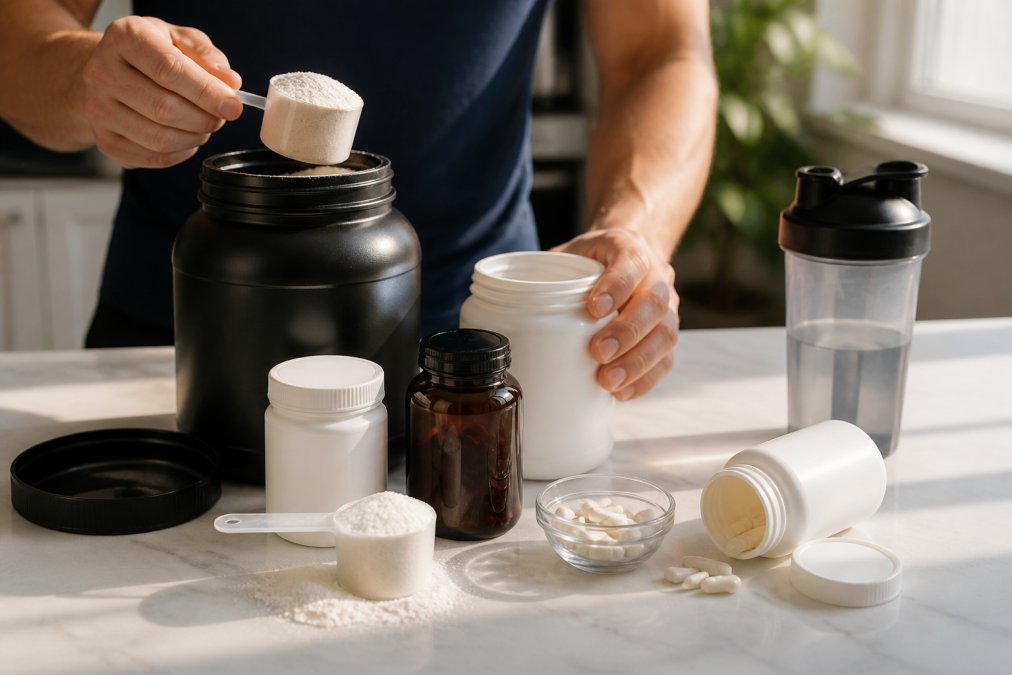
A recovery stack works synergistically. Protein provides amino acids. Creatine supports energy regeneration. Electrolytes maintain hydration and muscle function. Magnesium supports relaxation and sleep. Tart cherry reduces inflammation. Together, they address the complete recovery picture.
Essential Stack (Budget-Conscious): Start with protein powder and creatine monohydrate. These two alone address the biggest recovery bottlenecks: amino acid availability and ATP regeneration. Add these to PureFitnessWarehouse.com's cart: any whey isolate option ($51.99-$74.00) and Pure Creatine Monohydrate ($27.99). Total: roughly $80-$100. This combination covers 80% of recovery needs.

Comprehensive Stack (Optimal Recovery): Add electrolytes and magnesium to the essential stack. The Rapid Rehydr8 Electrolyte Capsules ($24.95) and MAGNESIUM GLYCINATE 500MG ($19.99) round out mineral support. This stack ensures hydration, muscle function, and sleep quality all support recovery. Total: roughly $125-$145 for a month's supply.
Performance Stack (Serious Athletes): Add tart cherry for inflammation control. The Tart Cherry: Bottle (60 Count) ($29.99) targets the inflammation-recovery bottleneck that other supplements don't address. This stack covers amino acids, energy, hydration, minerals, sleep, and inflammation. Total: roughly $155-$175 for a month's supply.
The best supplements for muscle recovery and growth work best when they address multiple recovery mechanisms simultaneously. Stacking strategically compounds results more than any single supplement alone.
| Stack Level | Key Supplements | Monthly Cost | Best For |
|---|---|---|---|
| Essential | Protein + Creatine | $80-$100 | Budget-conscious lifters, beginners |
| Comprehensive | + Electrolytes + Magnesium | $125-$145 | Serious trainees, high-volume training |
| Performance | + Tart Cherry | $155-$175 | Advanced athletes, intense programs |
Supplement Safety and What to Avoid
The supplements covered here have strong safety profiles when used as directed. Protein powder, creatine, electrolytes, magnesium, and tart cherry are all well-tolerated by healthy adults. However, safety depends on quality and dosing.
Buy from reputable sources. PureFitnessWarehouse.com carries products from established manufacturers like Swanson, Minimo Nutrition, UpNourish, and BLACKLABEL Supplements, brands with transparent ingredient lists and quality control. Avoid supplements with undisclosed ingredients, proprietary blends that hide actual dosages, or claims that seem too good to be true.
Dosing matters. More isn't better. Creatine at 5 grams daily is effective; 20 grams daily produces no additional benefit and stresses your kidneys. Magnesium at 300-500 milligrams in the evening supports sleep; exceeding this causes digestive issues. Follow label instructions.
Interactions with medications are rare for these supplements, but possible. If you take blood pressure medication, blood thinners, or other prescriptions, consult your healthcare provider before starting a new supplement regimen, especially electrolytes and magnesium, which affect fluid and electrolyte balance.
Avoid supplements making disease claims. According to FDA regulations on dietary supplements, supplements cannot claim to diagnose, treat, cure, or prevent disease. Any product claiming to "cure arthritis" or "treat diabetes" is either mislabeled or not a legitimate supplement.
Conclusion
The best supplements for muscle recovery and growth aren't mysteries. They're tools that address specific bottlenecks in your recovery process: amino acid availability, energy regeneration, hydration, mineral status, sleep quality, and inflammation control. Protein powder, creatine monohydrate, electrolytes, magnesium, and tart cherry each serve a distinct purpose.
Building a recovery protocol that actually works means starting with the fundamentals, protein and creatine, then expanding based on your training demands and recovery gaps. PureFitnessWarehouse.com's curated selection of protein powders, creatine options, electrolyte capsules, magnesium supplements, and tart cherry extract gives you everything needed to optimize recovery without guesswork. Start with the essential stack, assess your results over 4-6 weeks, then add targeted supplements based on where your recovery still falls short. Get started with PureFitnessWarehouse.com and build the recovery system that matches your training intensity.
Frequently Asked Questions
What are the best supplements for muscle recovery?
Protein powders, creatine monohydrate, and electrolytes form the core of effective muscle recovery. Whey protein isolate supports muscle protein synthesis, creatine replenishes ATP for cellular energy, and electrolytes maintain hydration and electrolyte balance. Adding magnesium glycinate enhances relaxation and sleep quality, both critical for recovery. Tart cherry extract reduces inflammation from training-induced muscle damage. Stack these based on your training volume and recovery needs.
When should I take protein powder for muscle growth?
Timing matters for muscle protein synthesis. Consume protein within 60-90 minutes after your workout to capitalize on the window when your muscles are primed for nutrient uptake. A second serving 3-4 hours later supports sustained muscle repair. Post-workout protein accelerates recovery, but total daily protein intake matters more than timing alone. Most lifters benefit from distributing protein evenly across meals throughout the day.
What are the benefits of creatine monohydrate for recovery?
Creatine monohydrate replenishes ATP stores in muscle cells, directly supporting energy availability during high-intensity exercise and recovery phases. It reduces delayed onset muscle soreness and accelerates muscle repair by maintaining cellular energy levels. Studies show consistent creatine use increases strength gains and lean muscle mass when paired with resistance training. It also supports cognitive function and mood, both affected by training stress. Standard dosing is 5g daily for sustained benefits.
How much protein do I need for muscle growth?
Current evidence supports 0.7-1.0 grams of protein per pound of body weight daily for muscle hypertrophy. For a 180-pound lifter, that's 126-180 grams daily. Distribute this across 4-5 meals to optimize muscle protein synthesis throughout the day. Higher intakes (up to 1.2g per pound) may benefit advanced athletes during cutting phases. Protein powder supplements make hitting these targets practical without excessive whole-food consumption.
Do I need supplements to build muscle, or is food enough?
Whole foods provide the foundation for muscle growth through complete amino acid profiles and micronutrients. However, supplements fill practical gaps. Protein powder delivers 25-30g of protein in a single shake, far more convenient than cooking chicken for post-workout nutrition. Creatine and electrolytes are difficult to obtain in adequate amounts from food alone. Supplements accelerate recovery and consistency, but they amplify training and nutrition, they don't replace either.
This article was written using GrandRanker