
Table of Contents
- Why Recovery Gear Matters for Home Athletes
- How to Reduce Muscle Soreness Naturally
- Benefits of Percussion Massage Guns
- Cold Therapy vs Heat Therapy for Recovery
- Top Recovery Gear Essentials for Your Home Gym
- Recovery Protocols by Sport Type
- Integrating Recovery with Sleep and Nutrition
- Safety Considerations and Contraindications
Last Updated: August 21, 2026
Why Recovery Gear Matters for Home Athletes
Recovery is the foundation that determines whether you progress or plateau. Home athletes must build their own recovery infrastructure without access to professional facilities. The difference between athletes who invest in essential recovery gear and those who skip it comes down to consistency. Muscle soreness, inflammation, and accumulated fatigue can sideline you for days, breaking training momentum.
At PureFitnessWarehouse.com, we offer a comprehensive selection of fitness essentials designed to fuel your ambition. The answer isn't harder training, it's smarter recovery. Compression support, targeted massage tools, proper supplementation, and strategic temperature therapy all accelerate the repair process that happens between workouts.
Intense training creates microscopic muscle damage and triggers inflammation. Your body repairs this damage during rest periods, which is when adaptation happens. Without active recovery interventions, inflammation lingers, delayed onset muscle soreness (DOMS) persists, and your nervous system stays depleted. Essential recovery gear speeds tissue repair, reduces muscle soreness, and restores your capacity to train hard again sooner.
How to Reduce Muscle Soreness Naturally
The most effective approach combines mechanical intervention with metabolic support. DOMS typically peaks 24-48 hours after intense training, exactly when active recovery tools deliver the greatest impact (peer-reviewed research). Blood flow circulation and lymphatic drainage accelerate the removal of metabolic waste and deliver oxygen and nutrients needed for repair.
Natural methods focus on three core strategies: soft tissue mobilization to reduce muscle tension, temperature therapy to control inflammation, and proper nutrition to support cellular repair. Foam rolling and myofascial release target trigger points directly, breaking up adhesions that restrict range of motion. Cold therapy immediately post-workout reduces initial inflammation, while heat therapy in the 24-48 hour window promotes blood flow when inflammation has already begun.
Electrolyte replenishment and protein intake are equally critical. Your muscles need amino acids to rebuild and minerals to maintain fluid balance. Dehydration amplifies perceived soreness because your muscles can't access the minerals needed for proper contraction and recovery.
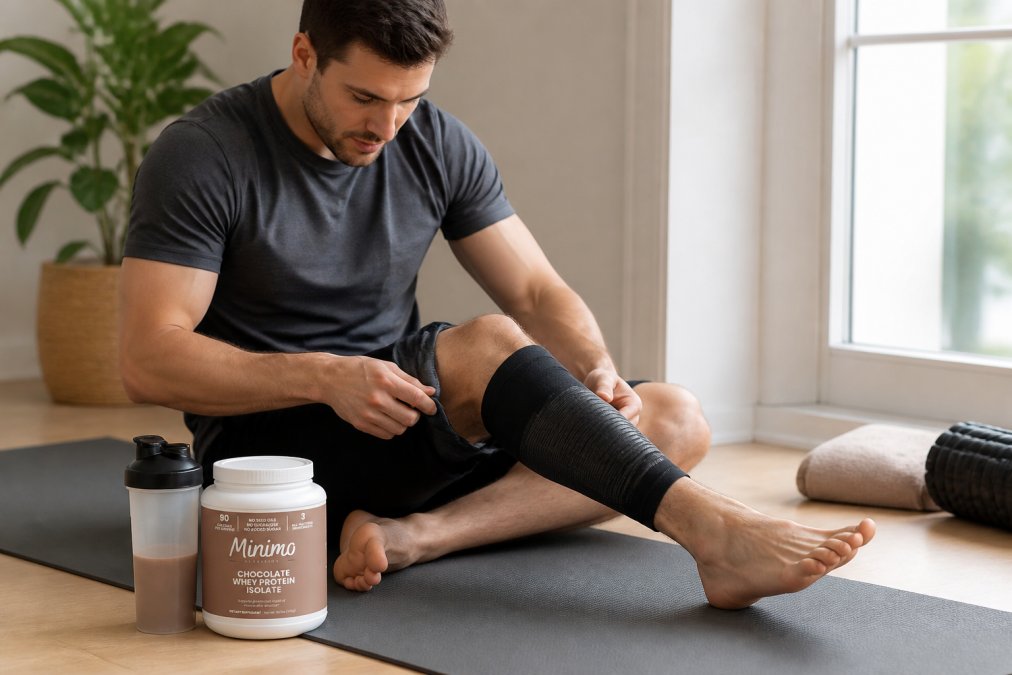
The timeline matters. Immediately post-workout (0-2 hours), focus on cold therapy and protein intake. At 24-48 hours, shift to heat therapy and active recovery like light stretching or walking. By day three, return to normal training if soreness has subsided.
Benefits of Percussion Massage Guns
Percussion massage therapy delivers rapid, targeted vibrations that penetrate deep muscle tissue without requiring manual pressure. Unlike foam rolling, a percussion gun does the work for you while you control depth and intensity. High-frequency vibrations trigger muscle relaxation and increase local blood flow circulation.
A 60-90 second session on a sore muscle group reduces muscle tension noticeably. Athletes report improved range of motion and reduced stiffness, which translates directly to better workout performance the next day. The percussion action also breaks up trigger points that restrict movement and amplify soreness.
Percussion massage works best 4-24 hours post-workout, not immediately after. Your muscles are already inflamed from training; aggressive percussion in the first few hours can amplify that inflammation. Wait until the acute inflammatory phase has passed, then use percussion to address residual tension.
The consistency advantage is significant for home athletes. Manual massage requires a partner or professional; percussion guns require only a power outlet and 2-3 minutes, making regular use more likely.
Cold Therapy vs Heat Therapy for Recovery
Cold therapy and heat therapy serve different purposes in your recovery timeline. Cold therapy immediately reduces inflammation by triggering vasoconstriction, narrowing blood vessels and limiting the inflammatory response. This works best in the first 2-4 hours after training when inflammation is acute and counterproductive.
Heat therapy does the opposite: it triggers vasodilation, expanding blood vessels and increasing blood flow circulation to damaged tissue. This accelerates metabolic waste removal and nutrient delivery, which is exactly what you need 24-48 hours post-workout when inflammation has peaked and tissue repair is underway.
The mistake most home athletes make is using cold therapy too long or heat therapy too early. A 10-15 minute ice bath immediately post-workout is effective. Continuing cold therapy into the next day interferes with the natural inflammatory response your body needs to repair tissue.
| Recovery Phase | Recommended Temperature Therapy | Duration | Mechanism |
|---|---|---|---|
| 0-4 hours post-workout | Cold therapy | 10-15 minutes | Reduces acute inflammation |
| 24-48 hours post-workout | Heat therapy | 15-20 minutes | Increases blood flow for repair |
| 48+ hours | Optional heat or contrast therapy | 10-15 minutes | Maintains circulation, aids mobility |
Contrast therapy (alternating cold and heat) is a middle-ground approach that works at any point: 2-3 minutes cold, then 2-3 minutes heat, repeated 3-4 times.
Top Recovery Gear Essentials for Your Home Gym
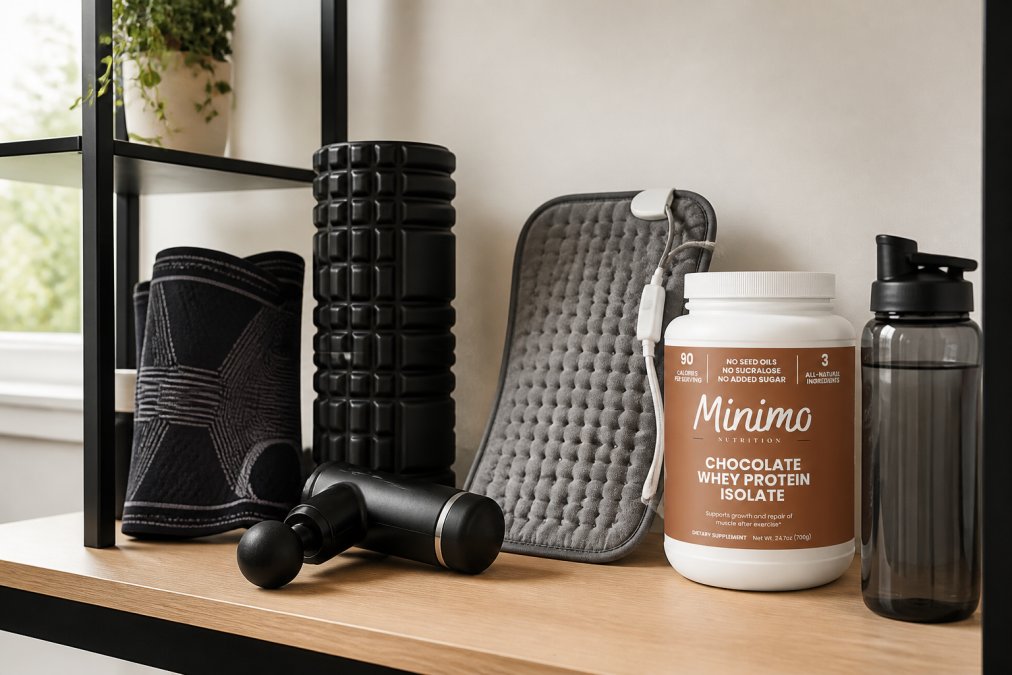
Building a functional recovery setup at home doesn't require expensive equipment or dedicated space. Focus on tools that address the three core recovery mechanisms: soft tissue mobilization, temperature therapy, and compression support.
Compression Support Gear
Compression garments apply consistent pressure that improves blood flow circulation and reduces swelling. External pressure helps your cardiovascular system move blood back to the heart more efficiently, preventing fluid from pooling in damaged tissue.
Compression sleeves for knees, elbows, and calves are the most practical starting point. Wear them for 2-4 hours immediately post-workout or during low-intensity activity the next day. The knee sleeve support at PureFitnessWarehouse.com ($25.99) uses breathable neoprene with silicone grip lines that stay in place during movement.
Compression boots are a premium option for recovery. These inflatable compression systems cycle pressure in waves, actively pumping fluid out of your legs. For most home athletes, compression sleeves deliver significant benefit at a lower cost.
Protein Supplementation and Electrolyte Support
Muscle repair requires amino acids, and protein powder is the most efficient way to deliver them immediately post-workout when your muscles are primed to absorb nutrients. The Chocolate Whey Isolate Protein Powder from PureFitnessWarehouse.com ($51.99) uses pure whey isolate with only three natural ingredients. Mix one scoop with water or milk 20-30 minutes post-workout.

Electrolyte supplementation addresses a recovery gap most home athletes miss. When you sweat, you lose sodium, potassium, magnesium, and calcium, minerals essential for muscle contraction, nerve function, and fluid balance. The Rapid Rehydr8 Electrolyte Capsules ($24.95) include the full electrolyte spectrum in convenient capsule form.
Creatine monohydrate supports ATP regeneration, the energy system your muscles rely on during intense training. The BLACKLABEL Creatine at PureFitnessWarehouse.com ($29.99) delivers 5 grams per serving, the evidence-based dose for strength and power performance. Creatine works best with consistent daily use over weeks.
Recovery Apparel and Protective Equipment
The weight lifting belt at PureFitnessWarehouse.com ($15.99) stabilizes your core during heavy lifts, reducing spinal stress and allowing faster recovery between sessions. Gym fitness gloves ($18.00) prevent calluses and blisters that can interfere with grip-dependent exercises and force you to modify training.
The knee sleeve support ($25.99) provides both compression for recovery and stabilization during training.
Recovery Protocols by Sport Type
Recovery needs vary by training style. Strength athletes should prioritize compression support and myofascial release, as heavy loading creates deep muscle damage and joint stress. Endurance athletes need electrolyte and fluid replacement as the primary intervention, since long training sessions deplete glycogen and electrolytes faster. High-intensity interval athletes need both mechanical and metabolic support, as HIIT creates acute muscle damage while also depleting energy systems.
Sport-specific protocols work because they address the actual damage your training creates.
Integrating Recovery with Sleep and Nutrition
Recovery happens during sleep, not during your workout. Your training is the signal; sleep is when adaptation occurs. Without adequate sleep, recovery gear becomes less effective. Aim for 7-9 hours nightly, and prioritize sleep consistency over any other recovery tool (the CDC).
A cool, dark room (around 65-68°F) optimizes sleep architecture (the NIH). Heat therapy before bed can improve sleep by triggering the natural temperature drop that initiates sleep onset.
Protein intake within 2 hours post-workout is critical; this is when muscle protein synthesis is elevated and your body can most efficiently use amino acids for repair. Carbohydrates restore glycogen depleted during training. Electrolytes maintain fluid balance so your cardiovascular system can deliver nutrients to damaged tissue.
Each element multiplies the others' effectiveness. Recovery gear alone without sleep and nutrition shows minimal benefit; nutrition alone without mechanical recovery tools leaves inflammation unaddressed.
Safety Considerations and Contraindications
Recovery tools are generally safe, but misuse creates risk. Cold therapy can trigger excessive vasoconstriction if applied too long. Ice baths longer than 15 minutes are counterproductive. If you have poor circulation or neuropathy, cold therapy requires medical clearance.
Percussion massage should never be applied directly to bone, joints, or areas with acute injury. Use it only on muscle tissue 4+ hours post-workout. Compression garments can restrict circulation if worn too tight or for too long. Remove them if you experience numbness or tingling.
Electrolyte supplementation is safe for most people, but if you have kidney issues, heart conditions, or take medications affecting electrolyte balance, consult your doctor. Creatine supplementation requires adequate hydration; drink at least 3-4 liters of water daily when using creatine.
Heat therapy can aggravate acute inflammation, so never apply heat in the first 4 hours post-workout. Recovery tools are powerful precisely because they create physiological change. Respect their mechanisms and follow timing guidelines.
Recovery gear transforms how consistently you train and how quickly you progress. The tools at PureFitnessWarehouse.com, from compression support like our knee sleeves ($25.99) to supplementation like our Chocolate Whey Isolate ($51.99) and Rapid Rehydr8 Electrolytes ($24.95), address the specific mechanisms of muscle repair and inflammation reduction. When you integrate mechanical recovery, temperature therapy, and proper nutrition with sleep, you create a recovery system that lets you train hard without chronic soreness breaking your consistency. Start with compression support and protein supplementation; add percussion massage and temperature therapy as your protocol evolves. The investment pays dividends in training frequency, performance gains, and long-term durability as a home athlete.

Frequently Asked Questions
Q: What are the best recovery items for home athletes?
A: The most effective recovery gear includes compression sleeves, massage tools, protein supplements, and electrolyte support. Compression gear like knee sleeves improves blood flow and reduces inflammation. Protein powders such as whey isolate (like our Chocolate Whey Isolate at $51.99) deliver amino acids for muscle repair. Electrolyte capsules restore minerals lost during training. Combining these tools with proper hydration creates a complete recovery system without needing expensive gym memberships.
Q: How do recovery tools improve muscle soreness?
A: Recovery tools work by increasing blood flow, reducing inflammation, and promoting tissue repair. Compression gear creates pressure that enhances circulation and lymphatic drainage, removing metabolic waste that causes delayed onset muscle soreness (DOMS). Percussion massage activates trigger points and reduces muscle tension. Electrolyte supplementation supports cellular repair and prevents cramping. When used consistently after workouts, these tools can help reduce soreness, allowing you to train more frequently.
Q: Should I use cold therapy or heat therapy for recovery?
A: Cold therapy works best immediately after intense training to reduce inflammation and numb pain through vasoconstriction. Heat therapy is more effective 24-48 hours later to increase blood flow and promote tissue flexibility through vasodilation. For home athletes, alternating between cold (ice baths or cold compression) right after workouts and heat (heating pads) on rest days delivers the best results. Cold reduces acute inflammation; heat restores range of motion and accelerates healing.
Q: Which recovery gear is worth the investment for home gyms?
A: Prioritize compression gear like knee sleeves ($25.99) and a lifting belt ($15.99) for joint protection during training. Add protein supplementation ($51.99 for whey isolate) and electrolytes ($24.95) for cellular repair. These essentials cost under $120 total and address the three pillars of recovery: mechanical support, inflammation reduction, and nutritional repair. Advanced tools like percussion massage guns offer faster myofascial release but are optional after mastering basic recovery fundamentals.
This article was written using GrandRanker